


The U.S. Consumer Product Safety Commission reported nearly 25,000 automatic gate related injuries between 1990 and 2000. About 9,000 involved children younger than 15. Those figures show why choosing a residential gate should involve much more than appearance alone. A well planned gate must balance security, safe movement, strength, access, privacy, weather resistance, and daily convenience.
AI Overview
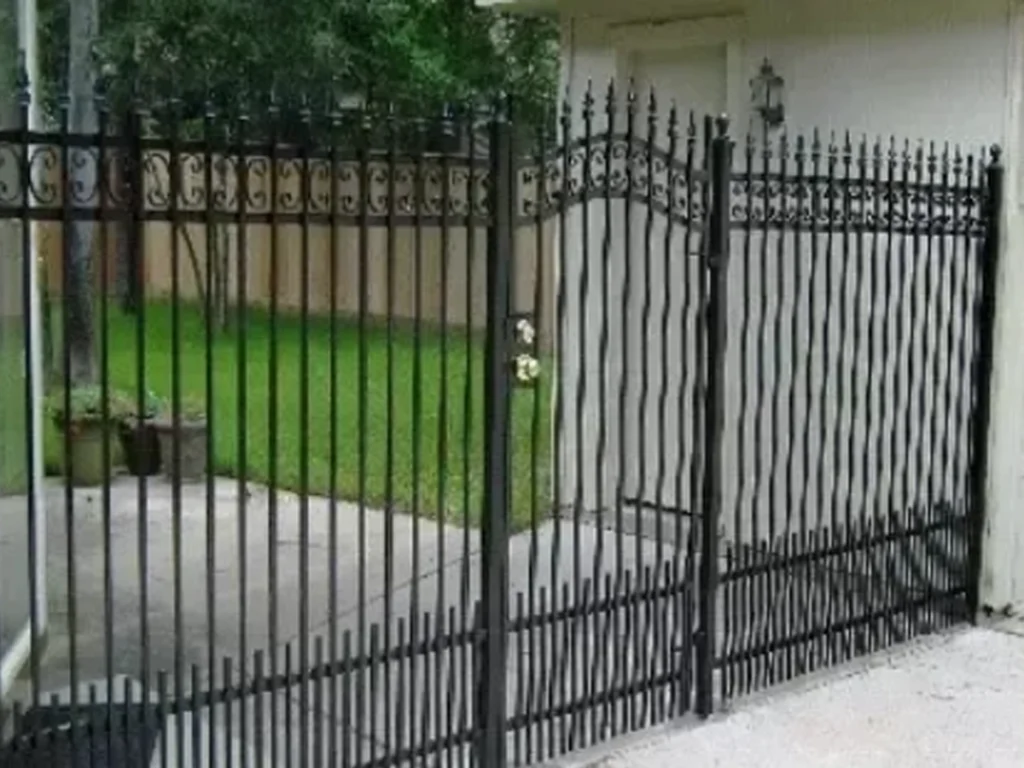
The most important residential fence gate features include strong construction, suitable materials, secure locking hardware, safe hinges and rollers, proper dimensions, access control, privacy, weather resistance, emergency access, dependable automation, entrapment protection, and a design that matches the property.
For an automatic residential gate, safety deserves special attention. ASTM F2200 covers automated vehicular gate construction, including residential Class I applications, while UL 325 addresses gate operator safety and entrapment protection. Therefore, homeowners should consider the gate, operator, sensors, access controls, and installation as one complete system rather than unrelated components.
At Everlast Gates & Fence, our view is simple. A residential gate should work reliably every day while fitting the way the household actually uses the property. The best design is not always the largest, most decorative, or most automated option. Instead, it is the gate that solves the property’s specific access, safety, privacy, and security needs.
Strong Structural Construction
The first essential feature is structural strength. Every other gate feature depends on a frame that remains stable through thousands of opening and closing cycles.
A residential fence gate carries its own weight while also dealing with movement, wind, vibration, temperature changes, and repeated use. Therefore, weak framing can eventually cause sagging, poor alignment, difficult latching, or uneven movement.
For larger driveway gates, the structural demands become even more important. A gate that looks attractive on installation day can become frustrating if its frame starts twisting or its posts begin moving.
Important structural considerations include:
- A rigid frame that supports the full gate width and weight
- Proper posts, foundations, hinges, rollers, and mounting hardware
In our experience, homeowners often focus first on decorative panels. However, we recommend starting with the frame and support system. Structural weakness is much harder to correct after installation.
A properly designed system should also suit the actual gate type. Swing gates place different forces on posts and hinges than sliding gates place on tracks, rollers, guides, and supports.
For additional installation considerations, see our guide to long lasting residential fence gate installation in Houston.
Durable Material Selection
The second essential feature is a material that suits the home, environment, security goal, and expected maintenance level.
There is no single best gate material for every property. Instead, homeowners should compare how different materials perform in their specific situation.
Common choices include wood, steel, iron, aluminum, and combinations of metal and wood.
For example, wood can provide warmth and privacy. Steel and iron can provide strength and a substantial appearance. Meanwhile, mixed material designs can combine visual warmth with a strong structural frame.
Two questions should guide the choice:
- How will the material respond to the property’s exposure and everyday use?
Houston conditions also make finish quality important. Heat, humidity, rain, and outdoor exposure can affect gate materials differently over time.
Therefore, material selection should include coatings, finishes, hardware, fasteners, and maintenance needs rather than focusing only on the visible panels.
Homeowners comparing materials can also review our article about choosing the right material for gate fabrication.
Reliable Locking and Security Hardware
The third residential fence gate feature is a dependable locking system.
A gate is part of the property’s security boundary. Therefore, the latch, lock, access hardware, and surrounding construction should work together.
A beautiful gate with weak hardware can create a false sense of security.
Depending on the property, useful security hardware can include mechanical locks, electric locks, magnetic locks, controlled access systems, or secure residential gate latches.
Two priorities matter most:
- The locking method should match the gate’s purpose and usage
- Hardware should remain accessible to authorized users without creating an obvious weak point
For pedestrian gates, the homeowner may want simple controlled access. For driveway gates, remote opening or integrated access controls may provide more convenience.
However, additional technology should never replace good basic construction.
Proper Gate Width and Clearance
The fourth essential feature is correct sizing.
Gate width affects convenience every single day. Therefore, dimensions should be determined from real vehicle movement and property conditions rather than guesswork.
A driveway gate needs enough clearance for vehicles to enter and exit safely. The correct width can depend on the driveway, approach angle, vehicle size, road position, posts, landscaping, and available operating space.
A gate that is too narrow may force difficult turns. Meanwhile, a gate that is unnecessarily wide may become heavier, more expensive, and harder to operate.
Before choosing dimensions, evaluate:
- The largest vehicle that regularly uses the entrance
- The turning path required to approach and pass through the gate
Homeowners should also consider delivery vehicles, trailers, landscaping equipment, and other occasional access needs.
For pedestrian gates, width should support comfortable daily access while fitting the surrounding fence layout.
Proper clearance also matters below and beside the gate. Ground movement, slopes, drainage, landscaping, and pavement can affect how freely a gate moves.
Safe Hinges, Rollers, Tracks, and Movement
The fifth feature is smooth and controlled movement.
The moving components of a gate determine how it feels during everyday use. They also affect wear, noise, alignment, and safety.
Swing gates depend heavily on strong hinges and properly supported posts. Sliding gates depend on suitable guides, rollers, tracks, or cantilever components.
A residential gate should not scrape, drag, wobble, bind, or move unpredictably.
Two signs of a well designed movement system are:
- Smooth travel throughout the entire opening and closing cycle
- Hardware sized appropriately for the gate’s weight and configuration
Movement components should also minimize dangerous pinch and entrapment areas.
Therefore, the way a gate moves deserves the same attention as the way it looks.
Smart Access Control
The sixth essential feature is convenient but controlled access.
Modern residential gates can use remotes, keypads, intercoms, smartphone controls, vehicle detection, or other access technologies.
The right system depends on who needs entry and how often.
For example, a household may want remote access for family members and temporary access for visitors. Another property may benefit from an intercom that lets the homeowner communicate with someone before opening the entrance.
Two valuable access features include:
- A convenient method for regular authorized users
- A controlled method for guests, contractors, or deliveries
Smart access can also improve daily convenience because homeowners do not need to leave their vehicles to operate a driveway gate manually.
However, security should remain a priority. Access credentials should be managed carefully, and homeowners should understand how their system behaves during communication or power failures.
For a deeper look at this technology, see our guide to maximizing security with gate access control systems in Houston.
Effective Privacy Design
The seventh residential fence gate feature is the right level of privacy.
Not every homeowner wants a fully enclosed entrance. Therefore, privacy should match the property’s goals.
A solid wood gate can block much of the view into a yard. Meanwhile, an ornamental iron gate can preserve visibility and create a more open appearance.
Some homeowners prefer a balanced design that blocks direct views while preserving airflow and architectural detail.
Consider these questions:
- Does the gate need to block views from the street?
- Should the entrance feel private, open, decorative, or somewhere between those options?
Privacy also depends on spacing between panels, gate height, surrounding fence design, driveway position, and sight lines.
A well designed residential fence gate should look intentional when paired with the rest of the property’s perimeter.
Weather Resistant Finishes and Components
The eighth essential feature is resistance to outdoor exposure.
Every residential gate spends its life outside.
Moisture can affect wood. Exposed metal can develop corrosion when protective coatings fail. Heat can also affect electronic gate equipment, batteries, seals, and other components.
That makes weather protection an entire system rather than a single coating.
Homeowners should consider:
- Protective finishes appropriate for the gate material
- Outdoor rated hardware and electrical components where automation is used
Drainage around posts, operators, tracks, and electrical equipment also deserves attention.
Additionally, routine inspections can catch finish damage, loose hardware, corrosion, or alignment problems before they become larger repairs.
In Houston, weather should be considered from the beginning of the design process rather than addressed only after visible damage appears.
Manual Release and Emergency Access
The ninth essential residential fence gate feature is a practical plan for emergencies.
Automatic gates depend on electrical and mechanical components. Therefore, homeowners should know what happens if power is lost or a component fails.
A manual release can allow authorized users to move the gate when the automatic operator cannot function normally.
However, the exact release method depends on the operator and system design. Homeowners should learn the manufacturer’s approved procedure instead of trying to force a stalled gate.
Two important questions to ask during installation are:
- How can the gate be opened safely during a power failure?
- How can authorized emergency access be maintained?
Backup power may also be appropriate for some properties.
Emergency access should be discussed during planning because a gate that cannot be operated when something goes wrong can create inconvenience or a serious access problem.
Dependable Automation and Gate Operator
The tenth feature is an operator correctly matched to the gate.
Automation can make a residential entrance much easier to use, but the operator must suit the gate’s size, weight, movement, and expected usage.
An operator that is poorly matched to the gate may experience unnecessary strain or inconsistent performance.
Therefore, homeowners should consider more than opening speed or remote control range.
Important factors include:
- Compatibility between the operator and gate design
- Professional setup of controls, limits, safety devices, and access equipment
Automation should improve convenience without sacrificing safe operation.
For homeowners considering an automated entrance, our article about choosing the ideal electric gate installation in Houston provides additional planning information.
Entrapment Protection and Safety Sensors
The eleventh feature is one of the most important for an automatic gate: entrapment protection.
An automatic gate is a large moving object. Therefore, its safety system should detect potential obstructions and respond as designed.
Important safety considerations include:
- Proper entrapment protection for relevant hazard zones
- Correct placement and testing of sensors and related devices
Safety equipment should never be bypassed simply because it causes a gate to stop.
Instead, repeated safety activation should be investigated to determine whether alignment, sensors, obstacles, wiring, or another component needs professional attention.
Design That Complements the Home
The twelfth essential feature is visual compatibility.
A residential fence gate occupies a prominent position on many properties. Therefore, it should feel connected to the architecture rather than appearing as an unrelated barrier.
Design choices can include gate shape, vertical or horizontal lines, panel spacing, ornamental details, material combinations, finish, color, and hardware.
Two useful design goals are:
- Match important visual elements already present on the home
- Create an entrance that still looks appropriate as exterior styles change
For a modern property, simple lines and restrained details may fit naturally. For a traditional home, decorative metalwork or classic wood detailing may provide a stronger connection.
However, appearance should not interfere with safe movement, security, or maintenance access.
The best custom gate designs make functional components feel like part of the overall design.
Houston homeowners interested in a more tailored entrance can also explore our article about custom gate design in Houston’s luxury home market.
How These 12 Residential Fence Gate Features Work Together
A residential gate performs best when all twelve features are planned as one system.
Strong framing supports reliable movement. Good materials improve durability. Proper dimensions make daily vehicle access easier. Secure hardware strengthens the perimeter. Access control manages entry. Privacy affects comfort. Weather protection supports long term performance.
Meanwhile, automatic systems require another layer of planning because the operator, sensors, controls, gate structure, and safety devices must function together.
That is why we recommend evaluating the entire entrance before selecting individual components.
For example, adding a powerful operator does not solve a badly aligned gate. Similarly, a strong gate does not solve poor vehicle clearance. A sophisticated access system cannot compensate for weak locking hardware.
The goal is balance.
A Practical Residential Gate Example
Consider a Houston homeowner replacing an older manual driveway gate.
The household wants better privacy and easier vehicle access. Family members enter several times each day, while visitors need occasional access.
A strong approach might include a properly sized metal frame, privacy panels, suitable outdoor finishes, a matched automatic operator, obstruction detection, controlled remote access, and an emergency release method.
However, another property may have very little room for a swinging gate.
In that case, a sliding configuration could make better use of the available driveway space.
This example shows why homeowners should avoid choosing a gate only from a photograph. The property itself determines many of the most important design decisions.
Common Mistakes to Avoid When Selecting a Residential Fence Gate
Many problems start before installation because important factors were overlooked during planning.
The first common mistake is choosing only by appearance. A gate must also fit the driveway geometry, fence structure, ground conditions, and daily traffic pattern.
The second mistake is treating automation as a simple add on.
An automated gate requires attention to operator compatibility, safety devices, control placement, electrical needs, emergency access, and maintenance.
Other mistakes include:
- Selecting hardware that is too light for the gate
- Ignoring drainage, soil movement, or clearance conditions
Homeowners should also avoid postponing maintenance until a gate completely stops working.
A small alignment problem can place extra stress on hinges, rollers, operators, locks, or frames.
Choosing Residential Fence Gate Features for a Houston Home
The right gate starts with the property rather than a generic product list.
Before installation, homeowners should review how the entrance is used, what level of privacy is desired, what vehicles must pass through, whether automation is necessary, and how the gate will connect to the surrounding fence.
For automatic systems, safety requirements deserve especially careful attention.
Professional planning can also help identify issues that are easy to miss during a basic visual inspection, such as operating clearances, support requirements, drainage, access equipment placement, and potential entrapment areas.
At Everlast Gates & Fence, we believe homeowners get better results when security, durability, safety, convenience, and appearance are considered together from the first design discussion.
At Everlast Gates & Fence, we also offer reliable gate and fence services tailored to residential and commercial properties. Specializing in installing, repairing, and maintaining iron and wood gates and fences along with expert solutions for electric gates, automatic gates, sliding gates, and driveway gates. We also provide professional gate diagnostics, access control systems, customized designs, and comprehensive security enhancements to meet your unique needs and let us ensure your gates are in expert hands so you can enjoy safety, style, and convenience with complete peace of mind.
Frequently Asked Questions
What should I look for in a residential fence gate?
Look for a strong frame, suitable materials, reliable hardware, proper dimensions, smooth operation, weather resistance, and a design that fits your property. If the gate will be automated, also consider a correctly matched operator, controlled access, emergency operation, and appropriate entrapment protection devices.
How wide should a residential driveway gate be?
The correct width depends on the driveway, vehicle sizes, approach angle, turning radius, posts, and surrounding space. Rather than choosing a universal measurement, the opening should be planned around the largest vehicles that regularly use the property and the path those vehicles take when entering and leaving.
Is a sliding gate or swing gate better for a home?
Neither design is automatically better. Swing gates can work well when enough clear space exists for their opening arc. Sliding gates can be useful where preserving driveway depth is important. The best choice depends on available side space, slope, driveway layout, gate weight, appearance, and automation requirements.
Can an existing residential fence gate be automated?
Some existing gates can be automated, but the gate should first be evaluated for structural condition, alignment, smooth movement, dimensions, hardware, and compatibility with a suitable operator. Automation should not be used to hide mechanical problems. Safety devices and the overall installation must also be considered when converting a manual gate.
What safety features should an automatic residential gate have?
An automatic residential gate should use appropriate entrapment protection and safety equipment for its design and operating hazards. Depending on the system, these can include photoelectric sensors, sensing edges, obstruction response, protected rollers, warning signs, and correctly positioned controls. A qualified installer should follow the operator manufacturer’s instructions and applicable requirements.
Conclusion
The best residential fence gate is not defined by one feature.
Instead, dependable performance comes from combining strong construction, durable materials, secure locking hardware, proper sizing, smooth movement, controlled access, privacy, weather protection, emergency access, reliable automation, entrapment protection, and attractive design.
These 12 residential fence gate features help create an entrance that works for everyday life while supporting security, convenience, safety, and curb appeal.
Most importantly, automated residential gates should be approached as complete systems. The physical gate, operator, access controls, sensors, mounting hardware, and safety equipment all affect how reliably the entrance performs.
At Everlast Gates & Fence, we also offer reliable gate and fence services tailored to residential and commercial properties. Specializing in installing, repairing, and maintaining iron and wood gates and fences along with expert solutions for electric gates, automatic gates, sliding gates, and driveway gates. We also provide professional gate diagnostics, access control systems, customized designs, and comprehensive security enhancements to meet your unique needs and let us ensure your gates are in expert hands so you can enjoy safety, style, and convenience with complete peace of mind.
If you are planning a new gate or upgrading an existing residential entrance in Houston, professional evaluation can help you choose features that match your property instead of paying for options you do not need.
Contact Everlast Gates & Fence
Ready to improve your home’s entrance with a secure and carefully planned residential fence gate?
Contact Everlast Gates & Fence to discuss your property, security goals, gate design, access needs, and automation options.
Phone: 210 940 1544
Location: 613 Northwest Loop 410 ste 200, San Antonio, TX 78216
