


Solar Gate Security for Modern Wylie Properties
A solar gate can continue supporting controlled property access without requiring a long electrical connection from the nearest building.
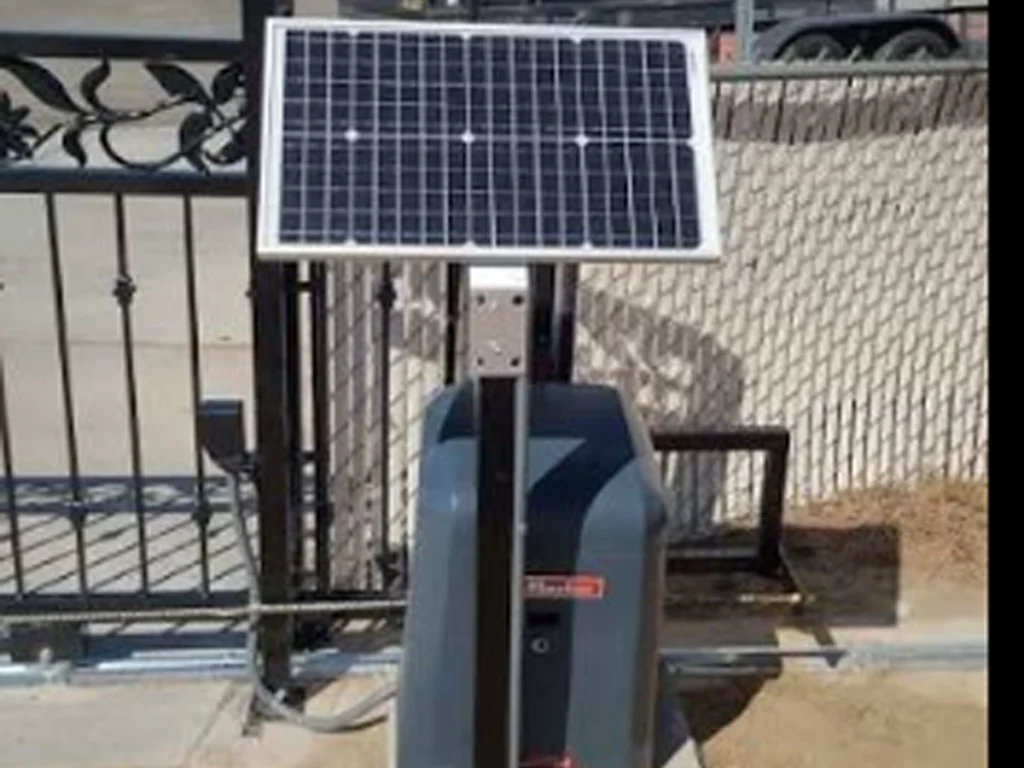
That fact can change how homeowners, ranch operators, property managers, and business leaders approach gate automation in Wylie, Texas.
Instead of relying only on a fixed electrical line, a solar gate collects sunlight and converts it into usable electrical power. The system then stores that energy inside a battery that supports the gate operator and its connected access devices.
This setup can provide a practical answer for entrances located far from a home, office, barn, warehouse, or electrical panel.
However, solar power alone does not make an automated gate dependable. Long term results depend on correct panel placement, accurate energy calculations, strong mounting hardware, suitable batteries, safe controls, and professional installation.
The United States Department of Energy explains that photovoltaic panels generate electricity by using materials that absorb sunlight and convert its energy into electrical power. A complete system also includes other components that manage, store, and deliver that electricity.
Therefore, a well planned solar gate should be viewed as a complete access system rather than a panel attached to an operator.
For decision makers in Wylie, the goal is not simply to purchase renewable technology. The goal is to create reliable access, reduce unnecessary electrical work, and protect the entrance during daily use.
AI Overview
A solar gate uses a photovoltaic panel, charge controller, battery, gate operator, and safety devices to automate an entrance.
It can serve homes, estates, rural land, neighborhood entrances, storage sites, farms, and commercial properties where regular electrical access may be difficult.
Its greatest strengths include flexible installation, stored battery power, reduced dependence on a distant electrical connection, and support for modern access controls.
Still, performance depends on proper system sizing, clear sunlight, strong weather resistant parts, and routine professional care.
What Is a Solar Gate and How Does It Work?
A solar gate is an automated entry gate that receives operating power from a solar energy system.
The panel collects sunlight during the day and produces direct current electricity. A charge controller then manages that electricity before sending it to the battery.
The battery stores energy until the operator needs power to open or close the gate.
Because the operator runs from stored energy, the gate may work during evening hours or periods of reduced sunlight. However, its operating time depends on the battery capacity, gate weight, daily traffic, and installed accessories.
A complete solar gate system commonly includes the following parts.
- A photovoltaic panel collects sunlight and produces electrical power.
- A charge controller manages the energy entering the battery.
- A deep cycle battery stores energy for later gate movement.
- An automated operator moves the gate along its normal path.
- Access devices send approved opening commands to the operator.
- Safety sensors help detect vehicles, people, animals, or obstructions.
The Department of Energy notes that solar modules are only one part of a complete photovoltaic system. Therefore, a larger panel does not automatically solve every power or performance issue.
Every part must work together under expected traffic, weather, and access conditions.
For example, a lightly used residential gate may require less stored energy than a commercial entrance opening many times daily.
Likewise, an intercom, camera, keypad, wireless receiver, and lighting system will increase the total electrical demand.
Therefore, professional planning should begin with actual use rather than a general package size.
Why Is a Solar Gate a Strong Security Investment?
A gate creates a controlled boundary between public space and private property. Automation makes that boundary easier to manage during regular entry and exit.
A solar gate adds another advantage because it can bring automated access to places where extending utility power may be difficult.
However, the gate should support a larger security plan rather than acting as the only protective measure.
A well designed system can strengthen security in several practical ways.
- It allows owners to use remotes, keypads, intercoms, cards, or mobile access tools.
- It can create a clear entry point for visitors, contractors, deliveries, and service teams.
For property owners comparing traditional and renewable gate systems, the real question is whether each option supports dependable access.
A solar gate may be especially valuable when conventional wiring requires long trenching, pavement work, landscape disruption, or major electrical upgrades.
It may also serve land where the entrance sits far from an occupied building.
Still, security depends on the whole installation. A strong operator cannot correct a weak gate frame, poor hinges, damaged track, loose posts, or unsafe access layout.
That is why experienced assessment should cover both the solar equipment and the physical gate.
Property owners planning a complete automated entrance may also review these important electric gate installation factors before choosing an operator.
Which Wylie Properties Can Benefit Most?
Solar automation is not limited to one kind of property.
It may support suburban homes, larger estates, rural properties, agricultural land, managed communities, industrial sites, storage facilities, and selected business entrances.
However, each setting creates different design needs.
Residential Homes
A homeowner may choose a solar gate to add controlled driveway access without extending a long power line.
The system may support daily family use while providing access for guests, deliveries, maintenance crews, and emergency needs.
- The gate should match the available driveway space.
- The operator should match the gate weight and movement style.
- Safety sensors should cover likely vehicle and pedestrian paths.
- The panel should receive dependable sunlight throughout the year.
Estates and Rural Properties
Large properties often place entrances far from the main building.
Therefore, solar automation may reduce the need for long electrical trenches across driveways, fields, or landscaped areas.
- Battery storage should support the expected number of daily cycles.
- Wireless devices should be tested across the actual property distance.
- Posts and panel mounts should resist strong wind and impact.
- Manual access procedures should remain available during service needs.
Neighborhood and HOA Entrances
Managed communities often experience higher traffic than single family homes.
Therefore, their solar gate systems require careful energy calculations, strong hardware, and clear traffic planning.
- The system must support peak entry and exit periods.
- Visitor access should remain simple without weakening control.
- Management should define maintenance and emergency responsibilities.
- Equipment should support the community’s chosen access process.
Commercial and Industrial Properties
Businesses need gates that support operations as well as security.
A system that causes frequent delays may create delivery problems, employee frustration, or unsafe vehicle queues.
- Gate speed should match safe operational needs.
- Access records may be useful for staff and vendor management.
- Backup procedures should support business continuity.
- Commercial duty hardware should match traffic demand.
Decision makers should avoid selecting a residential package for a high use business entrance. The initial savings may be lost through battery strain, slow movement, and frequent repairs.
How Does Solar Power Improve Gate Reliability?
Solar energy can improve flexibility because the gate does not require a direct power cable extending from the nearest occupied structure.
However, solar does not mean unlimited energy.
The battery must receive enough daily charging to replace the power used by the operator and accessories.
Reliability depends on several connected factors.
- The panel must receive enough direct sunlight during useful charging hours.
- The battery must store enough energy for regular use and reserve demand.
- The operator must move the gate without unnecessary mechanical resistance.
- Connected equipment must remain within the planned power budget.
- Weather conditions must not damage exposed equipment or connections.
A shaded panel can reduce charging performance. Likewise, a dragging gate can force the operator to consume more energy during each cycle.
Therefore, electrical and mechanical efficiency must be considered together.
The Department of Energy recommends evaluating solar resource conditions and other site factors before finalizing a photovoltaic design. Online tools can provide early estimates, although a site specific assessment remains important.
For a solar gate, this assessment should include trees, buildings, fences, seasonal shadows, panel direction, panel angle, and future landscape growth.
A strong design should also allow room for changes in daily use.
For example, a quiet residential gate may later gain a camera, keypad, intercom, or delivery access system. Planning some reserve capacity may reduce future limitations.
Why Do Durable Solar Panels Matter in Wylie?
Your selected priority was durable panels made for Texas heat, storms, wind, and debris.
That focus is important because outdoor access equipment remains exposed every day.
North Texas regularly experiences intense sunlight, high summer heat, heavy rain, strong winds, and thunderstorms. The National Weather Service provides ongoing information for the Dallas and Fort Worth region, including heat, rainfall, flooding, and storm risks.
A solar gate panel should therefore be treated as permanent outdoor equipment rather than a light accessory.
Panel strength matters, although the mounting structure is equally important.
A high quality panel can still fail when attached to a weak bracket, unstable post, or poorly placed frame.
A durable installation should address the following areas.
- The panel mount should resist wind movement and repeated vibration.
- Exposed wiring should remain protected from water, animals, tools, and landscaping equipment.
- Connections should remain secure inside suitable weather resistant enclosures.
- The panel angle should support sunlight collection without creating unnecessary wind stress.
- The location should reduce impact risks from vehicles, branches, and maintenance work.
Heat also affects batteries, controllers, operators, and other electronic parts.
Therefore, equipment boxes need suitable placement and ventilation based on manufacturer requirements.
Placing a battery inside direct summer sunlight may raise operating temperatures and shorten useful service life.
Likewise, placing the entire system under deep shade may protect equipment from heat while preventing adequate panel charging.
Professional design balances both needs rather than solving one problem while creating another.
How Should a Solar Gate Be Prepared for Storms?
Storm preparation begins during design, not after severe weather appears.
A gate system contains several exposed elements, including a large moving structure, posts, hinges, tracks, electrical controls, batteries, access devices, and the solar panel.
Each part must remain stable under local conditions.
Strong Panel Support
The solar panel should use secure mounting hardware designed for outdoor exposure.
The supporting post or frame should remain rigid without excessive movement during wind.
- Fasteners should match the mounting system and environment.
- Brackets should receive periodic checks for movement or corrosion.
- The installation should avoid weak structures or unstable fence sections.
- Panel placement should limit likely impact from falling limbs.
Protected Electrical Parts
Water intrusion can damage batteries, controllers, terminals, and communication devices.
Therefore, outdoor electrical parts need suitable enclosures and protected cable entries.
- Wiring should not remain loose or exposed near moving gate parts.
- Conduit and cable paths should avoid low points where water may collect.
- Boxes should close correctly after every inspection.
- Damaged seals should receive prompt replacement.
Strong Gate Construction
A strong solar system cannot compensate for a gate that bends, sags, or moves poorly.
Wind can place added force on solid gates because their surfaces catch more air than open designs.
- Posts should support the gate weight and movement forces.
- Hinges, rollers, tracks, and guides should remain properly aligned.
- Welded connections should receive inspection for cracks or movement.
- Gate design should account for wind exposure at the actual site.
Battery Reserve
Cloud cover may reduce charging, although the battery can provide stored energy.
Still, reserve capacity must match expected gate use.
- High traffic entrances may require more storage than quiet driveways.
- Additional accessories increase total battery demand.
- Aging batteries may store less energy than new batteries.
- Storm related access plans should include manual operation procedures.
A weather ready solar gate is not a system that can never fail.
Instead, it is a system designed with realistic risks, reserve capacity, safe hardware, and clear recovery steps.
What Safety Features Should Every Automated Gate Include?
Security should never come at the expense of safe movement.
Automated gates can create entrapment and impact risks when systems lack proper design, installation, or maintenance.
UL Solutions explains that UL 325 addresses safety requirements for gate operators, including entrapment protection. It also describes the relationship between gate operators and access control equipment used at residential communities and commercial facilities.
Therefore, decision makers should consider safety devices essential parts of the project.
A professional system may include monitored photo sensors, contact edges, vehicle detection devices, warning signs, controls, and protected gate zones.
The exact arrangement depends on the gate type and surrounding site.
Entrapment Protection
Entrapment zones can occur where a moving gate approaches a post, wall, fence, guide, or fixed object.
- The site should be reviewed for every possible pinch or crush area.
- Approved protection devices should match the selected operator.
- Devices should remain aligned, connected, and regularly tested.
- Damaged safety equipment should receive immediate attention.
Pedestrian Separation
Vehicle gates should not become the normal pedestrian path when a safer separate entrance is practical.
- Walkways should remain clear from moving gate travel.
- Controls should not require users to reach through the gate.
- Children should not play on or near automated gates.
- Signs should communicate important operating restrictions.
Vehicle Detection
A closing gate should not strike a vehicle stopped within its movement area.
- Detection zones should match common vehicle positions.
- Drivers need enough space to clear the gate safely.
- Delivery and service vehicles may require extra clearance.
- Exit devices should operate consistently during busy periods.
Safety planning should remain part of every maintenance visit rather than receiving attention only after a problem.
Which Gate Style Works Best With Solar Automation?
Solar power can support swing gates, sliding gates, and certain specialty entry systems.
However, the best style depends on space, grade, wind exposure, traffic, and gate construction.
Swing Gates
Swing gates move inward or outward through an arc.
They may suit properties with enough clear driveway space and stable hinge posts.
- The driveway must provide room for the full movement path.
- Slopes can affect safe opening and closing.
- Wind may place added pressure on wide solid gate panels.
- Strong frames and hinges support smooth operator performance.
Property owners considering this layout can review how a professional swing gate can add security and property value.
Sliding Gates
Sliding gates move sideways along the entrance.
They may work well where driveway depth is limited, although they need adequate side storage space.
- The gate needs enough room beside the opening.
- Tracks, rollers, or cantilever hardware must remain aligned.
- Debris should not interfere with moving components.
- Safety devices must protect the full travel area.
For further planning, this Wylie sliding gate installation guide explains considerations for local properties.
Custom Gates
Custom gates can match the architecture, security needs, and entrance width of a property.
However, decorative features, solid panels, and heavy materials affect operator demand.
- Gate weight must remain within the operator rating.
- Wind load should be considered for solid designs.
- Frames should resist sagging and twisting.
- Solar capacity should match the final gate, not an early concept.
The most attractive design should also remain safe, balanced, and easy to move.
What Access Controls Can a Solar Gate Support?
A correctly sized solar gate may support many modern access tools.
However, every device adds electrical demand and may affect battery reserve.
Common options include remote transmitters, wireless keypads, card readers, telephone entry systems, mobile controls, cameras, and vehicle detection devices.
The ideal system depends on who enters the property and how access should be approved.
Residential Access
A household may need simple entry for family members with controlled options for guests and contractors.
- Remote transmitters provide fast vehicle access.
- Keypads can provide temporary or individual entry codes.
- Intercoms allow residents to speak with visitors.
- Mobile controls may support remote entry when properly configured.
Community Access
Neighborhood systems often need different permissions for residents, guests, vendors, and management.
- Resident credentials should be easy to manage.
- Visitor access should avoid long vehicle lines.
- Lost credentials should be removed promptly.
- Emergency procedures should be clearly documented.
Commercial Access
Businesses may require access schedules, employee permissions, delivery controls, and activity records.
- Managers should assign access based on operational roles.
- Former employee credentials should be disabled quickly.
- Vendors may receive limited schedules or temporary permissions.
- Backup entry methods should support essential operations.
Readers exploring connected entry options may also review modern gate access control choices.
How Much Maintenance Does a Solar Gate Need?
A solar gate is often described as low maintenance, although low maintenance does not mean no maintenance.
Its mechanical, electrical, and safety parts still require inspection and care.
A practical service plan should cover the complete system.
Solar Equipment Care
Dust, leaves, bird debris, and nearby growth can reduce sunlight reaching the panel.
- The panel surface should remain reasonably clean.
- Branches should not create new shade or impact risks.
- Mounting brackets should remain tight and stable.
- Wiring should remain protected and firmly connected.
Battery and Controller Care
Battery condition affects the system’s ability to operate after dark or during cloudy weather
- Terminals should remain clean and secure.
- Enclosures should remain dry and properly closed.
- Aging batteries should be replaced before repeated failures begin.
Mechanical Gate Care
A gate that moves freely uses energy more efficiently than a dragging gate.
- Hinges, rollers, wheels, guides, and tracks should remain aligned.
- Debris should be removed from movement paths.
- Loose hardware and cracked welds should receive prompt repair.
- Unusual sounds should be investigated before damage grows.
Safety Device Care
Safety equipment must remain active and correctly positioned.
- Sensors should be tested during routine inspections.
- Lenses should remain clean and aligned.
- Damaged cables should receive immediate replacement.
- The operator should respond correctly when a safety device activates.
A useful maintenance plan should follow the manufacturer’s instructions and the actual use level of the entrance.
High traffic gates normally require closer attention than lightly used residential systems.
For additional guidance, property owners can review these gate maintenance practices for Wylie homes.
What Common Solar Gate Mistakes Should Be Avoided?
Many reliability problems begin with planning shortcuts.
The following mistakes can reduce performance even when the equipment appears suitable.
Choosing a Panel Without Calculating Demand
A panel should not be selected only by price or physical size.
- Daily gate cycles must be estimated honestly.
- Every connected accessory should be included.
- Seasonal sunlight conditions should be considered.
- Reserve power should support realistic cloudy periods.
Ignoring Shade
A location may appear sunny during one site visit yet receive long shadows during another season.
- Trees may block light during part of the day.
- Buildings may create shadows as the sun changes position.
- Future plant growth may reduce panel exposure.
- A professional assessment should consider year round conditions.
Using Weak Mounting Hardware
A secure panel requires more than a basic bracket.
- Wind movement can loosen weak connections.
- Vibration can damage wiring over time.
- Rust can weaken exposed metal parts.
- Impact risks should influence panel location.
Oversizing the Gate and Undersizing the Operator
Heavy gates place greater demand on operators and batteries.
- The operator should match gate weight and length.
- The gate should move smoothly before automation begins.
- Solid surfaces should receive wind load consideration.
- Frames should resist sagging and twisting.
Ignoring Safety Standards
An automatic gate should never be treated like a simple household appliance.
- Entrapment zones need professional review.
- Approved safety devices must match the operator.
- Pedestrian access should remain separated where practical.
- Users should understand safe operating procedures.
How Should Decision Makers Compare Solar Gate Proposals?
A strong proposal should explain how the system was selected.
It should not present a panel, battery, and operator without connecting them to the property’s real needs.
Ask each contractor to explain the following details.
- How many daily gate cycles the system is designed to support.
- How panel size and battery capacity were calculate
- Which safety devices protect each movement and entrapment area.
- How the gate can be operated during service or battery failure.
- Which maintenance tasks the owner must complete.
- Which warranties apply to panels, batteries, operators, and workmanship.
- Whether future access devices can be added without replacing major components.
- How the gate frame, hinges, rollers, and posts were evaluated.
Decision makers should also compare lifecycle value rather than only installation price.
The lowest proposal may omit capacity, safety devices, weather protection, structural reinforcement, or future expansion.
A complete design may cost more initially while reducing service problems and operational delays later.
Is a Solar Gate Right for Every Property?
A solar gate is useful in many settings, although it is not automatically the best choice for every entrance.
Properties with deep shade, unusually high traffic, heavy gates, or large accessory loads may require a more detailed design.
In some cases, a standard electrical connection may provide a better solution.
A professional assessment should answer four main questions.
- Does the site receive enough useful sunlight?
- Can the system store enough energy for expected use?
- Can the gate move safely and efficiently?
When the answer to all four questions is supported by clear planning, solar automation may provide dependable security and convenient access.
When one answer remains uncertain, the design should be revised before installation.
The best contractor will explain limitations instead of promising that one package works everywhere.
Frequently Asked Questions About Solar Gates
1. Will a solar gate work on cloudy days?
Yes, a properly designed solar gate can use energy stored in its battery during cloudy periods. However, operating time depends on battery capacity, gate traffic, connected accessories, battery age, and available charging. The system should be sized for realistic local conditions rather than ideal sunlight alone.
2. Can a solar gate work at night?
Yes. The solar panel charges the battery during daylight, while the battery supplies power when the gate operates at night. Therefore, nighttime use does not require sunlight at that moment. Reliable performance still depends on correct charging, storage capacity, and routine battery testing.
3. Can a solar gate support a keypad and intercom?
Many solar gate systems can support keypads, intercoms, remotes, receivers, cameras, and other controls. However, each accessory increases electrical demand. The installer should calculate the complete power load before selecting the panel, controller, and battery system.
4. How often should a solar gate receive service?
Service frequency depends on traffic, gate weight, weather exposure, equipment type, and manufacturer requirements. Owners should perform regular visual checks and schedule professional inspections. High use community or commercial gates usually need more frequent attention than lightly used residential entrances.
5. What happens when the battery fails?
A failed battery may prevent normal powered operation. A well planned system should include a safe manual release process and documented service procedure. Owners should learn that process before an emergency occurs and keep the release area secure, accessible, and properly maintained.
6. Are solar gates reliable during power outages?
A solar gate does not depend on a direct utility connection when it operates from its charged battery system. Therefore, a utility outage may not stop normal operation. However, the gate still depends on healthy batteries, working controls, safe hardware, and sufficient stored energy.
7. Can trees prevent a solar gate from working?
Trees can reduce charging when branches shade the panel during important daylight hours. Seasonal growth may also change panel exposure over time. An installer should study the site carefully and choose a position that receives dependable sunlight without creating avoidable impact or maintenance risks.
8. Can an existing automated gate be converted to solar power?
Some existing gates may be suitable for solar conversion. However, compatibility depends on the operator, voltage, gate condition, daily traffic, access devices, and available sunlight. A professional should inspect the complete system before recommending a conversion.
9. Does a solar gate require a special gate design?
Not always. Solar power can support several swing and sliding gate designs. However, the gate should move freely, remain structurally sound, and match the operator. Heavy, damaged, poorly balanced, or wind exposed gates may require repairs or reinforcement before automation.
10. How long will a solar gate battery last?
Battery life varies by battery type, charging pattern, temperature, discharge depth, system demand, and maintenance. Because Texas heat can affect battery performance, placement and ventilation matter. Regular testing helps owners replace a weakening battery before it causes repeated access problems.
Conclusion: Renewable Power With Practical Security
A solar gate can connect renewable energy with controlled automated access for many Wylie properties.
It may serve suburban homes, estates, ranches, communities, commercial sites, and entrances located far from dependable electrical service.
However, long term success requires more than choosing a panel.
The system must include correctly sized energy storage, a suitable gate operator, safe access controls, strong mounting hardware, protected wiring, and a gate that moves efficiently.
Texas weather should also guide every design decision.
Durable solar panels, rigid mounts, protected enclosures, secure wiring, strong frames, and tested batteries can help the system handle heat, rain, wind, and debris.
Most importantly, safety must remain central.
A secure gate should protect property while also reducing risks to drivers, pedestrians, workers, children, and animals.
Everlast Gates & Fence helps Wylie property owners evaluate their entrances, compare automation options, and plan solar gate systems around actual traffic, weather exposure, safety needs, and long term goals.
Request a Professional Solar Gate Assessment
A reliable solar gate begins with an accurate site review.
At Everlast Gates & Fence, we also offer reliable gate and fence services tailored to residential and commercial properties. Specializing in installing, repairing, and maintaining iron and wood gates and fences along with expert solutions for electric gates, automatic gates, sliding gates, and driveway gates. We also provide professional gate diagnostics, access control systems, customized designs, and comprehensive security enhancements to meet your unique needs and let us ensure your gates are in expert hands so you can enjoy safety, style, and convenience with complete peace of mind.
Contact Everlast Gates & Fence to discuss panel placement, battery capacity, gate design, access controls, weather protection, safety devices, and maintenance needs.
Contact us at
Phone: (469) 663-9302
Location: 3806 Old Parker Rd Suite E, Wylie, TX 75098
