


Residential Fence Gate Installation Supports a Safer Home
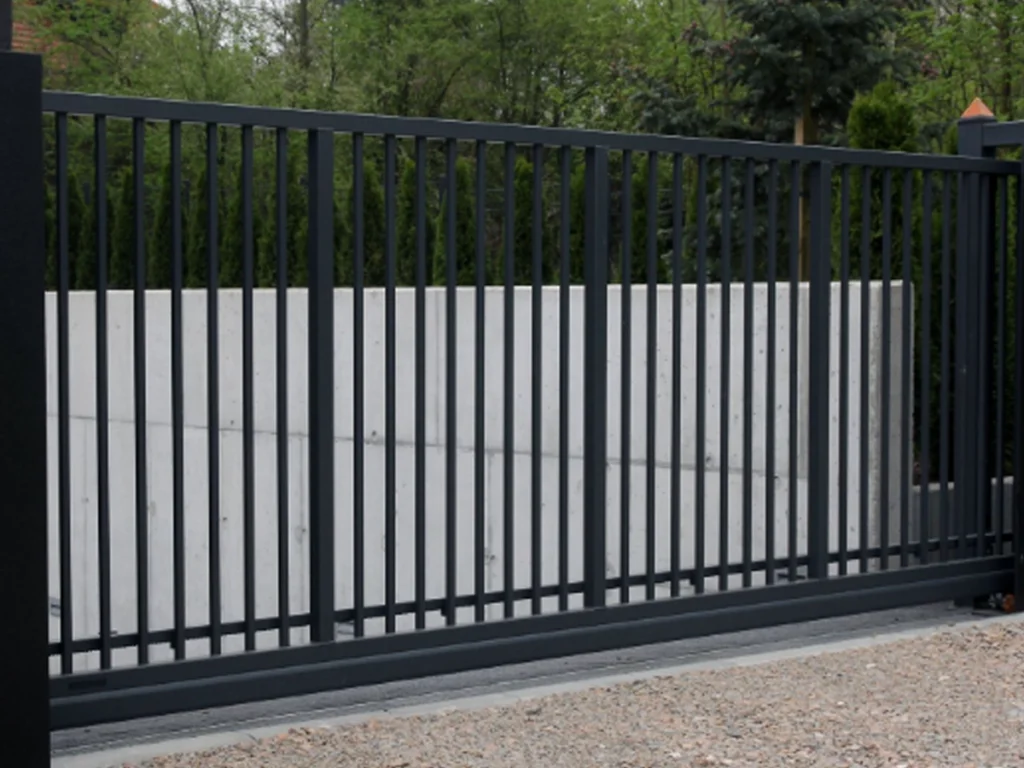
A striking safety fact shows why gates deserve careful planning. The U.S. Consumer Product Safety Commission reported that nearly 25,000 people were involved in automatic gate related injuries from 1990 through 2000. About 9,000 were children under age 15. Those historical figures apply to powered gates, not every residential fence gate. Still, they show why gate design, movement, access, and safe operation should never be treated as minor details.
Residential fence gate installation can support a safer home by creating a defined and controllable opening within a property boundary.
A fence alone establishes separation. However, people still need a safe place to enter and leave. Therefore, the gate becomes the part of the fence system that manages movement.
A well planned residential gate can support safer property use through dependable closing, suitable latches, strong supports, thoughtful placement, clear access routes, and appropriate materials.
It may also help families manage access to backyards, side yards, pools, gardens, driveways, and other outdoor spaces.
However, no gate can guarantee personal security or prevent every accident. Good lighting, supervision, locks, cameras, alarms, and other measures may still be useful.
Key safety goals include:
- Create one clear and manageable point of entry through the fence.
- Ensure the gate closes, latches, and moves as intended during normal use.
The following eight areas explain how good residential fence gate installation can support a safer Frisco property.
Residential Fence Gate Installation Creates a Clear Access Point
A fence defines where a property boundary exists.
However, an uncontrolled opening can weaken that boundary.
A properly installed gate creates a deliberate place for people to enter and leave.
That change may appear simple. Yet it improves how homeowners manage movement around the property.
- Visitors have a clear place to approach and enter.
- Homeowners gain a defined point where a latch, lock, or access system can be used.
This idea closely matches the basic principle behind physical access control.
A residential gate is much simpler than a commercial access system.
Still, the basic concept remains useful.
Instead of several informal openings in a fence, homeowners can direct movement toward one planned entrance.
For example, a side gate can keep contractors or lawn crews from walking through a garage or home.
Likewise, a backyard gate can create a clear transition between front and private outdoor areas.
A driveway gate can define where vehicles should enter.
The gate does not guarantee that unauthorized people cannot cross a property boundary.
However, it can make the intended entrance obvious.
It can also support locks, cameras, intercoms, and lighting when homeowners want additional layers.
For homeowners reviewing broader security choices, this guide to smart fence gates and home security in Frisco offers related ideas.
Dependable Closing Helps Preserve the Fence Boundary
A fence gate cannot support a boundary if it regularly stays open.
Therefore, reliable closing is one of the most important parts of residential fence gate installation.
The hinges, frame, latch, posts, and clearances must work together.
If one part moves out of position, the gate may become difficult to close.
- Good alignment helps the latch meet its receiver consistently.
- Stable supports help reduce unwanted movement at the hinge side.
Imagine a gate that begins rubbing against the ground.
Someone may stop closing it fully because lifting it every time becomes frustrating.
Likewise, a latch that constantly misses its receiver may eventually be left unsecured.
Those small operating problems can weaken the usefulness of the whole fence.
Professional planning helps address those risks at installation.
Gate width matters.
Weight matters.
The framing method matters.
Ground conditions also matter.
A wide gate can place greater demands on the hinge post than a narrow pedestrian gate.
Therefore, structural choices should fit the actual opening.
Homeowners should test a new gate several times.
It should move without excessive effort.
It should not need to be lifted by hand.
The latch should meet naturally.
These simple checks can reveal whether the gate and surrounding structure are working together.
The Right Latch Can Help Limit Unplanned Access
The latch is a small component with a large responsibility.
It determines whether a closed gate remains closed.
Therefore, homeowners should select a latch according to how the gate will be used.
- A dependable latch can help prevent casual opening.
- A lock can add another access layer when the property requires one.
A backyard gate may use simple mechanical hardware.
A side entrance may need a lock.
A driveway or automated gate may use electronic access control.
Different applications need different solutions.
Residential systems can range from simple keypads to more advanced connected controls.
However, technology should not replace sound physical construction.
A sophisticated keypad has limited value if the gate does not close correctly.
Likewise, a strong lock cannot correct a weak post or failing hinge.
Therefore, homeowners should treat the latch as one part of a complete system.
The gate should close correctly first.
Then the locking method can support the intended access policy.
Frisco homeowners considering electronic options can also review gate access control solutions for Frisco properties.
A Good Gate Can Help Separate Children From Certain Areas
Families often use fencing to create boundaries between different outdoor spaces.
A gate can help preserve those separations when designed and used properly.
This can matter around pools, streets, driveways, gardens, workshops, and other areas requiring additional care.
- A controlled gate can make boundaries clearer for family members.
- Suitable closing and latching can reduce the chance that an opening remains unintentionally accessible.
Pool barriers deserve special attention.
A normal backyard gate should never automatically be assumed to meet pool safety rules.
Local requirements may regulate gate height, latch placement, opening direction, spacing, and other details.
Therefore, homeowners planning a pool barrier should confirm applicable requirements before installation.
Gate safety is also important when the gate itself is powered.
Accordingly, powered gates require more safety planning than ordinary manual gates.
Parents should still supervise children around any gate.
A gate is a physical boundary, not a replacement for supervision.
Residential Fence Gate Installation Can Help Manage Pets
A residential gate can also make outdoor pet management more practical.
Many homeowners rely on fenced yards to give dogs controlled outdoor space.
However, the fence is only as useful as its openings.
A gate that does not latch consistently can create an escape opportunity.
- Reliable closing helps maintain the fenced enclosure.
- Suitable spacing can reduce obvious openings around the gate.
Pet size should influence design.
A small dog may fit through gaps that would never concern a larger animal.
Some dogs may also dig, jump, or push against gates.
Therefore, the gate design should reflect the specific animal rather than a general idea of pet security.
Ground clearance deserves attention.
A gate needs enough room to open without dragging.
However, excessive space beneath it may be unsuitable for some pets.
The correct balance depends on the surface, slope, drainage, gate movement, and animal size.
Homeowners should also inspect latches.
Some pets can push simple hardware with surprising persistence.
A more secure latch may be useful where this is a concern.
Still, no gate can guarantee that a pet will never escape.
Behavior, supervision, fence height, surrounding objects, and ground conditions also matter.
The goal is to create a practical barrier that supports the household’s normal pet management plan.
Proper Gate Placement Can Create Safer Walking Routes
Where the gate sits can matter almost as much as how it is built.
A badly placed gate can send people across slopes, muddy areas, landscaping, or vehicle paths.
A thoughtfully placed gate can create a more natural walking route.
- Gate placement can direct people toward established paths.
- Good positioning can reduce unnecessary crossings between pedestrians and vehicles.
Start by studying how people already use the property.
Where do residents walk from the driveway?
Where do children move between the house and backyard?
These questions help identify a useful gate position.
Lighting matters too.
A gate used after dark may benefit from nearby exterior lighting.
Steps and uneven surfaces should also be considered.
A gate opening directly toward an unexpected drop or obstacle may be inconvenient.
The opening direction deserves similar attention.
The gate should have enough room to move without striking walls, landscaping, furniture, or parked vehicles.
For a broader discussion of entrance planning, homeowners can read about designing a secure and welcoming Frisco entrance.
A safe route often feels obvious after installation.
However, achieving that simplicity usually requires planning first.
Strong Materials and Hardware Reduce Avoidable Problems
Residential gate safety also depends on physical condition.
Loose hinges, damaged boards, unstable posts, or corroded connectors can change how a gate moves.
Therefore, durable materials and suitable hardware matter.
- Hinges should suit the size and weight of the gate.
- Supports should remain stable enough for dependable operation.
Wood gates need additional attention because exterior wood responds to moisture and weather.
Material choice, drainage, finishing, and maintenance can influence long term performance.
For metal gates, corrosion and connection condition deserve inspection.
No material is completely maintenance free.
The best choice depends on the home’s design, local exposure, gate size, privacy needs, and maintenance expectations.
Hardware should also match the surrounding materials.
Fasteners intended for dry indoor use may not be suitable outdoors.
Likewise, decorative hinges should not be chosen only because they look attractive.
They must also support the gate.
A useful installation balances appearance and structure.
The result should look appropriate for the home while still moving reliably.
Frisco homeowners considering wood options can review wood gate installation guidance for Frisco properties.
Routine Gate Checks Can Reveal Safety Problems Early
Installation is only the beginning.
Every gate changes with use and outdoor exposure.
Therefore, routine observation is one of the simplest ways homeowners can maintain safer operation.
- Watch for changes in movement, alignment, and latch operation.
- Repair loose, damaged, or unstable parts before the problem grows.
A homeowner does not need advanced tools to notice many early warning signs.
Listen for new scraping sounds.
Look for a gate that begins leaning.
Watch the latch while closing.
Check whether hinges are loosening.
Inspect visible cracks or damaged boards.
Look for corrosion on metal parts.
Notice whether soil or landscaping has begun interfering with movement.
Automatic gates deserve additional care.
Because they move under power, their safety systems should remain functional.
Professional service may be appropriate when a powered gate behaves unpredictably.
Homeowners should avoid defeating sensors or other safety devices simply to keep a malfunctioning gate operating.
A gate that changes behavior is giving useful information.
Investigating the cause early is usually better than waiting for complete failure.
How Does Residential Fence Gate Installation Support Privacy?
Privacy and safety often overlap.
A gate can control where visitors enter while also limiting unwanted views into private areas.
This is especially useful for backyards and side yards.
- Solid designs can increase visual screening.
- Strategic placement can keep visitor traffic away from private spaces.
A privacy gate can also help separate public and private parts of the property.
For example, a front walkway may remain open and welcoming.
Meanwhile, a side gate can mark the transition to the family’s backyard.
The gate height and design should coordinate with the fence.
A much shorter gate may create an unwanted opening in an otherwise private enclosure.
However, a completely solid gate can also create more wind resistance than an open design.
Therefore, larger privacy gates need suitable supports.
Homeowners should weigh privacy against visibility too.
Sometimes, seeing through a gate can be useful.
The ideal design depends on the property’s specific layout.
What Should Homeowners Check Before Choosing a Gate?
A safer gate begins with better questions.
Before installation, homeowners should define who will use the gate and why.
Then the design can follow the actual need.
- Decide whether the gate serves pedestrians, vehicles, pets, or several groups.
- Identify any areas requiring special safety or access rules.
Next, examine the site.
Consider slope.
Look at drainage.
Check available swing space.
Review the existing fence.
Measure likely equipment that must pass through.
Think about normal traffic.
Then discuss materials and hardware.
The gate should not simply be copied from another property.
A good design fits the opening, fence, household, and use.
For automatic systems, ask about entrapment protection and applicable gate operator standards.
work with UL 325 reflects the importance of safety devices for powered gate systems.
Why Professional Installation May Support Safer Results
Some simple manual gates can be installed by experienced homeowners.
However, professional installation can be valuable when structural demands or safety needs become more complex.
- An installer can evaluate the gate as part of the complete fence system.
- Professional planning can coordinate posts, framing, hinges, latch, clearance, and site conditions.
Wider gates deserve extra attention.
So do heavy gates.
Sloped openings may need special planning.
Automatic gates introduce electrical controls, moving equipment, sensors, and safety requirements.
Pool gates can involve specific rules.
In those situations, a professional approach may reduce avoidable mistakes.
Still, homeowners should evaluate the contractor.
Ask how the gate will be supported.
Ask how alignment will be maintained.
If the system is powered, ask how entrapment hazards are addressed.
Clear answers are a good sign that safety is being considered before construction.
What Is the Difference Between Security and Safety?
Security and safety are related, but they are not identical.
Security usually focuses on controlling unauthorized entry.
Safety focuses on reducing risks that can injure people or animals.
- A strong lock may improve security.
- Smooth movement and suitable clearances may improve safety.
A gate can perform well in one area and poorly in another.
For example, an extremely heavy gate with a strong lock may resist casual entry.
However, if it moves unpredictably, it can create another hazard.
Likewise, a lightweight gate may be easy to operate but offer limited access control.
Good residential fence gate installation balances both needs.
Together, those ideas show why a complete gate plan must consider both controlled entry and safe operation.
Frequently Asked Questions
Does a fence gate make a home safer?
A well planned fence gate can support a safer property by creating a defined, closable entrance through the fence. Reliable latching may help maintain the boundary. However, no fence gate can guarantee security or prevent every accident. Lighting, supervision, locks, cameras, alarms, and other measures may also be appropriate.
What type of latch is safest for a residential gate?
The right latch depends on the gate’s purpose, users, location, and access needs. A normal backyard gate may require different hardware from a pool gate or driveway gate. The latch should close reliably and suit the intended level of access. Special enclosures may also need to meet applicable local requirements.
Are automatic residential gates safe?
Automatic gates can be operated safely when properly designed, installed, maintained, and equipped with appropriate protective systems. However, CPSC has documented serious injuries and deaths associated with entrapment in automatic gates. Safety devices and proper gate operator standards are therefore important for powered systems.
How often should a residential fence gate be inspected?
There is no universal inspection interval for every manual residential gate. Homeowners should regularly observe hinges, posts, framing, latches, locks, clearances, and visible damage. Inspection is especially useful after storms, ground movement, impact, or noticeable changes in operation. Powered gates may require professional maintenance according to their equipment requirements.
Can a fence gate help keep pets and children in the yard?
A properly designed and maintained gate can support a fenced enclosure and reduce unintended openings. However, effectiveness depends on gate height, gaps, latch design, child or pet behavior, surrounding objects, and supervision. Pool areas and powered gates require special attention because additional safety standards or local rules may apply
.
Conclusion
Residential fence gate installation can support a safer home in ways that are easy to overlook.
The most obvious benefit is controlled access.
However, a gate can also help maintain a property boundary.
It can direct visitors toward the correct entrance.
It can support backyard privacy.
Reliable hardware can also make everyday operation more predictable.
Routine inspection then helps homeowners catch changes before they become larger problems.
Two principles are especially important.
- A gate should control access without creating unnecessary operating hazards.
- Safety depends on design, installation, use, and maintenance working together.
The importance becomes even clearer with automatic gates.
A residential fence gate is usually much simpler.
Still, it follows the same practical idea.
Create a clear boundary.
Create a deliberate opening.
Then manage that opening in a way that fits the people and property using it.
For Frisco homeowners, the best gate is therefore not simply the strongest or tallest option.
It is the gate that suits the home’s actual needs.
It should also remain easy to close, inspect, and maintain.
That combination can make residential fence gate installation a meaningful part of a broader home safety plan.
Create a Safer Frisco Entrance With Everlast Gates & Fence
Everlast Gates & Fence can help Frisco homeowners plan residential fence gates and custom entrances around the property’s layout and access needs.
At Everlast Gates & Fence, we also offer reliable gate and fence services tailored to residential and commercial properties. Specializing in installing, repairing, and maintaining iron and wood gates and fences along with expert solutions for electric gates, automatic gates, sliding gates, and driveway gates. We also provide professional gate diagnostics, access control systems, customized designs, and comprehensive security enhancements to meet your unique needs and let us ensure your gates are in expert hands so you can enjoy safety, style, and convenience with complete peace of mind.
Planning can consider gate location, width, materials, support, privacy, hardware, clearance, pedestrian movement, and possible access control before installation begins.
- Choose a gate design that matches how your property is actually used.
- Build safety, reliable access, and practical maintenance into the plan from the beginning.
Contact us at
Phone : 469 551 8521
Location: 7460 Warren Pkwy Suite 164, Frisco, TX 75034
A safer property boundary begins with a gate that is planned as carefully as the fence around it.
