





A Surprising Fact About Automatic Gate Safety
The United States Consumer Product Safety Commission once estimated that automatic gates caused nearly 25,000 injuries from 1990 through 2000. The agency also reported that more than 2,000 people received emergency room care each year during that period.
Those figures are historic, yet they reveal an important point. A secure entrance must protect people as well as property. Therefore, keypad gate access control should never be planned as a keypad alone. The complete entrance must include a sound gate, a suitable operator, safe sensors, clear traffic flow, and careful installation.
For Richardson owners, keypad entry can be a strong and practical choice. However, its value depends on the design behind it. A good system controls entry without making daily use hard for residents, workers, vendors, or approved guests.
Key ideas to remember include:
- A keypad controls permission, while the gate and operator control physical movement.
- Safe planning should address access, emergency entry, moving parts, power loss, and daily traffic.
Is Keypad Gate Access Control a Secure Choice?
Yes, keypad gate access control can provide secure and convenient entry for Richardson homes, offices, apartments, and managed facilities. Users enter an approved code, and the control system sends a signal to the gate operator. The gate then opens when the system accepts that code.
However, a keypad does not secure a property by itself. The best results come from unique codes, limited user rights, strong gate hardware, safe operator settings, working sensors, and regular code reviews. Owners should remove old codes when staff, tenants, vendors, or household needs change.
A professional assessment should also consider the gate type, driveway layout, power source, traffic level, and emergency access needs. Richardson property owners should confirm current local rules with the proper city office before work begins.
In short:
- A keypad offers simple entry without physical keys or remote controls.
- Good code management makes the system safer and easier to audit.
- A safe automatic gate also needs suitable sensors and sound mechanical parts.
- Higher risk sites may benefit from cameras, intercoms, or managed credentials.
Why Keypad Gate Access Control Matters in Richardson
Richardson includes private homes, office properties, warehouses, apartment communities, and mixed use sites. Each property has a different entry pattern. Still, most owners want the same basic result. They want approved people to enter without leaving the entrance open to everyone.
A keypad creates a clear step between a public driveway and a controlled area. Unlike a standard lock, it does not require every user to carry a key. Unlike a basic remote, it can support different codes for different groups.
For example, a homeowner may keep one family code and create another temporary code for a contractor. A business may issue separate codes for employees, cleaning teams, and delivery partners. As a result, the owner can change one group without disrupting every approved user.
Keypad entry can support:
- Better control over who may open the gate.
- Faster code changes when access rights change.
- Less dependence on keys that may be copied or lost.
- More orderly entry for homes and managed properties.
Still, convenience should not be confused with complete security. A shared code written beside the keypad offers little real control. Likewise, a strong code cannot correct a weak gate, broken latch, or unsafe operator.
How a Secure Gate Keypad System Works
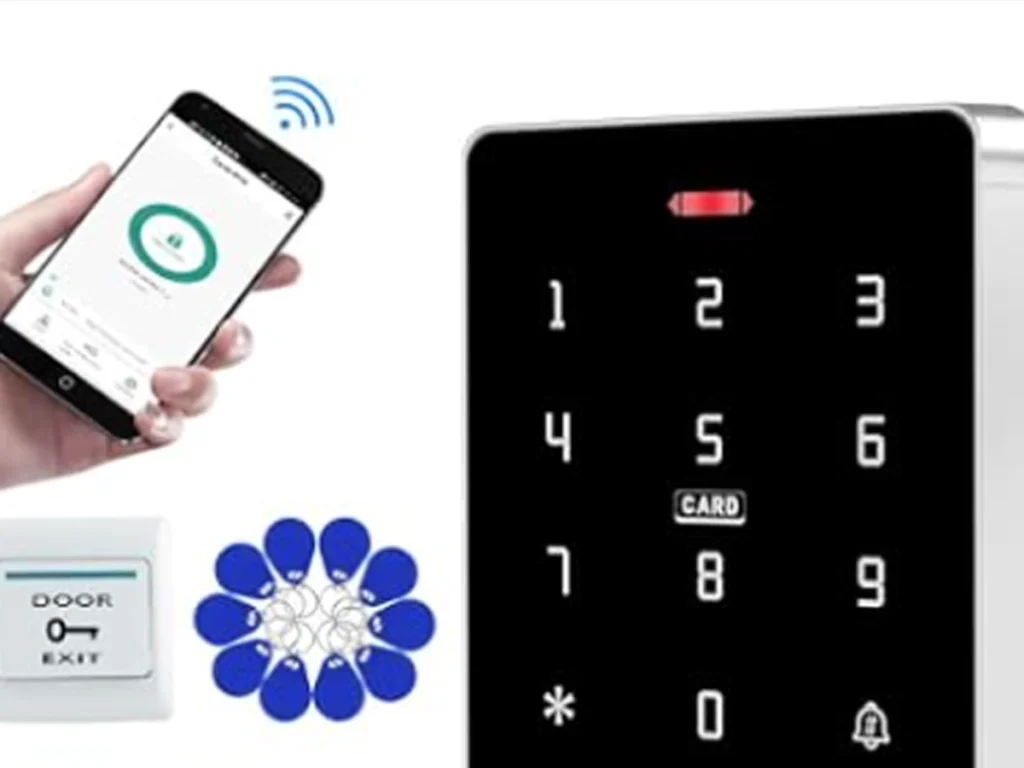
A keypad is the visible part of a larger access system. First, a user enters a personal identification number. Next, the keypad or control panel checks that entry against its approved records. Then, the system sends an open command when the code is valid.
The gate operator receives that command and begins movement. Safety devices watch the travel area while the gate opens or closes. Depending on the design, those devices may include photo eyes, sensing edges, vehicle loops, or built in force controls.
A complete setup may include:
- An outdoor keypad with sealed buttons or a protected touch surface.
- A control panel that stores and checks approved codes.
- An electric gate operator matched to the gate and expected use.
- Safety sensors placed around possible contact or entrapment areas.
- A manual release or backup power plan for service interruptions.
- Optional cameras, intercoms, logs, or remote management tools.
The keypad should sit where a driver can reach it without entering the path of the moving gate. In addition, the post should allow comfortable use without forcing a driver into unsafe traffic movement.
Owners planning a full entrance can also review this guide to driveway gate installation that fits the property. It explains why the entrance layout matters before equipment is selected.
Seven Powerful Benefits for Richardson Properties
Keypad access remains popular because it solves several daily entry problems with one clear method. Nevertheless, each benefit depends on sound setup and active management.
Simple Entry Without Keys
Users only need an approved code. Therefore, owners do not need to issue a remote or physical key to every person.
This approach can reduce common problems:
- Keys can be lost, copied, or left with former users.
- Remote controls can fail, disappear, or remain inside another vehicle.
A code can usually be removed without replacing every lock or collecting every device. That feature makes keypad entry useful for changing groups of users.
Separate Codes for Better Control
One shared code is easy to manage at first. However, it becomes hard to control once many people know it. Separate codes create clearer ownership.
Useful code groups may include:
- Permanent codes for owners or trusted staff.
- Limited codes for vendors, cleaners, or service teams.
- Temporary codes for guests or active projects.
Some systems can limit a code by day or time. Thus, a cleaning crew may receive access only during an approved service window.
Fast Access Changes
A mechanical key may require a new lock when access rights change. By contrast, a keypad code can often be removed through the controller.
This benefit matters when:
- An employee leaves a business.
- A tenant moves from a managed property.
- A contractor finishes a project.
- A code may have been shared without approval.
The owner should still follow the system maker’s steps and keep a simple access record. Regular reviews prevent old codes from staying active without a reason.
Support for Entry Records
Some basic keypads only send an open signal. More advanced controllers can record which code was used and when it was entered.
An entry record may help an owner:
- Review activity after an unusual event.
- Find codes that are active but no longer needed.
- Understand busy periods at a commercial entrance.
- Check whether a vendor arrived during the approved window.
Logs have limits. They may show which code was entered, but they may not prove who entered it. Therefore, higher risk sites may pair logs with a camera or staffed review process.
Flexible Use for Homes and Businesses
A residential driveway may need only a small number of codes. Meanwhile, a business may need schedules, many users, and a stronger control panel.
A flexible design can serve:
- Private homes and estate entrances.
- Offices and employee parking areas.
- Apartment or community vehicle entrances.
- Warehouses and managed service yards.
The system should match real traffic. A light residential keypad may not suit a busy entrance with frequent visitors and delivery vehicles.
Easy Support for Visitors
Visitors do not always need a permanent credential. Instead, an owner can provide a temporary code or confirm the visitor through an intercom.
For entrances with frequent guests:
- Temporary codes reduce long term sharing.
- An intercom lets the owner screen an unknown visitor.
- A camera can add visual context before entry.
- A scheduled code can close after a planned visit.
Property owners who need stronger visitor screening can explore custom gates with intercom options.
A Clean and Familiar User Experience
Most people already understand how to enter a number on a keypad. Therefore, training is often brief.
A clear system should provide:
- Buttons that remain easy to see at night.
- Simple prompts for approved and rejected codes.
- A mounting height and location suited to expected users.
- Written instructions for residents, staff, and managers.
Although the process is familiar, the keypad should never be placed where a user must stand inside the moving gate area.
Five Real Risks That Owners Should Address
A keypad offers control, but poor habits can weaken it. The following risks deserve attention during planning and daily use.
Shared Codes Can Spread Quickly
A single code can move from an employee to a former worker, friend, driver, or vendor. Once that happens, the owner may not know who still has access.
Better practice includes:
- Give each user or group a separate code when the system allows it.
- Remove codes as soon as access is no longer needed.
- Avoid easy patterns such as an address, year, or repeated digit.
- Change any code that may have been seen or shared.
Visible Button Wear Can Reveal a Pattern
Older physical keypads may show wear on frequently used buttons. Dirt, oil, or faded numbers can also reveal parts of a code.
Owners can reduce this risk:
- Clean the keypad according to the maker’s instructions.
- Review worn buttons during routine service.
- Change codes at sensible intervals.
- Consider equipment designed to resist visible pattern clues.
Tailgating Can Bypass the Keypad
A valid user may open the gate, and another vehicle may follow before it closes. This behavior is often called tailgating.
Possible controls include:
- Set gate timing around safe and normal traffic flow.
- Use signs that tell drivers not to follow another vehicle.
- Add cameras where the risk justifies them.
- Use staffed control or other checks at higher risk entrances.
The closing time should never be shortened in a way that creates a collision or entrapment risk.
Power and Network Failures Need a Plan
An automatic entrance depends on power. Some connected systems also depend on local data service or internet access.
A clear response plan may include:
- Battery backup that matches the operator and expected need.
- A manual release procedure for trained users.
- A defined response when a keypad or control panel fails.
- Regular testing of backup equipment.
The correct response during a failure depends on the property, operator, local requirements, and emergency plan.
The Moving Gate Can Create Greater Risk
The keypad controls access, but the gate itself creates motion. Therefore, safety equipment is not an optional detail.
The United States Consumer Product Safety Commission has warned about automatic gate entrapment risks. Its guidance explains why sensing devices, proper control placement, guarded rollers, and reduced pinch points matter.
Owners should confirm:
- The operator suits the gate and type of property.
- Required safety devices are present and working.
- Users cannot reach through the gate to activate a control.
- Pedestrians have a separate and suitable path when required.
- Warning signs remain visible.
How to Choose the Right Keypad System
The best keypad is not always the model with the longest feature list. Instead, it is the system that fits the property, users, gate, and management plan.
Start With the User Count
A household may need only a few codes. A managed site may need hundreds of users and a record of every change.
Ask these questions:
- How many permanent users need access?
- How many vendors or temporary users visit?
- Who will add and remove codes?
- How often will access rights change?
- Does the owner need entry records?
Match the Equipment to the Environment
Richardson weather can expose outdoor controls to heat, rain, dust, and direct sun. Therefore, the keypad should be rated for its installed location.
Review these features:
- Outdoor enclosure rating.
- Button or screen visibility.
- Water and dust resistance.
- Operating temperature range.
- Resistance to tampering.
- Reliable mounting hardware.
A protective hood may improve visibility and reduce direct weather exposure. However, it should not block normal use.
Decide Between Local and Connected Control
A local keypad stores or checks codes at the property. A connected system may allow remote updates, alerts, or reports.
Local control may offer:
- Simple operation without a constant internet link.
- Fewer connected features to manage.
Connected control may offer:
- Remote code updates.
- Scheduled user access.
- Activity reports.
- Alerts for selected events.
Connected equipment also needs strong account security. Owners should use unique account passwords, protected administrator access, and available security updates.
Plan for Growth
A small property may later need an intercom, camera, phone entry system, or managed credentials. Planning ahead can reduce avoidable replacement work.
Consider whether the controller can support:
- More users and scheduled codes.
- A call box or intercom.
- Camera integration.
- Card, tag, or mobile access.
- Remote management.
- Added entry points.
For a broader comparison, read about the latest gate access control options.
Richardson Safety, Fire Access, and Approval Questions
Local requirements can vary by property type, gate location, work scope, and adopted code. Therefore, owners should confirm current rules before installation. A general article cannot decide what a particular address requires.
The Richardson Fire Department publishes fire prevention resources, including information for gates, barricades, and rapid entry systems. Owners and managers can review the city’s current fire prevention forms and information.
Questions to confirm may include:
- Does the project need a building, electrical, or other permit?
- Does the gate affect a required fire access route?
- Is a fire department rapid entry method required?
- What clear width or gate operation rule applies?
- Are there property or association limits on placement?
- Does added electrical work require a qualified trade professional?
In addition, an automatic gate should be planned around recognized safety standards and the operator maker’s instructions. A professional installer should identify possible entrapment zones and select compatible protection devices.
The federal CISA physical security resources also support a risk based approach. In other words, the entrance should reflect the property’s actual threats, users, operations, and response needs.
An Illustrative Richardson Property Example
The following example is a planning scenario, not a claim about a specific customer or completed project.
Consider a small Richardson office with twenty employees, a cleaning team, regular deliveries, and occasional client visits. The existing entrance uses one shared code. Former workers may still know it, and the manager cannot tell which group opened the gate.
A stronger plan could include:
- Individual codes for employees.
- A scheduled code for the cleaning team.
- A temporary process for approved service vendors.
- An intercom for visitors without a code.
- A camera aimed at the entry lane.
- A monthly report of active users.
- Immediate removal of codes when roles change.
The installer would also inspect the physical gate, operator, sensors, power, driveway, and traffic pattern. If the gate drags or the safety devices fail, replacing the keypad alone would not solve the main problem.
This example shows why access control must be treated as a process. The keypad is one tool inside that process.
Professional Installation Versus Basic Add On Work
Some keypad products appear simple. Yet compatibility can become complex when the device must communicate with an existing operator and remain safe outdoors.
Professional planning can help verify:
- The keypad output matches the gate controller.
- Wiring is protected from weather and damage.
- The post stands outside the gate’s movement area.
- Vehicle reach and driveway flow are practical.
- Safety devices remain active after integration.
- The system responds correctly during power loss.
A weak installation may create repeat problems, even when the keypad itself works. For example, poor wiring can cause random failures. A bad post location can force drivers to leave their vehicles. An incorrect control connection can also interfere with normal operation.
Before installation, owners may benefit from reviewing five things to know about electric gate service.
A Smart Maintenance and Code Review Plan
Keypad gate access control needs both physical care and access review. One without the other leaves a gap.
Monthly Owner Checks
A short visual review can find small problems early.
Owners can check:
- Whether every button responds correctly.
- Whether the display or light remains clear.
- Whether the post moves or leans.
- Whether the gate opens and closes as expected.
- Whether photo eyes appear clean and aligned.
- Whether warning signs remain readable.
Users should not adjust safety settings unless they are trained and authorized.
Quarterly Access Reviews
Every few months, an owner or manager should review active codes.
The review should ask:
- Does each code still have a valid owner?
- Are former staff or vendor codes still active?
- Do scheduled codes match current work hours?
- Are administrator accounts limited?
- Have any codes been widely shared?
Unused codes should be removed. Meanwhile, widely known codes should be replaced through a planned process.
Professional Service
The service schedule depends on gate use, equipment, environment, and maker guidance. A busy commercial gate may need more frequent attention than a private residential gate.
Professional service may cover:
- Gate alignment and smooth travel.
- Hinges, rollers, chains, arms, and brackets.
- Operator condition and control settings.
- Batteries, wiring, and protected connections.
- Keypad and controller communication.
- Photo eyes, sensing edges, and related devices.
- Manual release and backup operation.
Our Expert View on the Best Security Approach
In our view, the best Richardson entrance is not the one with the most technology. It is the one that people can manage correctly every day.
A practical system should make secure behavior easy. For instance, managers should be able to remove a code without calling several departments. Residents should understand how to admit guests. Service teams should have clear access windows. Everyone should know whom to contact when the system fails.
We recommend a layered approach:
- Use unique or group based codes.
- Set time limits where the controller allows them.
- Add an intercom when visitor screening matters.
- Add cameras when visual review serves a clear purpose.
- Inspect the physical gate before upgrading controls.
- Test safety and backup functions on a planned schedule.
- Confirm city and fire access needs before final work.
No access system can promise that an intrusion will never occur. However, a well managed keypad system can reduce casual entry, improve control, and simplify access changes.
Five Frequently Asked Questions
Are Keypad Gates Secure?
Yes, a keypad gate can provide secure controlled entry when it uses strong codes, suitable equipment, and careful installation. Security drops when everyone shares one code or old users remain active. For better control, assign separate codes, remove unused access, protect administrator settings, and combine the keypad with sound gate hardware and working safety devices.
How Often Should a Gate Code Be Changed?
There is no single schedule for every property. Change a code when a user leaves, a vendor finishes work, or sharing is suspected. In addition, review all active codes every few months. Properties with frequent staff or tenant changes may need more regular updates than a private home with only a few trusted users.
Can a Gate Keypad Work Without Internet Service?
Many gate keypads can operate locally without internet service. They store codes inside the keypad or a nearby control panel. However, remote updates, cloud reports, and mobile alerts may need a data connection. Ask the installer what will keep working during an internet outage and whether any local backup method remains available.
What Happens to an Automatic Gate During a Power Outage?
The answer depends on the operator and system design. Some gates use battery backup, while others require a manual release. Certain properties may have specific emergency access needs. Owners should learn the approved outage procedure, keep instructions available to trained users, and test batteries or backup equipment according to the manufacturer’s guidance.
Can I Add a Keypad to My Existing Automatic Gate?
Often, yes, but the existing operator, controller, wiring, safety devices, and gate condition must be checked first. A compatible keypad can still perform poorly when wiring is damaged or the gate binds during travel. A professional evaluation can confirm compatibility and identify mechanical or safety problems before new access equipment is connected.
Conclusion: Make Secure Entry Simple
Keypad gate access control can be a secure entry option for Richardson properties. It removes the need for physical keys, supports fast access changes, and can create clearer control for families, workers, vendors, and guests.
Still, the keypad should never be treated as the whole system. Strong results depend on code management, safe gate movement, suitable sensors, dependable power, and a layout that fits real traffic.
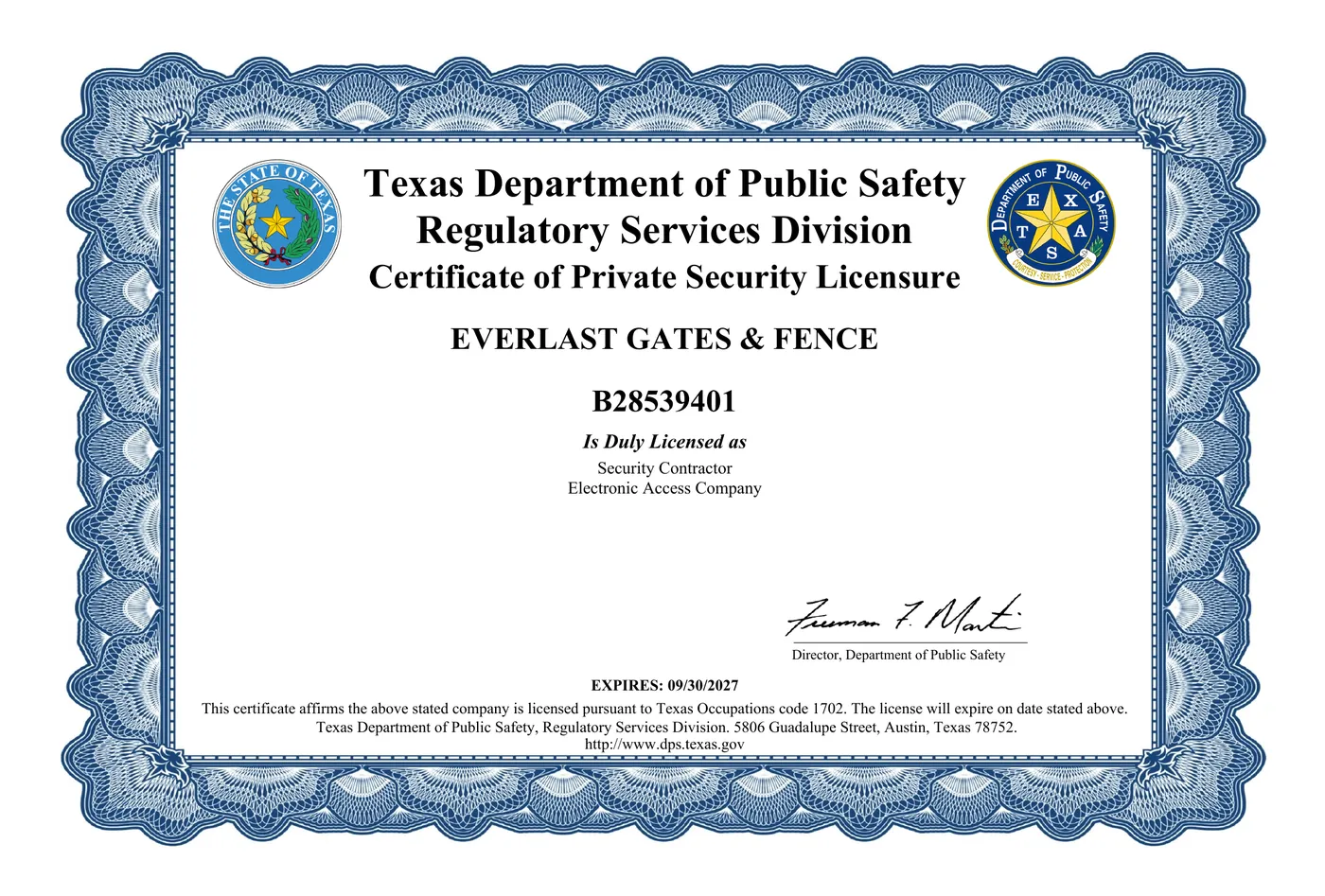
Everlast Gates & Fence provides gate installation, repair, access control, intercom, and fence services for residential and commercial properties. Our team can assess the entrance, gate, operator, controls, and access needs before recommending a suitable path.
A thoughtful plan should:
- Match the keypad to the number and type of users.
- Protect codes through regular access reviews.
- Address visitor screening and delivery needs.
- Include safe operator and sensor performance.
- Confirm applicable Richardson approval and emergency access requirements.
- Support reliable maintenance after installation.
Contact us to discuss keypad gate access control for your Richardson property.
At Everlast Gates & Fence, we also offer reliable gate and fence services tailored to residential and commercial properties. Specializing in installing, repairing, and maintaining iron and wood gates and fences along with expert solutions for electric gates, automatic gates, sliding gates, and driveway gates. We also provide professional gate diagnostics, access control systems, customized designs, and comprehensive security enhancements to meet your unique needs and let us ensure your gates are in expert hands so you can enjoy safety, style, and convenience with complete peace of mind.
Phone : (469) 966-2608
Location: 1106 Commerce Dr, Richardson, TX 75081
