


One strong storm can turn one loose fence board into a full backyard repair job. In fact, severe storms can bring damaging winds, hail, lightning, flash floods, and tornadoes. So, a fence that looks fine today can fail fast when bad weather hits.
That is why storm season prep of wood fence care matters for San Antonio homes. Your fence does more than mark a yard line. It adds privacy, helps protect pets, supports curb appeal, and frames your outdoor space. Also, it can help your home feel safer before, during, and after rough weather.
San Antonio weather can be hard on wood. Hot sun can dry boards. Heavy rain can swell them. Strong wind can push weak posts. Also, falling limbs can crack panels or damage gates. Therefore, early fence care is often cheaper and easier than major storm repair.
Everlast Gates & Fence helps local homeowners and property owners plan smart fence care before storm season. The team understands wood fence repair, gate care, post support, and long term fence strength. More importantly, the team helps owners make clear choices before small issues turn into big damage.
Before you build, repair, or replace a fence, check local rules. The City of San Antonio says residential permit applications may ask for a site plan, fence height, material, and location details. This matters because storm repairs can sometimes become bigger fence projects.
Below are practical steps to help protect your wood fence before storm season arrives.
1. Storm Season Prep Of Wood Fence Starts With a Careful Check
A good fence check should happen before the first hard storm. Walk the full fence line slowly. Then, look for leaning posts, loose boards, soft wood, rusted fasteners, and gate gaps.
Even small damage can grow during high wind. For example, one loose picket can pull on nearby boards. Also, one weak post can make a full section shift. Therefore, a simple inspection gives you time to act before storms arrive.
- Check each post by hand: Push each post gently and watch for wobble.
- Look near the soil line: Soft wood near the ground often means hidden rot.
Also, look for signs of water damage. Dark stains, green growth, soft spots, and splits can show that moisture is trapped. If the fence feels weak, do not wait for the next storm to test it.
For more help with year round fence care, review these tips on how to prolong the lifespan of a wood fence in San Antonio.
2. Storm Season Prep Of Wood Fence Means Fixing Loose Boards Fast
Loose boards are easy to ignore on calm days. However, storm wind can turn them into a serious problem. Once one board shakes free, the nearby boards may also start to loosen.
Fast repairs help your fence keep its shape. Also, they reduce noise during storms. A tight fence is less likely to rattle, twist, or pull away from the rails.
- Tighten loose fasteners: Replace weak nails or screws before rain arrives.
- Replace split boards: Cracked boards can break under wind pressure.
Do not only repair what you can see from the patio. Instead, check both sides of the fence when possible. This helps you find back side damage, rail cracks, and hidden fastener issues.
If boards have pulled loose many times, the rail may be weak. In that case, a pro should inspect the full section. Everlast Gates & Fence can help spot the root cause, not just the surface problem.
3. Storm Season Prep Of Wood Fence Includes Strong Posts
Fence posts carry much of the storm load. When wind hits a wood fence, the posts help hold the full line in place. Because of that, post strength is one of the most important parts of storm prep.
A post may look fine at eye level but still be weak underground. Soil movement, water, age, and insects can all cause trouble. Also, posts near gates often carry extra stress.
- Watch for leaning: A leaning post may need repair before heavy wind.
- Check soil around posts: Washed out soil can make posts less stable.
If soil has pulled away from the post base, fill and compact the area if safe. Also, look for standing water after rain. Poor drainage can make post bases weaker over time.
NOAA notes that severe storms can bring damaging winds. So, fence posts need to be ready before gusts arrive.
4. Storm Season Prep Of Wood Fence Should Include Gate Care
Gates often fail before fence panels because they move every day. Hinges loosen. Latches shift. Wood swells. Also, gravity can cause a heavy gate to sag.
Before storm season, open and close each gate. Listen for scraping, grinding, or creaking. Then, check if the latch lines up. If the gate drags on the ground, it may get worse after rain.
- Tighten gate hardware: Secure loose hinges, latches, and braces.
- Check gate swing space: Remove items that may block movement during storms.
A weak gate can slam in strong wind. That can damage the frame, posts, latch, and nearby boards. Therefore, gate care is a key part of fence storm prep.
If your gate also supports access control or a driveway entrance, timely service is even more important. You can learn more from this guide on San Antonio electric gate maintenance.
5. Storm Season Prep Of Wood Fence Needs Better Drainage
Water can harm wood fences in quiet ways. Heavy rain may not break a fence right away. Instead, it can soak boards, soften soil, and weaken post bases.
Good drainage helps keep the fence base dry. It also helps limit rot and soil movement. Therefore, storm prep should include the ground around the fence, not only the wood.
- Clear soil buildup: Keep soil from piling high against boards.
- Move trapped water: Create a path for rainwater to drain away.
Leaves, mulch, and dirt can hold water against the fence. Over time, this can cause rot near the bottom boards. Also, wet soil can shift around posts.
If water pools near your fence after each storm, the area may need better grading. A fence expert can explain which repairs help the fence and which issues may need drainage support.
6. Storm Season Prep Of Wood Fence Must Include Tree and Limb Checks
Trees add shade and beauty. However, weak limbs can damage fences during storms. The Texas A&M Forest Service notes that storms can leave fallen trees and branches that damage structures and create hazards.
Before storm season, check branches that hang over the fence. Look for dead limbs, cracked limbs, and branches touching panels. Also, check vines that pull on boards or hold moisture against wood.
- Trim risky branches: Remove weak limbs before high wind arrives.
- Clear heavy vines: Vines can trap water and add weight to the fence.
Do not climb or cut large limbs without the right help. Tree work can be risky. Also, poor cuts can harm the tree and create more danger later.
A clear fence line helps reduce storm damage. It also makes repair easier if bad weather does hit.
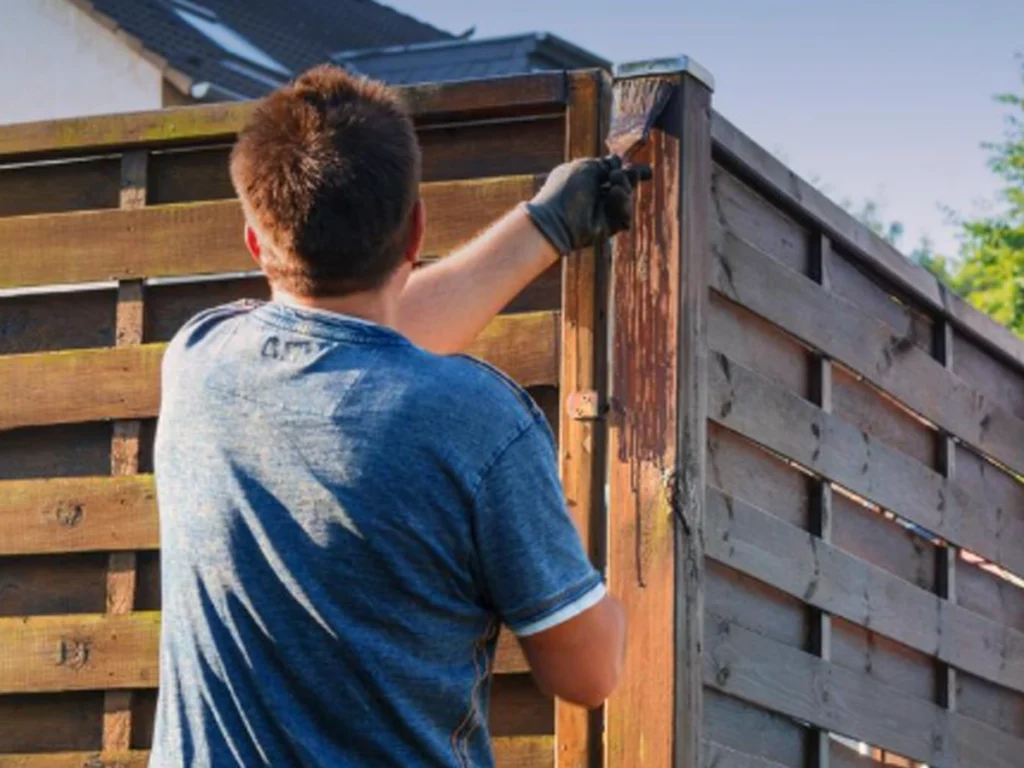
7. Storm Season Prep Of Wood Fence Includes Stain and Seal Care
Wood needs a barrier against sun and rain. A good stain or seal can help slow water absorption. It can also help protect the color and surface of the fence.
If the fence looks gray, dry, or faded, it may need care before storm season. Also, if water soaks into the board instead of beading, the wood may need sealing. This simple test can help you decide when to act.
- Check water response: If water soaks in fast, sealing may help.
- Watch for fading: Dry, gray boards may need care before storms.
Staining is not only about looks. It can help the fence handle wet and dry cycles better. Also, it can make the yard look cleaner and more cared for.
For design and care ideas, see how custom wood fences in San Antonio can improve privacy and property value.
8. Storm Season Prep Of Wood Fence Should Cover Fence Hardware
Fence hardware is small, but it matters. Screws, nails, brackets, hinges, and latches all help the fence hold together. If these parts rust or loosen, storm wind can find the weak point fast.
Check metal parts before heavy rain. Rust stains, missing screws, bent brackets, and loose hinge bolts all need attention. Also, make sure hardware fits the wood well.
- Replace rusted parts: Rust can make hardware weak and unsafe.
- Secure loose brackets: Tight hardware helps the fence handle stress.
If the same part keeps loosening, the wood may be damaged. In that case, replacing the screw alone may not solve the issue. A professional can add support or replace the weak section.
9. Storm Season Prep Of Wood Fence Helps Protect Privacy
A damaged fence can expose your yard fast. Missing boards, leaning panels, and broken gates can affect privacy and comfort. Also, they can make pets and kids harder to keep within the yard.
Storm prep helps protect the way you use your outdoor space. It keeps your fence looking neat. It also helps your yard feel calm after storms pass.
- Protect daily comfort: A strong fence keeps outdoor spaces more private.
- Protect curb appeal: A clean fence helps the home look cared for.
Privacy is one reason many San Antonio homeowners choose wood fencing. For more privacy focused design ideas, visit this guide to custom wood gates in San Antonio.
10. Storm Season Prep Of Wood Fence Can Reduce Repair Costs
Small repairs usually cost less than emergency repairs. A loose board, weak latch, or minor rot spot can often be fixed early. However, storm damage can spread across many panels.
Prep also helps you plan. Instead of rushing after a storm, you can choose the right repair method. Also, you can avoid poor patch work that may fail again.
- Act before storms: Early service can stop damage from spreading.
- Plan smart repairs: A clear plan helps protect long term value.
After a storm, document damage with photos. Then, avoid touching unsafe sections. If boards, rails, or gates are unstable, call a fence professional.
Everlast Gates & Fence can inspect the fence, explain repair options, and help restore strength. This helps homeowners move from worry to action.
11. Why San Antonio Homeowners Trust Everlast Gates & Fence
Everlast Gates & Fence understands that fences are part of home security and outdoor life. The team works with wood fences, gates, access points, and repair needs across San Antonio. Because of that, homeowners get practical advice based on real fence problems.
The company focuses on strong materials, clear workmanship, and useful design. Also, the team can help spot issues that a homeowner may miss. This matters before storm season, when hidden weakness can become costly damage.
- Local fence care: The team understands San Antonio weather and fence needs.
- Full property support: The team can help with fences, gates, and access areas.
Everlast Gates & Fence also helps clients think beyond one repair. A fence should protect privacy, support curb appeal, and work well with gates. Therefore, the best service plan looks at the full property.
12. Local Rules to Know Before Fence Repairs
Some fence work may need city review. The City of San Antonio says residential permit work may involve applications, site plans, and project details. Also, the fence permit form asks for height, material, fence location, and easement information.
This is important after storms. A small repair may stay simple. However, a larger replacement may need more planning. So, it is wise to check local rules before major work starts.
- Review city guidance: Check permit needs before major fence changes.
- Know your layout: Mark easements, corners, and fence lines before work.
This step can save time and stress. It can also help you avoid delays during a busy storm repair season.
13. Fast Wood Fence Storm Checklist for San Antonio
Use this quick list before the next storm watch. It can help you find urgent issues before wind and rain arrive.
- Fence line check: Look for leaning panels, loose boards, and cracked rails.
- Gate check: Test latches, hinges, braces, and swing space.
- Post check: Push posts gently and look for soil gaps.
- Drainage check: Clear leaves, dirt, and water traps near the fence.
- Tree check: Remove risky branches and heavy vines near panels.
- Finish check: Look for dry, faded, or water soaked boards.
- Hardware check: Replace rusted screws, nails, brackets, and hinges.
This checklist is simple, but it works. Most fence failures start with small weak points. Therefore, finding those weak points early can protect the whole fence.
FAQ About Storm Season Prep Of Wood Fence in San Antonio
1. How early should I prepare my wood fence before storm season?
Start before heavy rain becomes common. Early prep gives you time to inspect, repair, stain, and clear the fence line. Also, it helps you avoid rushed repair calls after storms.
- Best timing: Check your fence before the first major storm pattern.
- Best habit: Inspect again after each strong storm.
2. What part of a wood fence fails first in San Antonio storms?
Posts, gates, loose boards, and weak rails often fail first. These parts carry stress when wind hits the fence. Also, wet soil can make weak posts shift faster.
- Most common weak point: Loose boards and shaky posts.
- Most ignored weak point: Gate hinges and latch hardware.
3. Can sealing a wood fence help before storm season?
Yes, sealing can help wood resist moisture. It also helps protect the surface from fast weather wear. However, sealing should happen when wood is clean and dry.
- Main benefit: It helps slow water absorption.
- Main warning: Do not seal over rot, dirt, or trapped moisture.
4. Do I need a permit for fence repair in San Antonio?
It depends on the scope of work, height, location, and project details. The City of San Antonio provides residential permit resources and fence application guidance. So, homeowners should check city rules before major repair or replacement.
- Small repair: It may be simple, but rules can vary.
- Large replacement: It may need more review and planning.
5. Should I repair my fence myself after a storm?
You can handle small tasks if the area is safe. For example, you may clear light debris or note damage. However, leaning panels, broken gates, and unstable posts should be checked by a pro.
- Safe task: Take photos and clear small loose items.
- Call a pro: Get help for structural damage or unsafe sections.
Conclusion
Storm season prep of wood fence care is one of the best ways to protect a San Antonio yard. It helps guard privacy, safety, curb appeal, and long term fence value. Also, it can help you avoid larger repairs after wind, rain, hail, or falling limbs.
Start with a full fence check. Then, fix loose boards, test gates, inspect posts, clear drainage, trim risky limbs, and review stain or seal needs. Each small step helps the fence stand stronger when bad weather arrives.
Everlast Gates & Fence helps San Antonio homeowners prepare, repair, and protect wood fences with clear service and skilled work. When your fence is ready, your yard feels more secure and easier to enjoy. Visit Everlast Gates & Fence Call 210 940 1544 today and schedule an inspection through the San Antonio service page location 613 Northwest Loop 410 ste 200, San Antonio, TX 78216 to plan expert wood fence care before the next storm season.
At Everlast Gates & Fence, we also offer reliable gate and fence services tailored to residential and commercial properties. Specializing in installing, repairing, and maintaining iron and wood gates and fences along with expert solutions for electric gates, automatic gates, sliding gates, and driveway gates. We also provide professional gate diagnostics, access control systems, customized designs, and comprehensive security enhancements to meet your unique needs and let us ensure your gates are in expert hands so you can enjoy safety, style, and convenience with complete peace of mind.
