


A uniform twelve foot gate weighing 300 pounds creates about 1,800 foot pounds of bending moment at its support. In that example, its center of mass sits about six feet from the hinge line.
That load exists before wind, impact, or daily movement begins. Therefore, gate hinge repair is not a small hardware task.
As a result, it protects alignment, access, and gate security, plus every part connected to the moving gate.
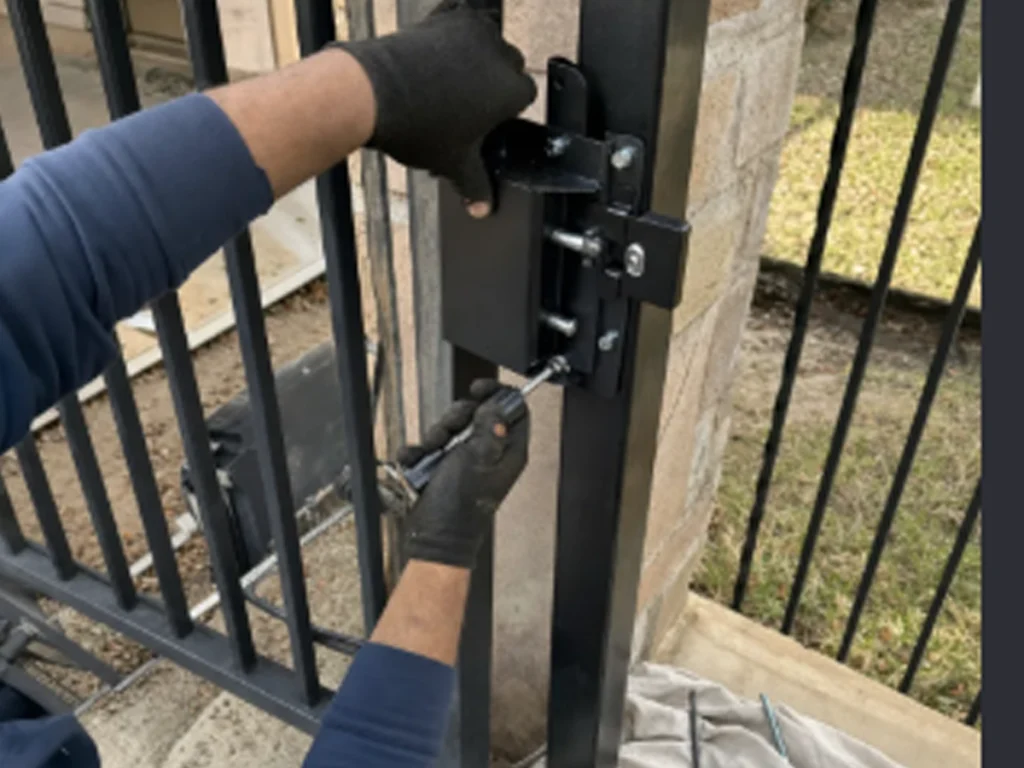
What Gate Hinge Repair Should Include
In practice, gate hinge repair should begin with a full gate check, not a quick spray of oil. First, the technician should inspect the hinge pins, bushings, leaves, welds, bolts, post, frame, latch, and opening path. Next, the gate should be supported so its weight does not shift during service. Then, the repair can address the true cause.
Therefore, a sound repair may involve adjustment, new fasteners, fresh bushings, a replacement hinge, new welds, post correction, or frame work. However, an automatic gate also needs operator and safety checks. A commercial pedestrian gate may have access rules as well. Therefore, the repair plan should fit the gate type, weight, use, and site.
- Check the full support system before replacing one visible part.
- Next, match every repair to the gate load, traffic, finish, and safety needs.
Why Gate Hinge Repair Protects the Whole Property
First, hinges connect the moving gate to the fixed support. When that link becomes loose, bent, cracked, or worn, the gate can drop. As a result, the latch may miss, the gate may drag, and the frame may twist.
Also, hinge trouble can spread stress into the post and gate frame. As a result, a dragging gate makes users pull harder. Meanwhile, an automatic operator may keep pushing against poor alignment. Therefore, a small hinge issue can become a wider structural or access problem. Industry guidance also notes model code language calling for exterior gates and operator systems to remain in good condition.
- First, treat sagging, binding, and loud movement as repair warnings.
- Restore the support and alignment before the damage reaches other parts.
Eight Clear Signs That Gate Hinges Need Help
Next, watch how the gate security moves and closes. Also, a gate should follow a steady path without lifting, dropping, scraping, or jumping. Therefore, a change in movement often gives the first warning.
For example, common signs include a misaligned latch, fresh hinge rust, loose bolts, cracked welds, or a moving pin. Also, a gate may need hinge service when it will not stay level. Squeaks can be harmless, but grinding or metal dust can point to active wear.
Likewise, automatic gates may slow, reverse, or strain near a binding point. However, a full gate security diagnosis must confirm the actual cause.
- First, look for sagging, scraping, loose hardware, rust, cracks, and uneven gaps.
- Next, listen for grinding, popping, and new operator strain during each cycle.
Property owners can also review these common electric gate problems for Garland homes.
Diagnose the Hinge, Post, Frame, and Latch Together
However, many gates that appear to have bad hinges actually have another support problem. For example, a leaning post can pull good hinges out of line. Likewise, a racked frame can lower the latch side even when the hinge pins remain sound.
Therefore, diagnosis should separate the hinge, post, frame, footing, latch, and stop. Thus, each part can create similar signs.
Next, a technician can compare gaps, post plumb, frame diagonals, hinge play, and latch contact. As a result, this check helps reveal the true fault.
- First, confirm whether the movement begins at the hinge, post, frame, or footing.
- Next, check the latch and stop only after the gate hangs in the correct position.
Residential Gate Hinge Repair Needs a Safe, Simple Plan
First, residential gate hinge repair should restore easy use without needless parts. Also, side gates and driveway gates may need very different support.
Most importantly, pool and child access areas need special care. Therefore, a repair must preserve any required self closing and latching action. As a result, the technician should not change hinge tension, gate gaps, or latch position without checking the applicable rules.
Wood gates may loosen around screws, while steel gates may develop worn pins or cracked welds. Therefore, materials guide the repair.
- Keep pedestrian gates easy to use while maintaining secure closure.
- Verify pool, pet, and child safety needs before changing hinge action.
Commercial Gate Hinge Repair Must Limit Risk and Downtime
In contrast, commercial properties often place more cycles and more users on a gate. Therefore, the repair plan should consider traffic, access hours, delivery needs, and emergency routes. For example, a hinge that works for a quiet yard may not suit a busy entrance.
Also, commercial gates may connect with locks, closers, readers, intercoms, and operators. Therefore, connected parts need testing after alignment.
Moreover, access needs matter at pedestrian gates. Specifically, the United States Access Board gate guidance explains that covered hardware should allow one hand use and avoid tight grasping, pinching, or wrist twisting. It also gives placement and operating force rules for applicable entrances.
- Plan service around traffic so the entrance remains controlled.
- Next, test locks, closers, controls, and access devices after hinge alignment.
Automatic Gates Need More Than a Mechanical Hinge Fix
In addition, an automatic gate combines a moving structure with powered equipment. Therefore, hinge repair should not end when the leaf swings again. The technician should also confirm that the operator, controls, stops, and safety devices still work as intended.
For example, the ASTM F2200 automated vehicular gate standard covers several gate types and four use classes. Moreover, the active 2024 edition states that automated vehicular gate systems should comply with that specification and UL 325.
Consequently, a qualified person should follow the operator manufacturer’s instructions. A hinge change can alter geometry, so the complete system needs review.
- First, do not treat an operator as a tool for pulling a misaligned gate.
- Next, recheck travel, stops, limits, and safety devices after structural work.
Seven Proven Gate Hinge Repair Methods
First, adjustable hinges may restore height, side position, or gate gap within their listed range to improve gate security. However, adjustment cannot hide a bent post.
Second, loose fasteners may need proper replacement. Third, serviceable pins or bushings may need renewal. Fourth, damaged hinges may need rated replacements.
Fifth, cracked welds may need skilled repair. Sixth, posts or frames may need correction. Finally, badly deformed gates may need replacement.
Most importantly, the key is sequence. First, support the gate, find the cause, repair the support, align the leaf, set the latch, and test the path. As a result, this method protects new parts from the old problem.
- First, use adjustment only within the hinge manufacturer’s stated limits.
- Correct failed posts and frames before final hinge and latch settings.
Additionally, read the guide to welding broken gates for long term durability.
Choose a Replacement Hinge by Load, Width, and Use
Next, select a hinge by more than appearance. Gate weight matters, but width also increases leverage. Daily cycles, wind exposure, opening angle, frame shape, and mounting method can also affect the choice.
For example, manufacturer data shows why exact product details matter. Specifically, one D and D Technologies hinge closer family lists models for gates up to 260 pounds, a two inch minimum post, and set gaps.
Also, choose the correct bearing, adjustable, spring, or hydraulic hinge system. A self closing product must still suit the gate.
- First, require a published capacity and mounting method for the chosen hinge.
- Next, match the hinge to gate width, weight, cycles, post, and frame.
Welding and Fasteners Can Decide Repair Life
First, welded hinges depend on sound base metal and sound joint work. Therefore, the repair should remove weak, cracked, or dirty metal before a new weld is placed. The welder should also avoid leaving sharp edges or unprotected bare steel.
Likewise, bolted hinges need proper fasteners and a sound mounting surface. However, a large bolt cannot make damaged metal strong.
Next, the finish needs repair after welding or drilling. Otherwise, exposed steel can rust around the very area carrying the gate. Therefore, hinge work should connect fabrication, alignment, and coating care. Additionally, review the linked welding guide for more context.
- First, inspect the metal behind every weld, bolt, and hinge plate.
- Next, restore primer, paint, or another approved finish after hot work.
Lubrication Helps Only When the Hinge Allows It
Also, lubrication is not a universal cure. For example, some open metal hinges need a manufacturer approved lubricant. However, some sealed or hydraulic products are designed as maintenance free units.
Therefore, identify the hinge before adding oil or grease. Then, clean the area and follow the product instructions. However, lubricant cannot solve a loose pin, cracked barrel, or moving weld.
Finally, regular cleaning helps reveal wear. Meanwhile, quick coating repairs, bolt checks, and latch checks support longer service.
- First, use only the lubricant and service method listed for that hinge.
- Next, never use lubrication to hide loose metal, cracks, or failed bearings.
Garland Rules Can Affect a Larger Gate Repair
In many cases, a simple hinge adjustment may not change the fence design. However, a larger repair can involve a new post, a changed opening, or a replacement gate for gate security. Therefore, owners should check Garland requirements before the scope grows.
For example, the City of Garland fence requirements state that permits are required in several cases. Specifically, these cases include certain corner lots, pool properties, new fences, and changes to height, location, or material.
- Check city and private rules before changing the opening or post location.
- Next, keep every swing gate inside the allowed property and travel area.
Repair or Replace the Hinge at the Right Time
Repair makes sense when the hinge body remains sound and the fault is limited. For example, a serviceable hinge may only need a new bushing, pin, fastener, or proper adjustment. However, the repaired part must still fit the load.
Replacement is often wiser when the hinge is cracked, bent, deeply rusted, badly worn, or too small. Also, repeated repairs can show that the original product does not match the gate. In that case, a stronger system may reduce future trouble.
Sometimes, neither choice solves the issue alone. A failed post, footing, frame, or weld area may need correction first. Therefore, the decision should consider the full support path, not the price of one hinge.
- Repair sound hardware when the service method restores listed function.
- Next, replace damaged or undersized parts after correcting the root cause.
Four Factors That Shape Gate Hinge Repair Cost
First, gate size and weight affect labor, lifting needs, and hardware. For example, a large steel leaf may require more support and more people than a small yard gate. Second, the damage type changes the scope. Likewise, adjustment usually costs less than post work or shop fabrication.
Third, access and downtime matter. For example, a commercial entrance may need traffic control or work outside busy hours. Finally, parts can vary by rating, finish, brand, and availability. Also, automatic gate checks may add operator and safety work.
Therefore, a reliable estimate should follow an inspection. Specifically, it should cover support, removal, welding, hardware, coating repair, alignment, and testing. Otherwise, vague quotes can leave the main cause outside the scope.
- First, compare written scopes, not only the final total.
- Next, ask what conditions could change the price after work begins.
Prevent Future Hinge Failure With a Simple Plan
First, prevention starts with clean movement after repair. Therefore, the gate should open without dragging and close without a hard slam. Consequently, keep the travel path clear and do not let soil or paving rise into the gate.
Next, inspect gaps, bolts, welds, pins, coatings, stops, and latches on a set schedule. Likewise, busy commercial gates need more frequent checks than quiet home gates. Also, follow the operator and hinge manufacturer’s service steps.
Finally, seasonal checks can reveal movement for Garland owners. Still, measure the post, frame, and gaps before blaming weather. This guide can help owners troubleshoot noisy or stuck gates in Garland.
- First, record new noise, drag, rust, or latch movement as soon as it appears.
- Next, schedule checks by gate use, manufacturer guidance, and site exposure.
Three Honest Gate Hinge Repair Scenarios
Importantly, the supplied brief does not include verified customer project records. Therefore, these examples are planning scenarios, not claims about completed Everlast Gates & Fence jobs.
In the first scenario, a home walk gate sags and misses its latch. Inspection finds sound hinges but a loose mounting point. Therefore, the repair supports the gate, restores the mount, aligns the leaf, and resets the latch.
In the second scenario, a commercial steel gate grinds near the bottom hinge. Next, inspection finds pin wear and a cracked weld area. Consequently, the repair needs gate support, hinge replacement, welding, finish repair, and alignment.
In the third scenario, an automatic swing gate slows and reverses. The hinge is binding, but the operator also needs system checks after repair. As a result, this broader approach avoids returning a corrected gate without safety testing.
- First, use scenarios to plan questions, not to predict a site result.
- Next, base every final scope on measured damage and verified gate details.
16. Choose a Garland Gate Repair Team With a Full Process
First, a strong contractor should explain what failed and why. Next, the team should inspect the gate, posts, hinges, frame, latch, stops, and travel. Next, it should describe the repair method and replacement parts.
Ultimately, a clear process gives Garland owners better control over safety, cost, and results. Related resources cover commercial gate maintenance in Garland and warning signs that call for welding gate repair.
- First, ask for the cause, repair sequence, parts, and testing in writing.
- Next, choose a team that treats the hinge, gate, and support as one system.
Frequently Asked Questions About Gate Hinge Repair
Finally, these questions reflect recurring themes in current gate repair search results and popular repair guides. The answers remain general because the right repair depends on the gate, hinge, post, and site.
How do I know whether my gate hinge is bad?
First, watch for vertical play, grinding, a bent leaf, cracked welds, loose bolts, metal dust, or pin movement. However, a sagging gate can also come from a leaning post or racked frame. Therefore, check the whole support system before replacing the hinge.
Can a sagging gate be fixed without replacing it?
Sometimes it can. For example, adjustment, new bushings, correct fasteners, frame correction, or post work may restore a sound gate. However, replacement is safer when a hinge is cracked, bent, deeply rusted, or too small for the load. A site inspection should identify the real cause first.
How often should gate hinges be lubricated?
Importantly, there is no universal schedule. For example, some serviceable hinges need the manufacturer approved lubricant at stated intervals. Meanwhile, sealed bearing or hydraulic hinge systems may be listed as maintenance free. Therefore, identify the product and follow its instructions rather than adding random oil whenever noise appears.
Why does my gate keep dropping after hinge repair?
The first repair may have treated only the visible symptom. For example, a leaning post, weak footing, racked frame, poor weld area, or undersized hinge can lower the gate again. Therefore, repeated sagging calls for a full check of the gate, support, opening, and load
Should automatic gate hinges be repaired by a professional?
Generally, qualified service is the safer choice. Because an automatic vehicular gate combines a heavy structure with powered equipment and entrapment controls, repair needs added care. In addition, ASTM F2200 and UL 325 address the gate and operator system.
Conclusion: Restore Safe, Smooth Gate Movement
In conclusion, gate hinge repair protects more than one small part. As a result, it keeps the leaf level, latch aligned, frame stable, and entrance usable. Therefore, early service can prevent wider wear and avoid daily access trouble.
First, find the true cause. Next, support the gate and repair the hinge, post, frame, or mount as needed. Finally, restore the finish and test every connected part. Ultimately, this complete method serves both residential and commercial properties.
- Act when sagging, grinding, cracks, or loose movement first appear.
- Next, choose a repair plan that covers alignment, structure, hardware, and testing.
At Everlast Gates & Fence, we also offer reliable gate and fence services tailored to residential and commercial properties. Specializing in installing, repairing, and maintaining iron and wood gates and fences along with expert solutions for electric gates, automatic gates, sliding gates, and driveway gates. We also provide professional gate diagnostics, access control systems, customized designs, and comprehensive security enhancements to meet your unique needs and let us ensure your gates are in expert hands so you can enjoy safety, style, and convenience with complete peace of mind.
Everlast Gates & Fence in Garland
Finally, contact Everlast Gates & Fence to discuss the gate type, damage, use, and access needs.
- Phone : 469 820 3882
- Location: 804 E Walnut St Suite B, Garland, TX 75040
