


Gate Grinding or Squeaking Noise Is an Early Warning
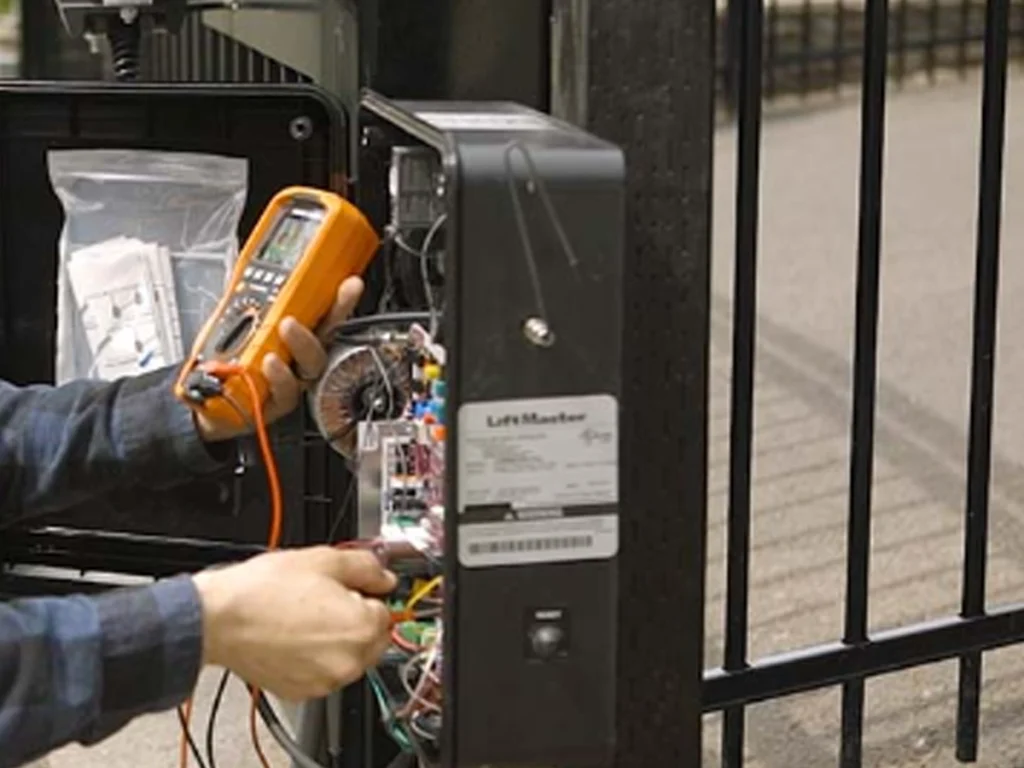
Here is a surprising fact about gate grinding or squeaking noise. A powered gate may keep moving even when its hardware is worn, dry, bent, or poorly aligned. Therefore, movement alone does not prove that the system is healthy. In fact, the Door and Access Systems Manufacturers Association says moving parts should be lubricated and should not squeak. Its inspection guidance also tells owners to watch and listen for uneven speed, excess sway, and unusual stops.
A squeak often begins at a dry hinge, roller, bearing, guide, or joint. A grind can point to debris, poor alignment, worn wheels, a loose chain, damaged gears, or metal contact. However, sound alone cannot confirm the failed part. First, note when and where the noise occurs. Then, stop repeated use if the gate jerks, binds, sags, reverses, or sounds harsh. A trained gate technician can separate the gate from its operator, inspect each moving part, and match the repair to the actual cause. Early service can limit added wear while protecting reliable access.
For Farmers Branch homes, apartments, and commercial sites, a noisy gate deserves prompt attention. Heat, dust, rain, daily traffic, and normal wear can affect several parts at once. Moreover, a minor squeak may hide a larger load problem. A careful inspection is the best way to avoid guesswork.
Key points to remember include:
- A squeak often signals friction, but lubrication is not always the full answer.
- A grind is more urgent because hard parts may be scraping, binding, or wearing.
- A noise that appears only under power may involve the operator or drive system.
- A noise during manual movement may come from the gate frame, hinges, wheels, or track.
What Does a Gate Grinding or Squeaking Noise Mean?
Gate sounds provide useful clues. Still, they do not act as a complete diagnosis. The pitch, rhythm, location, and timing help a technician narrow the cause. For example, a sharp squeak at one swing point differs from a steady grind inside a motor housing.
A squeak usually comes from repeated friction between surfaces. Dry hinge pins are a common example. Yet dirt, rust, excess side pressure, worn bushings, or a sagging frame may create the same sound. Therefore, adding oil without checking alignment can hide the symptom while the cause remains.
A grinding sound is normally rougher and deeper. It may occur when a wheel drags, a bearing fails, a chain meets a worn sprocket, or gear teeth no longer mesh well. Likewise, a stone in a slide gate track may cause a brief crunch at the same location during every cycle.
Listen for these useful patterns:
- Noise at one exact point may suggest debris, a bent track, or a damaged tooth.
- Noise through the full trip may suggest a dry bearing, poor alignment, or steady drive strain.
- Noise near a hinge may point toward hinge wear, rust, or a sagging gate leaf.
- Noise inside the operator cover may involve gears, bearings, chains, belts, or the motor.
Why Dry Hinges and Joints Often Squeak
Swing gates place a large load on their hinge points. As a result, each hinge must carry weight while allowing smooth travel. When the correct lubricant dries out, friction can rise. Dust may then cling to an exposed surface and form an abrasive paste.
However, a dry hinge is only one possible cause. A hinge may also squeak because the pin is worn, the barrel is bent, or the gate has dropped. In that case, fresh lubricant may quiet the gate for a short time, but it will not restore proper alignment.
The chosen product matters as well. Some gate parts use sealed bearings that should not receive added grease. Other parts need a lubricant named by the maker. Therefore, owners should check the product manual before applying anything. Spraying every moving surface can attract dirt or harm parts that require a different service method.
A technician may check:
- Hinge pins, welds, mounting plates, bushings, and visible rust.
- Gate level, post movement, leaf sag, and clearance across the full swing.
- Operator arm joints and mounting points for side load or loose hardware.
- The maker’s service instructions before cleaning or adding lubricant.
How Dirt and Debris Make Sliding Gates Grind
A sliding gate needs a clear path. On a tracked system, the wheels must roll smoothly along a straight and stable rail. Small stones, leaves, screws, hardened mud, and packed grit can interrupt that path. Consequently, the gate may grind, bump, or slow at the same place.
Debris can also hide damage. For instance, a stone may nick a wheel or bend part of the track. Even after the stone is removed, the new rough spot may remain. Therefore, clearing visible dirt is a first check, not a complete repair.
Cantilever gates have no ground track under the opening. Even so, their support rollers, guide rollers, frames, and mounting points can wear or shift. Because the whole gate load passes through those parts, one failing bearing may create both noise and uneven travel.
Safe visual checks include:
- Look from a safe distance for debris, rust, loose parts, and a gate that leans.
- Note whether the sound begins at the same point during opening and closing.
- Keep hands, tools, clothing, children, and pets away from the moving path.
- Do not enter a pinch area or reach near rollers while power is connected.
When Worn Rollers, Wheels, or Bearings Cause Noise
Rollers and wheels should rotate rather than drag. Over time, bearings can lose smooth movement. Wheel surfaces may also chip, flatten, or wear unevenly. As resistance grows, the operator must work harder to move the same gate.
This added load can create several symptoms. The gate may sound rough, travel slowly, shake, or stop before reaching its limit. In addition, a damaged roller may produce a repeating sound with each turn. A wheel problem may become louder when the gate changes direction.
Replacement should match the gate’s weight, design, and support system. A part that merely fits the opening may not have the correct load rating. Moreover, new rollers will not solve a bent rail, weak support post, or twisted frame.
Common signs include:
- A repeating rumble, scrape, or knock that follows wheel rotation.
- Visible wobble, uneven gaps, excess sway, or a gate that no longer sits level.
- Metal dust, chips, or fresh wear marks near a wheel or guide.
- An operator that strains even though its controls still respond.
Why Gate Alignment Matters More Than Lubrication
Good alignment lets weight travel through the parts designed to carry it. Poor alignment shifts that load sideways. Thus, hinges can bind, rollers can rub, chains can pull at an angle, and the operator can work beyond its normal demand.
Alignment problems may start with soil movement, a loose bracket, a damaged post, vehicle contact, or a bent frame. They may also follow an earlier repair that addressed one part without checking the complete gate. Because these causes differ, correction requires measurements rather than assumptions.
For swing gates, technicians review hinge lines, gate level, ground clearance, and operator geometry. For sliding gates, they examine the rail or cantilever supports, guide spacing, frame condition, and drive alignment. After correction, they test travel in both directions.
Important alignment clues include:
- The gate rubs a post, latch, curb, guide, or nearby fence section.
- Gaps change as the gate moves, or the leaf rises and drops during travel.
- The operator arm, chain, rack, or belt does not run in a straight line.
- The sound returns soon after a simple cleaning or lubrication attempt.
Can the Chain, Rack, or Sprocket Be Grinding?
Many powered slide gates transfer force through a chain or a toothed rack. These systems need correct position, tension, and engagement. A loose chain may slap or climb. An overly tight chain may add bearing load. Meanwhile, a worn sprocket or damaged rack tooth can make a repeating grind.
Sound may change as the gate crosses one damaged section. Alternatively, it may continue across the full opening when tension or alignment is wrong. Rust, dirt, and loose mounts can make either condition worse.
Chain and drive adjustment is not a casual task. Power must be controlled, stored movement must be considered, and the gate must remain stable. Therefore, a trained technician should handle repairs near drive parts and pinch points.
A professional drive inspection may cover:
- Chain condition, tension, rust, link movement, and sprocket wear.
- Rack position, tooth contact, mounting strength, and damaged sections.
- Drive alignment between the operator and the moving gate.
- Manual gate resistance before any force or limit setting is changed.
Is the Gate Motor or Gearbox Making the Noise?
The operator converts electrical power into controlled gate movement. Inside, motors, bearings, reduction gears, belts, clutches, and other parts may work together. Since operator designs vary, an internal grind does not prove that one named part has failed.
A motor bearing may growl as speed rises. Worn gears may create a rough repeating sound. A loose mount can add vibration. However, the operator may also sound strained because the gate itself is hard to move. Replacing a motor before checking manual travel can therefore miss the true cause.
The technician should inspect the gate as a complete system. First, the gate load and movement are evaluated safely. Next, the drive and operator are checked according to the maker’s instructions. Finally, limits, controls, and required safety devices are tested.
Operator related warning signs include:
- Noise comes mainly from the housing and occurs only when power drives the gate.
- The housing shakes, smells hot, leaks, or sounds different from its normal hum.
- Movement slows, stops, reverses, or becomes less consistent across repeated cycles.
- A breaker, protection device, or internal fault stops operation.
When a Noisy Gate Becomes a Safety Concern
A powered vehicle gate is a large moving system. UL explains that vehicular gate operators require independent primary and secondary ways to protect against entrapment. This fact shows why a noise inspection should include more than the noisy part.
Stop routine use and seek help when the gate sags, leaves its guide path, jerks, or strikes nearby material. Also stop when a damaged wire, loose assembly, failed sensor, or harsh internal grind is visible or audible. Keep the area clear until a qualified person evaluates the system.
Urgent warning signs include:
- The gate may fall, derail, swing freely, or move without steady control.
- The gate fails to stop or reverse during a required safety test.
- Exposed wiring, smoke, a burning smell, or water inside equipment is present.
- People must walk through the vehicle gate path because safe access is blocked.
What Can a Property Owner Check Safely?
Owners can gather useful details without touching moving machinery. Begin by standing outside the travel and pinch areas. Then, observe one normal cycle only if the gate appears stable and safe. Note the location, direction, weather, and exact point where the sound starts.
Do not remove an operator cover, adjust a spring, tighten a chain, or place a hand near a hinge or roller. Also, do not keep cycling the gate to make the sound easier to record. One short video from a safe location may help a service team, but personal safety comes first.
For broader care guidance, review these easy gate maintenance tips. Property managers may also use a written log to connect the noise with traffic levels, weather, or earlier repairs.
Record these details:
- Whether the noise occurs while opening, closing, or moving in both directions.
- Whether the sound comes from a hinge, wheel, track, chain, arm, or operator housing.
- Whether the gate also slows, shakes, leans, binds, stops, or reverses.
- Whether impact, storms, flooding, landscaping, or recent service preceded the change.
How Professionals Diagnose Gate Grinding or Squeaking Noise
A good diagnosis begins with the symptom history. The technician asks when the noise began, where it seems loudest, and whether movement changed. Next, the area is secured and the gate receives a visual inspection.
The technician may isolate the gate from the operator according to the maker’s method. This step helps show whether resistance comes from the gate hardware or the powered drive. Yet manual release procedures vary, so owners should not guess when instructions are missing.
The process should follow evidence. A technician may find one failed part, several related issues, or a condition that needs more testing. That honest approach avoids presenting a first impression as a proven cause.
Diagnostic work often includes:
- Inspecting hinges, rollers, wheels, tracks, guides, frames, posts, and welds.
- Reviewing chains, racks, sprockets, arms, mounts, gears, bearings, and operator condition.
- Checking smooth manual movement where safe and allowed by the product instructions.
- Testing limits, access controls, photo eyes, edge sensors, and reversal functions.
Readers who want to understand a service visit can see what happens during a professional gate diagnostic. Although each system differs, a structured inspection gives a better answer than replacing parts by trial.
How Preventive Maintenance Can Keep a Gate Quiet
Preventive maintenance aims to find change before access fails. It does not promise silent operation, because each system has a normal sound. Instead, it creates a useful baseline. When a new squeak, grind, vibration, or delay appears, the difference becomes easier to notice.
Service frequency should reflect the maker’s instructions and actual use. A busy apartment entrance may complete far more cycles than a private driveway. Likewise, a commercial site may need planned service around delivery hours and access needs.
The Southlake electric gate maintenance guide offers more context on lubrication and inspections. Still, the manual for the installed operator remains the main product reference.
A practical plan may include:
- Regular visual checks for rust, impact, debris, loose hardware, and changed alignment.
- Approved cleaning and lubrication at the intervals named by the manufacturer.
- Recorded checks of safety devices, manual release, limits, and smooth travel.
- Prompt service when sound, speed, position, or control response changes.
Frequently Asked Questions About Noisy Gates
Why does my gate squeak when opening and closing?
A gate may squeak because a hinge, joint, roller, or bearing has excess friction. Dry surfaces are common, but rust, dirt, poor alignment, and worn bushings can sound similar. Since lubricant cannot correct every cause, check the manufacturer’s instructions and arrange an inspection when the noise returns, movement changes, or visible wear appears.
Can I use a common spray lubricant on my gate hinges?
Only use a product approved for that hinge or gate system. Some parts need a certain grease, while sealed bearings may not need added lubricant. First, clean and inspect the area safely. If the gate sags, binds, or has damaged hardware, lubrication may briefly hide the sound without correcting the load problem.
Why is my automatic gate motor making a grinding sound?
Grinding near the operator may involve a bearing, gear, chain, belt, sprocket, mount, or another drive part. However, the motor can also strain because the gate itself is hard to move. A technician should inspect manual gate resistance and the powered system before identifying the failed part or recommending operator replacement.
Is it safe to keep using a gate that is grinding?
Repeated use is unwise when the grind is harsh or the gate also jerks, leans, binds, stops, or reverses. Those signs may indicate active wear or unstable movement. Keep people and vehicles away from the travel area, stop unnecessary cycles, and request qualified service. Do not reach near rollers, hinges, chains, or other pinch points.
How often should an automatic gate receive maintenance?
There is no single interval for every gate. Follow the operator maker’s schedule and consider daily cycles, site conditions, gate weight, and prior repairs. High traffic entrances may need more frequent professional checks than private driveways. In all cases, a new noise or movement change should prompt attention before the next planned visit.
Conclusion: Act Before the Noise Becomes a Failure
Gate grinding or squeaking noise is useful information. It tells you that movement has changed somewhere in the system. Although a dry hinge may be simple, the same sound can also come from wear, poor alignment, a damaged wheel, a strained drive, or an internal operator issue.
Therefore, avoid guessing from sound alone. Observe from a safe location, record the pattern, and stop repeated use when movement appears unsafe. A thorough inspection can identify the actual source and connect the repair to the gate’s design, use, and condition.
Choose Everlast Gates & Fence for careful gate repair and maintenance in Farmers Branch. Our team can inspect noisy swing gates, sliding gates, hardware, and operators, then explain practical repair choices for your property.
At everlasting Gates & Fence, we also offer reliable gate and fence services tailored to residential and commercial properties. Specializing in installing, repairing, and maintaining iron and wood gates and fences along with expert solutions for electric gates, automatic gates, sliding gates, and driveway gates. We also provide professional gate diagnostics, access control systems, customized designs, and comprehensive security enhancements to meet your unique needs and let us ensure your gates are in expert hands so you can enjoy safety, style, and convenience with complete peace of mind.
To schedule service, contact us at:
Phone: 469 813 8801
Location: 4099 McEwen Rd # 307, Farmers Branch, TX 75244
