


Here is a fact that surprises many gate buyers. A safe Custom Sliding Gate Installation depends on two different product areas. The moving gate needs sound construction, while the operator needs proper safety controls. Therefore, choosing a motor alone does not create a complete automated entrance.
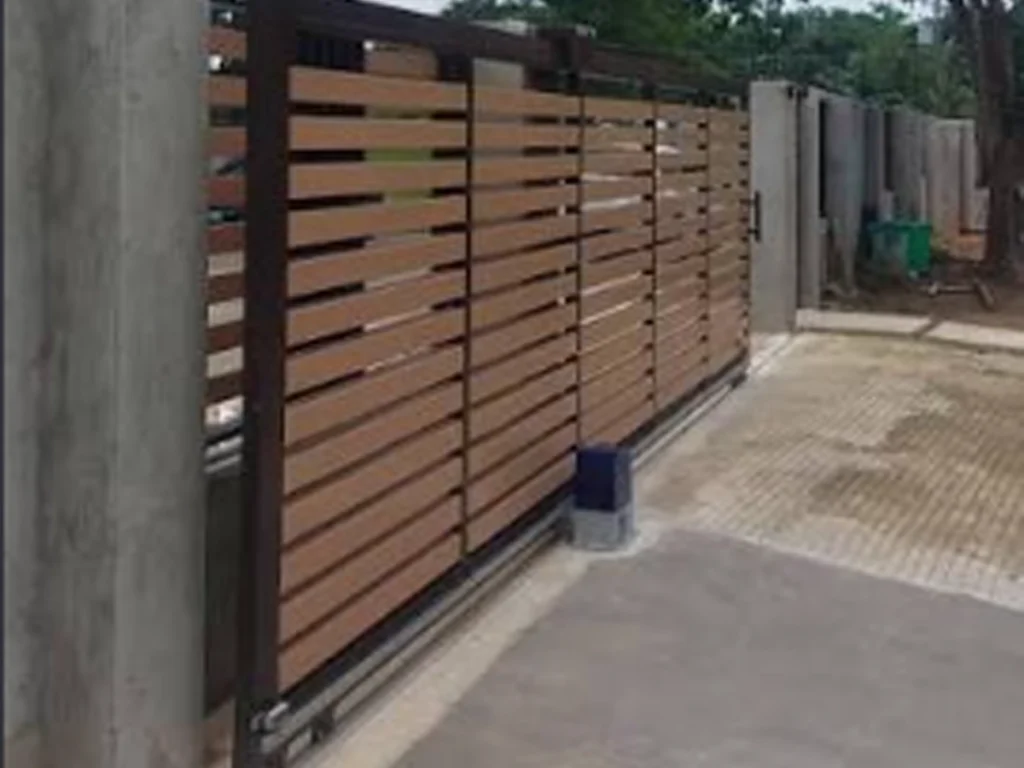
Custom Sliding Gate Installation creates a gate around the property instead of forcing the site to accept a standard kit. The process begins with measurements, grade, side room, drainage, vehicle flow, property lines, utilities, and local rules. Next, the design team chooses a track or cantilever layout, gate material, posts, foundations, operator, safety devices, and access controls. Finally, trained workers install, test, and explain the system. A well planned sliding gate can save swing space, support controlled entry, and fit the property’s look. However, it cannot promise perfect security or freedom from service. The best result comes from honest planning, strong fabrication, suitable automation, and regular care.
Fast planning points include:
- Measure the driveway and the full side travel area before selecting a gate style or approving a drawing.
- Treat the frame, operator, safety devices, power, controls, drainage, and service access as one working system.
Why Does a Custom Sliding Gate Save Useful Space?
A sliding gate moves beside the fence rather than across the drive. Therefore, parked cars can often sit closer to the entrance. The design can also work where a rising driveway would block the arc of a swing gate.
The space review should answer two questions:
- Can the full gate open without crossing a property line, walk, utility area, drain, wall, or landscaping feature?
- Can a vehicle wait safely while the gate opens without blocking a street, sidewalk, or another travel path?
A custom plan can shape the gate around columns, fence lines, slopes, and home design. Yet customization cannot erase physical limits. In our professional view, an honest site decision is better than forcing a sliding system into an area that cannot support it.
For more local context, review these insights about sliding gates in San Antonio. They explain why side movement can support both space and controlled access.
Which Sliding Gate Type Fits the Property?
Track and cantilever gates move sideways, but their support systems differ. A track gate rolls on wheels across a rail fixed to the drive. A cantilever gate hangs above the surface and passes through roller supports beside the opening.
A ground track can reduce the gate’s total frame length. It may suit a smooth, level drive with good drainage and easy cleaning. Still, stones, leaves, mud, or a bent rail can disturb movement. Therefore, ongoing path care is part of ownership.
A cantilever design keeps hardware away from the driving surface. As a result, it can suit gravel, uneven ground, or entrances where a track would face constant dirt. However, the frame is longer. Posts, rollers, and concrete must also carry its weight and repeated motion.
Compare the choices through these points:
- Check surface quality, grade, runoff, debris, opening width, side space, gate weight, wind, and expected daily cycles.
- Check whether future paving, landscaping, walls, utilities, or fence changes could enter the gate’s travel and support zones.
How Does a Site Survey Prevent Costly Changes?
A useful survey records more than one driveway width. The installer should measure the opening at several heights because walls and posts may not stand square. The survey should also map the gate’s complete open and closed positions.
A clear site record should include:
- Opening size, side storage room, slopes, soil clues, drive surface, corners, sight areas, and vehicle waiting space.
- Property lines, easements, utility marks, walks, trees, walls, irrigation, power sources, and planned site improvements.
The City of San Antonio says project scope can require more than one permit. Its residential guidance also directs fence applicants toward forms and site plan needs. Therefore, owners should check the current San Antonio residential permit guidance before work begins.
What Makes a Custom Gate Frame Strong?
The frame must stay square as it moves thousands of times. Therefore, member size, bracing, weld quality, panel weight, and finish all matter. A weak frame can sag or twist, while added cladding can raise weight and wind load.
Steel offers strength and many design choices. Aluminum can reduce moving weight and resist red rust, although its structure still needs correct design. Wood can add warmth and privacy, but it changes weight, moisture exposure, and wind pressure. Consequently, the final material schedule must reach the operator designer before equipment is selected.
Ask the fabricator to explain:
- How the frame resists sag, wind, repeated starts, repeated stops, and the force at rollers or wheel points.
- How welds, drain openings, joints, edges, fasteners, surface prep, paint, and future repair access will be handled.
Strong welded construction is especially important for automatic gates. The operator applies load each day, so a decorative frame must also perform as a machine part. Moreover, stronger frames may require larger posts, better foundations, and an operator rated for the real weight.
This guide to quality iron gate fabrication in San Antonio offers more questions for comparing metal work. Visual style matters, yet clean lines should come with sound structure.
Which Safety Rules Shape the Installation?
An automated vehicle gate can create pinch, crush, and entrapment areas. Therefore, safety must shape the layout before fabrication. It should not be added after the gate is already hanging.
UL 325 covers operator safety. UL explains that vehicle gate operators need provisions for independent forms of entrapment protection, based on the gate and use class. The official also stresses qualified installation and proper safety devices.
ASTM F2200 addresses automated vehicle gate construction. It includes design concerns that work with operator safety requirements. Buyers can review the official and ask which current provisions apply to their project.
Important safeguards commonly include:
- Monitored photo eyes, monitored contact edges, guarded rollers, screened openings, protected controls, warning signs, and tested limits.
- A separate pedestrian entrance, a clear manual release plan, owner training, and safe access for inspection and service.
The exact device layout depends on each entrapment zone. For example, a photo eye across the drive may not protect a gap beside the moving gate. Therefore, one sensor should never be assumed to cover the entire system.
People should not walk through a vehicle gate, climb it, or ride it. Children must not play near moving equipment. Finally, the installer should demonstrate every safety device and leave clear instructions for testing and service.
How Is the Right Gate Operator Selected?
The operator must move the completed gate without working beyond its rating. Width and weight matter, but they are not the only factors. Daily cycles, opening speed, wind load, resistance, user class, accessories, and local weather also affect the choice.
A larger motor does not solve poor movement. Before automation, the gate should roll smoothly by hand and remain aligned. Otherwise, the operator may fight worn wheels, tight rollers, weak posts, track debris, or a twisted frame.
Request these details in the proposal:
- Actual gate length, estimated weight, expected cycles, operator model, use class, duty rating, and supported safety devices.
- Chain or drive details, mounting method, weather protection, accessory load, release method, battery plan, and warranty terms.
What Power and Access Controls Work Best?
Most systems use a dedicated power source, while some sites can support solar charging. The design must include the operator, safety devices, keypads, loops, intercoms, cameras, network parts, and other accessories. New electrical work may also need a licensed trade contractor and permit.
Battery backup can support limited use during an outage. However, the number of cycles varies with battery age, temperature, gate load, traffic, and connected devices. Consequently, owners should request a realistic backup estimate and a safe manual release demonstration.
Build the access plan around users:
- List residents, staff, deliveries, vendors, guests, managers, and emergency users before selecting remotes, codes, cards, or apps.
- Decide who owns the accounts, removes lost credentials, changes schedules, reviews records, and manages service after installation.
A video intercom can help an owner speak with a visitor before granting entry. Still, video does not prove identity. Cameras, lighting, access rules, and good judgment remain important. Readers can compare custom gates with intercom options before choosing a call system.
What Happens During Custom Gate Installation?
Good installation follows an ordered plan. First, the team confirms the approved drawing, utility marks, permits, boundaries, and material list. Next, crews prepare foundations, posts, conduits, drainage, and the travel area.
Concrete needs time to reach the strength required by the project. Rushing this phase can weaken alignment. After the supports are ready, the gate is set, leveled, and adjusted. The operator and protective devices are then connected according to approved instructions.
A sound project sequence includes:
- Survey, design, approvals, utility checks, fabrication, site work, post setting, gate placement, and operator installation.
- Control setup, safety device placement, force and limit setup, repeated testing, cleanup, owner training, and final records.
The handover should include keys, codes, remote counts, app ownership, warranty papers, equipment manuals, release steps, and maintenance guidance. Without that information, even a good installation becomes harder to manage.
How Should Owners Compare Custom Gate Quotes?
Custom Sliding Gate Installation does not have one honest price for every property. Opening size, total gate length, metal, cladding, finish, posts, concrete, operator, controls, safety devices, electrical work, drainage, permits, and removal all affect cost.
Therefore, compare itemized scopes instead of bottom line totals. One bidder may include monitored edges, electrical work, and surface repair. Another may leave those items outside the price. The cheaper number may not represent the same gate.
Ask every bidder to show:
- What the base price includes, what it excludes, who handles each trade, and which site conditions could create added work.
- Which warranties cover fabrication, finish, operator, accessories, labor, and response after the installation is complete.
Price alone does not prove quality. Likewise, a high quote does not prove a safer system. The strongest proposal links each major part to a site need. It also names the operator, safety devices, materials, finish, controls, and service plan.
An Illustrative San Antonio Project Example
This example is fictional and combines common planning needs. It does not describe a named Everlast customer or promise an outcome. A San Antonio family owns a home with limited parking depth, a twelve foot entrance, and an upward sloping drive.
The side fence offers enough clear room for a cantilever frame. The owners want an open metal pattern, family remotes, a guest keypad, and video call entry. They also want the gate to work through short power outages.
The planning process makes two early changes:
- A separate walk gate is added, so guests never need to pass through the automated vehicle opening.
- The approved metal pattern balances style, visibility, airflow, frame weight, and the level of privacy the family wants.
The proposal identifies foundations, reinforced posts, gate frame, finish, operator, monitored devices, battery backup, controls, electrical work, testing, and training. It also notes that permit and utility findings can affect the final scope.
This example shows why custom work is more than decoration. Each choice affects another part. Added privacy changes wind load. A longer gate changes structure. More accessories change power needs. Therefore, the team must coordinate the full system before fabrication begins.
What Maintenance Protects the New Gate?
Maintenance starts with simple observation. Owners should keep the travel area clear and watch for slow motion, odd noise, rust, loose parts, damaged guards, or sensor trouble. If movement becomes unsafe, they should stop use and request service.
Do not bypass a sensor to keep the gate moving. A nuisance stop can point to dirt, misalignment, damaged wiring, sunlight, or another fault. A trained technician should find the cause and restore safe operation.
A practical care plan includes:
- Clear the track or travel path, support good drainage, check visible hardware, and follow the maker’s testing directions.
- Record service dates, battery changes, device tests, credential updates, and every unusual event or repair.
This local guide to common San Antonio gate repairs helps owners spot issues early. However, it does not replace an on site inspection.
Why Choose Everlast Gates & Fence?
Everlast Gates & Fence views a sliding gate as a complete entrance system. The work should connect site facts, strong fabrication, safe automation, useful controls, and clear owner training. That approach helps decision makers understand what they are buying.
Homeowners, HOAs, property managers, and business leaders also need direct answers. They should know what can fit, what may require approval, what affects cost, and how the system will be maintained. Clear scope builds trust before construction begins.
Our service approach emphasizes:
- Site based recommendations that respect space, grade, drainage, traffic, style, safety, access, and future service needs.
- Plain explanations of design choices, included work, owner duties, testing, warranties, and possible project limits.
No company should guarantee that a gate prevents all crime, never fails, or always raises property value. Instead, professional work should deliver a system designed for the stated use and explain its limits honestly.
Five Questions to Ask Before You Approve the Plan
A final review can prevent confusion after fabrication. Ask the installer to place every answer in the proposal or drawing. Then, compare that record with the finished gate during handover.
Use these final checks:
- Does the plan show the gate’s full travel, side room, waiting area, pedestrian route, sight needs, utilities, and drainage?
- Does it state the gate material, size, weight, finish, post design, foundations, operator, safety devices, power, and controls?
- Does it explain permit roles, HOA approval, electrical work, testing, training, warranty, service, and change order rules?
- Does it identify account ownership, backup entry, manual release, user records, remote counts, and lost credential steps?
- Does the installer explain why this track or cantilever design fits better than a swing gate or another entrance plan?
When these answers are clear, the owner can make a grounded decision. More importantly, the installation team has a shared plan to follow.
Frequently Asked Questions
How much does Custom Sliding Gate Installation cost?
The price depends on opening size, gate length, material, finish, track type, foundations, operator, safety devices, access controls, electrical work, permits, and site repair. Therefore, request an itemized site quote. Compare the same scope, warranty, and service plan rather than relying on broad online ranges.
How much side space does a sliding gate need?
A track gate commonly needs side room close to its panel length. A cantilever frame needs added length for its balance section. However, hardware and engineering can change the final requirement. An installer should measure the full travel path and confirm that walls, utilities, walks, and property lines remain clear.
Is a cantilever gate better than a tracked gate?
It depends on the site. Cantilever gates avoid a rail across the driveway and can suit gravel or uneven ground. Track gates may need less total side room and can work well on smooth surfaces. Drainage, debris, width, grade, weight, traffic, maintenance, and budget should guide the choice.
Do automatic sliding gates need safety sensors?
Automated vehicle gates need an entrapment protection plan that matches the operator, gate, and use. Monitored photo eyes and contact edges are common, but placement is critical. Ask the installer to identify every risk zone, explain each device, test the completed system, and show owners how to report a failed test.
Do I need a permit for a sliding gate in San Antonio?
Requirements depend on the location and project scope. Fence work, new electrical service, driveway changes, easements, historic areas, or special sites may involve separate review. Check current City guidance and HOA rules before construction. A contractor should explain permit roles, but the final answer must come from the proper authority.
Conclusion: Build the Gate Around the Property
Custom Sliding Gate Installation can save space, control entry, and give a San Antonio property a fitting entrance. Yet lasting value begins with facts. Measure the site, check the rules, design the structure, select suitable automation, protect each risk area, and plan for service.
At Everlast Gates & Fence, we also offer reliable gate and fence services tailored to residential and commercial properties. Specializing in installing, repairing, and maintaining iron and wood gates and fences along with expert solutions for electric gates, automatic gates, sliding gates, and driveway gates. We also provide professional gate diagnostics, access control systems, customized designs, and comprehensive security enhancements to meet your unique needs and let us ensure your gates are in expert hands so you can enjoy safety, style, and convenience with complete peace of mind.
Contact us at
Phone 210-940-1544
Location 613 Northwest Loop 410 ste 200, San Antonio, TX 78216
