


Here is a surprising fact about Automatic Sliding Driveway Gates. Their safest design depends on more than the motor. UL explains that a vehicle gate operator needs independent ways to reduce entrapment risk. Therefore, a complete gate must unite sound construction, suitable controls, and correctly placed safety devices. A strong panel alone is not a safe automated system.
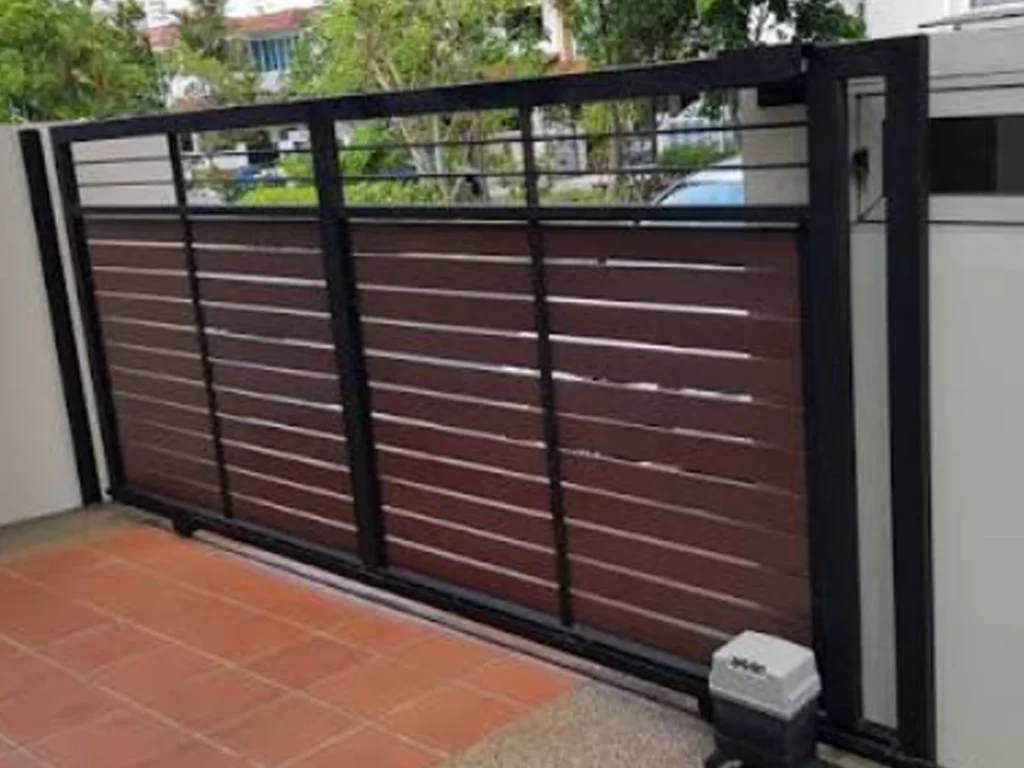
Automatic Sliding Driveway Gates move sideways along a fence instead of turning across a driveway. As a result, they can preserve parking room and work well where a drive slopes upward. Buyers should compare track and cantilever layouts, gate weight, opening width, operator duty, power, backup access, safety devices, drainage, and local rules. A good plan also allows enough side room for the full gate to open. In San Antonio, owners should confirm permit, electrical, property line, and access rules before work begins. The best system is not simply the strongest or most costly choice. Instead, it is the system designed for the site, traffic level, users, and service needs.
Key points for a fast decision include:
- Choose the gate layout only after measuring the opening, side room, grade, drainage, and vehicle waiting area.
- Require a listed operator, suitable entrapment protection, a manual release plan, and clear service records.
Why Automatic Sliding Driveway Gates Feel Practical
A sliding gate travels parallel to the fence. Thus, it does not need a large swing arc inside the property. This motion can protect parking space near the drive. It can also suit entrances where a swing gate would meet a rising slope.
The main practical gains are simple:
- The gate can control vehicle entry without taking up a broad turning area.
- The design can serve homes, private roads, apartments, yards, and business entrances when properly specified.
Buyers who want a broader comparison can read this guide to sliding gates in San Antonio. It explains how sliding movement can support access and daily convenience.
Which Sliding Gate Design Fits the Site?
Two common layouts lead the market. First, a track gate rolls on wheels over a ground track. Second, a cantilever gate hangs above the drive and rolls through support hardware beside the opening. Each design has a clear use.
A track system often uses less side room and may cost less. However, its path must remain clean and straight. Stones, leaves, mud, and bent track can disturb travel. Good drainage also matters because moving water can carry grit across the track.
A cantilever gate avoids a rail across the driveway. Therefore, it can be appealing where debris, uneven paving, or busy traffic would make a ground track less useful. Yet the frame is longer, while posts and rollers carry greater forces. That fact can raise material and foundation needs.
Compare these site factors before choosing:
- Check the clear opening, side storage room, ground slope, surface condition, drainage route, and nearby walls.
- Check traffic volume, expected gate weight, wind exposure, vehicle size, and the need for pedestrian access.
Never treat a sliding vehicle gate as a pedestrian gate. A separate walk gate offers a safer and clearer route. In addition, people should never climb, ride, or play on an automated gate.
How Much Side Room Does the Gate Need?
This question should be answered with a field measurement. A basic track gate often needs a clear run close to its own length. By contrast, a cantilever gate includes a tail that extends beyond the opening. Its total frame may be roughly one and one half times the clear opening, though engineering and hardware can change that ratio.
Do not use that rough ratio as a final plan. Posts, rollers, catches, walls, utility areas, and grade can alter the needed room. In addition, the open gate must not block a walk, service panel, drain, or neighboring space.
A careful measurement plan should include:
- Measure the usable opening at ground level and above it, then note every object along the travel path.
- Mark property lines, easements, utilities, corners, sidewalks, drive approaches, and vehicle sight areas before design approval.
Corner lots need extra care. A tall solid gate or fence may reduce the view of drivers and people near a walk. Likewise, a gate placed too close to the street may leave a waiting vehicle in traffic. Therefore, the entrance should offer enough room for safe waiting and clear sight.
San Antonio rules depend on the location and scope. The City says residential projects can require several permit types, and its fence guidance calls for a site plan in relevant cases. Buyers should check the current City of San Antonio residential permit page before work. An HOA may add separate design or access rules.
What Safety Features Should Buyers Require?
Safety is a system, not a single sensor. The gate, operator, controls, guards, signs, and site layout must work together. Moreover, the installer must follow the operator maker’s instructions and the rules that apply to the project.
UL 325 addresses gate operator safety. UL states that vehicle gate operators need provisions for independent primary and secondary entrapment protection.
Common protective parts include photo eyes and monitored edge sensors. A photo eye can detect an object across its beam. An edge sensor can respond when a moving edge meets an obstruction. However, device placement matters. One sensor cannot always cover every risk area.
Ask for these safety items:
- Confirm that the operator is listed for its intended use and supports the required monitored protective devices.
- Require guards at exposed rollers, protected pinch areas, secure controls, warning signs, and a tested manual release.
Gate construction matters as much as operator selection. ASTM F2200 standard page. is the recognized specification for automated vehicle gate construction. The current standard should be checked for the project, rather than guessed from an old summary. Buyers can view the official
How Should the Operator Be Sized?
An operator should match more than the opening width. Gate weight, daily cycles, speed, wind load, slope, resistance, and user class all matter. A light residential gate that opens ten times daily has different needs from a busy community entrance.
An oversized motor cannot repair poor gate movement. Before automation, the gate should roll smoothly by hand and stay aligned. Otherwise, the operator may strain against tight wheels, weak posts, debris, or a bent frame. That strain may shorten component life.
Use these buying checks:
- Ask for the actual gate weight, length, duty level, expected cycles, operator rating, and accessory power load.
- Ask how wind, solid panels, heat, dust, and drainage influenced the selected hardware and foundation.
The frame also deserves attention. Automatic operation applies force many times each day. Consequently, the frame, welds, posts, roller mounts, and receiving post must resist repeated movement. Readers can learn what solid fabrication looks like in this guide to quality iron gate fabrication in San Antonio.
What Power and Backup Plan Makes Sense?
Most automatic gates use a dedicated electrical supply. The power plan should account for the operator, safety devices, controls, lights, intercom, network parts, and battery charging. A licensed trade professional may be required for new electrical work under local rules.
Battery backup can allow limited use during an outage. Yet capacity varies with battery condition, gate weight, weather, accessories, and the number of cycles. Therefore, buyers should ask for an estimated backup plan based on the actual system. They should not assume unlimited operation.
Solar power can suit some locations when the site receives enough useful sun. Still, a solar system needs a load study, suitable panel placement, charge controls, and enough battery storage. Trees, roof lines, cloudy periods, and heavy traffic can change performance.
Plan for failure before it happens:
- Confirm how authorized users release or open the gate when mains power, batteries, controls, or internet service fails.
- Keep emergency access clear and teach responsible adults how to use the approved release without entering a danger area.
Which Access Controls Add Real Value?
Access control should match the people who use the entrance. A family home may need remotes, a keypad, and a video intercom. A community may need resident credentials, delivery rules, call entry, logs, and manager controls. A business may also need schedules and role based access.
Choose features through daily tasks:
- List residents, staff, visitors, deliveries, vendors, emergency users, and temporary guests before selecting credentials.
- Decide who may add users, remove codes, review events, change schedules, and approve remote entry.
An intercom can improve screening because an owner can speak with a visitor before opening. Video may add context, although it cannot prove identity by itself. For a deeper look, see these custom gate intercom options.
Vehicle loops may help an exit gate open or keep a gate from closing on a vehicle. Their role and placement should be designed as part of the safety and traffic plan. They are not a reason to omit required entrapment protection.
What Does an Automatic Sliding Gate Cost?
There is no honest single price for every gate. The total depends on opening size, material, design, track type, foundations, operator class, safety devices, electrical work, access controls, drainage, permits, and site repair. Demolition and custom finishes can also change the quote.
Online price ranges can be too broad for a firm budget. Instead, buyers should request an itemized site proposal. That document should state what is included, what is excluded, and what conditions could lead to a change order.
Compare bids using the same scope:
- Separate the gate, posts, concrete, operator, safety devices, controls, electrical work, finish, permits, and service plan.
- Compare warranty terms, response process, maintenance needs, parts access, and owner training instead of price alone.
A low quote may omit safety edges, electrical work, access hardware, or surface repair. Conversely, a high quote does not prove better work. Ask each bidder to explain the design in plain language. A sound professional should be able to show why every major part is needed.
What Maintenance Keeps the Gate Reliable?
The owner should inspect the gate regularly without entering moving areas. Look for debris, odd noise, slow motion, loose hardware, damaged guards, rust, worn wheels, and sensor damage. Stop using the gate if it moves in an unsafe or unusual way.
A useful care routine includes:
- Keep the travel path and drainage clear, while leaving electrical and force adjustments to qualified service people.
- Test protective devices as directed, record service dates, and arrange prompt review when any test fails.
Do not bypass a sensor because it causes a nuisance stop. The stop may point to misalignment, dirt, wiring damage, sunlight issues, or another fault. A technician should find the cause. Timely diagnosis can protect both users and the system.
This article on common San Antonio security gate repairs can help owners recognize early warning signs. It does not replace an on site safety review.
A Realistic Buyer Case Study
The following example is illustrative. It combines common project choices and is not a claim about a named customer. A San Antonio homeowner has a twelve foot driveway that rises toward the garage. Cars often park close to the entrance. Therefore, a swing gate would reduce useful room.
The side fence offers enough clear travel space for a cantilever design. The buyer wants family remotes, a guest keypad, and video call entry. The property also has reliable electrical service, but short outages occur during storms.
The planning team follows this path:
- They verify boundaries, utilities, local review needs, opening size, side room, drainage, and the waiting area near the street.
- They design a reinforced frame, suitable foundations, listed operator, monitored protection, battery backup, guarded rollers, and separate walk access.
The owner initially prefers a fully solid gate for privacy. Yet the team reviews wind load and operator demand. Together, they choose a design with limited openings that balances privacy, airflow, and the home’s style. This is a design decision, not a universal rule.
The final scope lists concrete, gate fabrication, finish, operator, controls, safety devices, electrical work, testing, owner training, and warranty terms. Because the proposal is itemized, the owner can compare value fairly. More importantly, the project begins with safety and site fit instead of an app or decorative detail.
How to Compare Gate Companies With Confidence
A buyer should expect questions before receiving a firm proposal. A contractor cannot responsibly select an operator without knowing the gate and site. Therefore, be cautious when a quote arrives without measurements, traffic details, safety review, or power planning.
Ask for proof that the chosen equipment fits its use. Also ask how the company handles permits, electrical coordination, concrete, fabrication, setup, testing, and future service. Clear responsibility helps prevent gaps between trades.
Use this short interview list:
- Who will design, fabricate, install, wire, test, document, and service every part of the finished gate system?
- Which standard, operator class, monitored devices, foundation details, and maintenance steps apply to this exact entrance?
Everlast Gates & Fence approaches Automatic Sliding Driveway Gates as complete access systems. In our view, the strongest result joins careful measurements, sturdy fabrication, suitable automation, clear safety planning, and honest owner training. That method serves homeowners, HOAs, property managers, and commercial decision makers who need dependable answers.
Final 2026 Buyer Checklist
Before signing, make sure the proposal answers the main questions. A detailed plan reduces surprises and gives each contractor the same target. It also creates a useful record for future service.
Confirm these essentials:
- Site fit: opening, side room, grade, drainage, sight lines, waiting space, property limits, utilities, permits, and HOA rules.
- System fit: frame, posts, foundations, operator rating, usage class, cycles, wind load, power, backup, and access controls.
- Safety fit: listed equipment, monitored devices, guarded rollers, protected pinch areas, warning signs, testing, and separate pedestrian access.
- Ownership fit: itemized price, exclusions, warranty, training, service schedule, parts support, account control, and manual release steps.
Automatic Sliding Driveway Gates can be an excellent 2026 choice when the property has enough side room and the design matches daily use. They save swing space and can support controlled access. Still, their value depends on the whole system. Careful site work, safe construction, correct automation, and steady maintenance matter far more than novelty.
Frequently Asked Questions
How much do Automatic Sliding Driveway Gates cost?
Cost changes with width, material, track style, foundations, operator duty, safety devices, controls, electrical work, finish, and permits. Therefore, a site based, itemized quote is more useful than a broad online range. Compare equal scopes and include maintenance, batteries, repairs, and access service when reviewing long term value.
Are sliding driveway gates better than swing gates?
Neither design is always better. Sliding gates preserve swing room and can work well beside rising driveways. However, they need clear side space. Swing gates may suit sites with open depth but little room beside the entrance. Grade, wind, traffic, drainage, safety zones, and budget should guide the choice.
Can an automatic sliding gate work during a power outage?
Many systems can use battery backup or an approved manual release. Actual backup capacity varies with the gate, battery health, weather, accessories, and number of cycles. Buyers should request a clear outage plan, test the release as directed, and ensure authorized adults know the safe procedure.
Do automatic driveway gates need safety sensors?
Automated vehicle gates require a planned entrapment protection system suited to the operator, gate, and use. Photo eyes and monitored edge devices are common parts, but correct placement and testing are vital. Ask a qualified installer to explain every risk area and show how each protective device responds.
Do I need a permit for a driveway gate in San Antonio?
Permit needs depend on the property’s location and project scope. Fence work, electrical work, driveway changes, easements, and special site conditions may trigger different reviews. Check current City of San Antonio guidance and HOA rules before construction. A site specific answer is safer than relying on an old general statement.
Conclusion: Choose a Complete Gate System
Automatic Sliding Driveway Gates offer useful space control, strong design options, and flexible access tools. However, the buying decision should begin below the surface. Measure the property, verify the rules, choose sound construction, specify the correct operator, and insist on tested protection.
At Everlast Gates & Fence, we also offer reliable gate and fence services tailored to residential and commercial properties. Specializing in installing, repairing, and maintaining iron and wood gates and fences along with expert solutions for electric gates, automatic gates, sliding gates, and driveway gates. We also provide professional gate diagnostics, access control systems, customized designs, and comprehensive security enhancements to meet your unique needs and let us ensure your gates are in expert hands so you can enjoy safety, style, and convenience with complete peace of mind.
For a professional site review, design discussion, and clear proposal, contact Everlast Gates & Fence in San Antonio.
Phone 210-940-1544
Location 613 Northwest Loop 410 ste 200, San Antonio, TX 78216
