


Performance Evaluation of an Automated Commercial Gate System
An automated commercial gate can complete hundreds of movements during a busy business week, yet one loose bracket can disrupt the whole entrance.
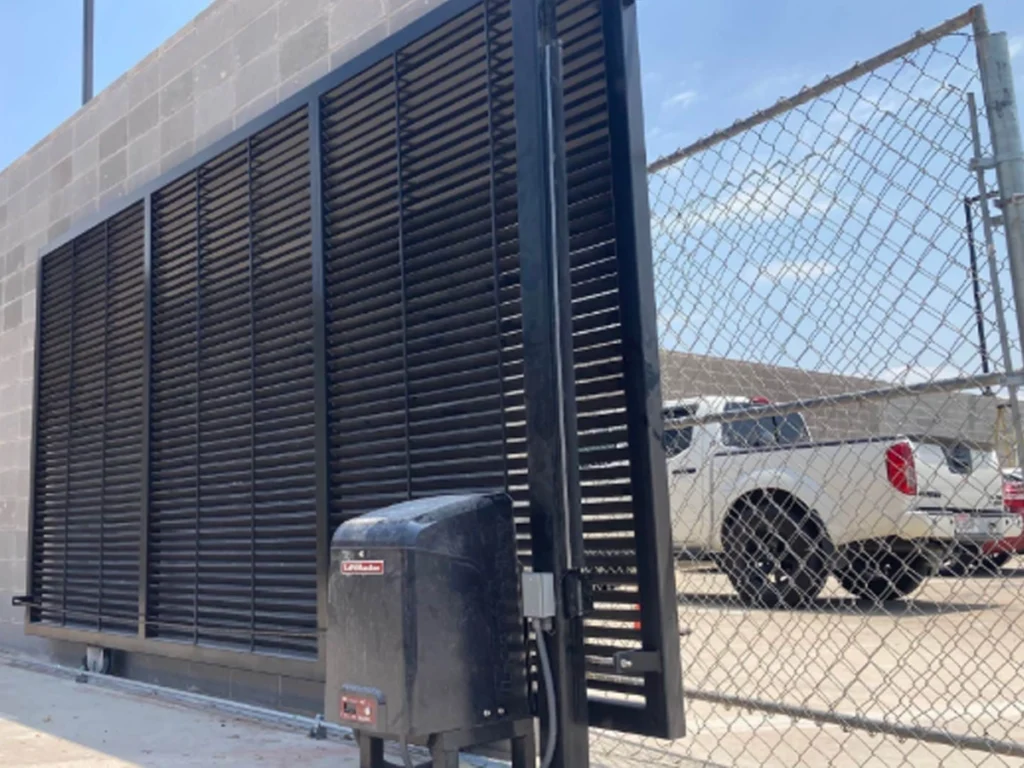
That fact is important because commercial gate performance is rarely controlled by one part alone. Instead, the gate, operator, posts, hinges, rollers, controls, sensors, and power source must work together.
A fast operator does not create a strong system when the gate frame drags. Likewise, a reliable access reader cannot prevent delays when weak hardware allows the gate to move out of alignment.
Therefore, automated commercial gate performance should be evaluated as a complete operating process.
A useful evaluation measures much more than whether the gate opens when someone presses a button. It also examines movement, speed, alignment, access response, safety protection, closing accuracy, and reliability during repeated use.
For Dallas business owners, these results affect daily traffic, employee access, deliveries, customer impressions, and site security.
A gate that performs well helps vehicles enter without needless delay. Moreover, it closes in a controlled way and responds correctly to approved users and safety devices.
However, a gate that performs poorly can create traffic backups, missed deliveries, security gaps, and unexpected repair costs.
This evaluation focuses on
- Smooth movement during repeated cycles
- Gate alignment and hardware strength
- Operator response and cycle speed
- Access control accuracy
- Safety sensor performance
- Reliability during normal business use
AI Overview
Automated commercial gate performance is the combined result of structural, mechanical, electrical, and control components.
A good commercial gate should remain aligned, move smoothly, respond to access commands, stop at the correct positions, and operate safely during repeated daily use.
The strongest performance test does not examine one feature alone. Instead, it confirms that the entire system remains dependable under normal business traffic.
Poor alignment or weak hardware can cause several warning signs. These signs may include shaking, slower movement, unusual sound, loose brackets, missed limits, and uneven closing.
Therefore, property managers should arrange a full inspection when several small changes appear together.
A successful test should confirm
- Stable and smooth movement
- Consistent access response
- Correct open and closed positions
- Proper safety device action
- Reliable operation during repeated cycles
- No harmful strain on the operator
Why Automated Commercial Gate Performance Matters
Commercial gates support daily operations as well as site security.
Employees may use the entrance before sunrise. Delivery drivers may arrive throughout the day. Visitors may need approval, while service teams may require temporary access.
Therefore, the gate must handle real traffic without creating long delays.
A system that works during one test cycle may still perform poorly during the morning rush. Heat, repeated movement, vehicle queues, and access demands can reveal weaknesses that a simple test misses.
Strong performance helps a business
- Maintain steady vehicle flow
- Control approved entry
- Reduce unplanned downtime
- Protect staff and visitors
- Support delivery schedules
- Present a professional entrance
Poor gate performance can affect more than the entrance itself.
For example, a slow gate may cause vehicles to queue near a public road. An uneven closing pattern may leave a wider gap than expected. An unreliable reader may force staff to leave their duties and open the gate manually.
As a result, performance should be treated as an operating concern rather than only a repair concern.
Why Every Gate Component Must Work Together
Your first answer identified the most important evaluation principle: all performance measures must work together as one system.
This principle prevents decision makers from judging a commercial gate by one attractive feature.
A gate may open quickly, yet speed has little value when the system shakes or stops in the wrong position. Similarly, a strong operator may still fail when worn hardware creates resistance.
The full system includes
- The gate frame and structural supports
- Hinges, rollers, tracks, and brackets
- The powered operator
- The control board and wiring
- Access control equipment
- Safety protection devices
Every component affects the others.
When the gate becomes difficult to move, the operator must work harder. When the operator works harder, brackets and attachment points receive added force. Meanwhile, repeated strain can loosen hardware and worsen alignment.
Therefore, a performance evaluation should follow the path of force through the whole system.
Technicians should review how the operator transfers movement into the gate. They should also confirm that the gate follows its intended path without binding, twisting, or striking nearby surfaces.
What Does a Performance Evaluation Measure?
A complete performance evaluation gathers evidence from normal gate operation.
The technician observes the gate before changing settings or replacing parts. This first observation can reveal patterns that disappear after an adjustment.
The gate should then be tested through several complete opening and closing cycles.
Key measures include
- Time required to open and close
- Smoothness through the full travel path
- Accuracy at each stopping point
- Response from access devices
- Safety sensor reaction
- Changes during repeated use
The evaluation should also consider the business setting.
A warehouse entrance may process trucks and delivery vans. In contrast, an office gate may handle employee cars and scheduled visitors.
These properties place different demands on gate speed, opening width, access controls, and cycle capacity.
Therefore, the best performance target is not always the fastest movement. Instead, the system should support safe and reliable traffic for that specific site.
Smooth Movement Is a Critical Test
Your fourth answer placed the greatest weight on smooth movement during repeated use.
That is a practical choice because smooth travel shows whether the mechanical gate and operator are working together.
A gate should begin moving without a hard jump. It should then travel at a consistent rate and stop without a violent shake.
Smooth movement usually shows
- The gate remains properly aligned
- Hinges or rollers move freely
- Hardware remains secure
- The operator has suitable capacity
- Stops and limits are set correctly
- The frame is not twisting
Technicians should observe the full path rather than only the beginning and end.
A gate may move well through most of its travel but bind near one point. That change may suggest a bent track, uneven grade, damaged hinge, shifting post, or poor operator geometry.
Repeated testing is also important. A system may behave correctly during the first cycle and then slow after several movements.
That pattern can point to heat, electrical load, mechanical resistance, or an operator that is not matched to the workload.
Why Poor Alignment Can Lower Performance
Your second answer identified poor alignment or weak hardware as the issue most likely to lower commercial gate performance.
Alignment controls how easily the gate follows its planned path.
A swing gate must rotate around a stable hinge line. A sliding gate must travel along a straight and supported route.
When these paths change, the operator must overcome added resistance.
Alignment problems may result from
- Shifting posts or foundations
- Loose hinge or roller hardware
- Bent gate frames
- Damaged tracks or guides
- Vehicle impact
- Long term wear
A small alignment change may appear harmless at first. However, commercial gates repeat the same movement many times.
Therefore, a small resistance point can place added force on the operator, brackets, frame, and fasteners during every cycle.
The system may then become louder or slower. It may also miss its stopping point or close unevenly.
Property managers who notice these changes can review what happens during a professional gate diagnostic service in Dallas.
Weak Hardware Can Create Several Warning Signs
Your third answer explained that several warning signs often appear together.
This is common because weak hardware rarely affects only one part of gate operation.
For example, a loose bracket may first create light movement. That movement may then change the operator angle, increase vibration, and place added force on nearby fasteners.
Combined warning signs may include
- Shaking during movement
- A new grinding or knocking sound
- Uneven closing
- Slower operation
- Loose hinges or brackets
- Repeated limit problems
Property managers should avoid waiting for one dramatic failure.
Several small changes can provide enough evidence that the system needs inspection. In fact, early attention may reduce damage to the operator or gate structure.
Technicians should check the physical gate before assuming the motor is failing.
A motor can sound strained because it is moving a gate with damaged rollers or poor alignment. Replacing the motor alone would not remove that resistance.
How to Inspect Gate Alignment and Hardware
A commercial inspection should follow a clear order.
First, the technician observes the closed gate. The frame, posts, hinges, rollers, brackets, guides, and stopping points should appear stable and properly positioned.
Next, the gate is moved while the technician watches for deflection, vibration, or changing gaps.
The inspection should review
- Gate position when fully closed
- Gate position when fully open
- Hardware movement under load
- Post and foundation stability
- Frame condition and visible damage
- Operator attachment points
Fasteners should remain secure, but tightening every fastener without diagnosis is not enough.
A loose connection may be the result of repeated vibration rather than the original cause. Therefore, the technician should determine why the connection loosened.
Welds should also be reviewed for cracks, separation, or nearby corrosion.
A gate that has been struck by a vehicle may show damage far from the visible impact area. Consequently, the full frame and support system should be checked.
How Repeated Cycle Testing Reveals Hidden Problems
A single operating cycle provides limited information.
Commercial entrances often face periods of heavy use. Therefore, the evaluation should include repeated cycles that reflect expected traffic.
The exact test plan depends on the gate, operator, business schedule, and equipment guidance.
Repeated testing can reveal
- Heat related performance changes
- Increasing mechanical resistance
- Delayed access response
- Inconsistent stopping points
- Battery or power weakness
- Intermittent sensor faults
During the test, the technician should compare early cycles with later cycles.
The gate should remain smooth and predictable. It should not become slower, louder, or less accurate as the test continues.
However, the test should not abuse the equipment or exceed its intended duty.
Instead, it should evaluate whether the installed operator and gate can support the property’s real operating needs.
Evaluating Opening and Closing Speed
Speed affects vehicle flow, but faster is not always better.
A commercial gate should open quickly enough to prevent needless delay. Nevertheless, its movement must remain controlled and suitable for the entrance.
The evaluation should measure complete cycle time under normal conditions.
Speed testing should consider
- Time from valid command to movement
- Time needed for full opening
- Delay before closing
- Time needed for full closing
- Changes after repeated cycles
- Effect on vehicle queues
A delayed start may result from access controls, communication links, control settings, or operator problems.
Slow travel may result from mechanical resistance, power problems, incorrect settings, or equipment limits.
The technician should avoid increasing speed until the gate structure, operator capacity, and safety plan have been reviewed.
A speed adjustment cannot repair a dragging gate. In fact, added force may worsen damage or create harsher movement.
Evaluating Access Control Response
A commercial gate is useful only when approved users can enter without avoidable delay.
Access control may include keypads, cards, mobile credentials, telephone entry, remote controls, or vehicle devices.
Each method should be tested from the position where users normally approach.
Access testing should confirm
- Valid credentials are accepted
- Invalid credentials are rejected
- Commands reach the gate promptly
- Temporary access works as planned
- User schedules are correct
- Staff can manage access records
A reader may work during a close test but fail from the normal vehicle position. Therefore, distance, mounting height, lighting, network coverage, and driver reach should be reviewed.
Access systems and gate operators also perform different roles. The access system decides whether a user is approved. The operator then moves the gate.
UL Solutions explains that gate operators and access control equipment may involve separate safety and security considerations. UL 325 addresses operator safety and entrapment protection, while access equipment can involve security evaluation under UL 294.
Evaluating Safety Device Performance
Safety testing must be part of every automated commercial gate evaluation.
An operator should respond correctly when a safety device detects a protected condition.
The technician should test devices according to the manufacturer’s instructions and the system design.
Safety testing may include
- Photoelectric sensor response
- Contact edge response
- Stop or reverse action
- Protected hinge or guide areas
- Warning sign condition
- Manual release operation
UL 325 is used for the safety evaluation of automatic door and gate operators. It addresses risks connected with powered operation, including entrapment protection. The standard is also referenced by major model building and fire codes.
ASTM F2200 provides performance based and prescriptive methods for evaluating automated vehicular gate construction. Its scope includes horizontal swing gates and horizontal slide gates used for vehicle traffic.
A sensor should not be bypassed simply because it causes an unwanted stop.
Unwanted activation may indicate poor placement, misalignment, dirt, damage, wiring trouble, or an unsafe site condition. The cause should be found and corrected.
Evaluating the Operator Under Load
The operator must be suitable for the gate and its daily workload.
A large gate, heavy frame, solid infill, or high traffic level can increase the demand placed on the operator.
During evaluation, the technician listens for changes and observes how the operator handles each part of travel.
Operator testing should examine
- Starting effort
- Movement through resistance points
- Sound during operation
- Bracket stability
- Stopping accuracy
- Performance after repeated cycles
The operator should not lift, twist, or pull the gate out of its correct path.
If the operator bracket moves, the mounting surface may be weak or damaged. If the gate changes shape under force, the frame may need reinforcement.
Power readings and control diagnostics may also help, depending on the equipment.
However, electronic information should be combined with physical inspection. A fault code alone may not identify a bent gate or worn hinge.
Testing Power and Backup Operation
Commercial gate performance depends on stable power.
Voltage problems, damaged wiring, weak batteries, and poor connections can cause delayed or inconsistent movement.
The evaluation should test normal power and available backup features.
Power evaluation should confirm
- Stable supply during operation
- Protected wiring and connections
- Healthy backup batteries
- Correct charging function
- Working manual release
- Clear outage procedures
Backup batteries have a limited service life. Their condition can decline even when the gate appears to work normally on main power.
Therefore, backup operation should be tested rather than assumed.
The manual release should also remain accessible to authorized staff. Managers should know who holds the key or tool and how the gate can be secured after release.
Measuring Reliability During Normal Business Use
Your fifth answer identified the final goal: the whole system must perform reliably under normal business use.
Reliability means the gate produces consistent results across many real operating conditions.
A reliable gate accepts proper access commands, moves smoothly, stops correctly, and responds to safety devices.
Reliable performance includes
- Consistent operation during peak periods
- Few unexplained access failures
- Stable speed and movement
- Correct gate position after each cycle
- Predictable safety response
- Clear recovery after power loss
A useful evaluation may include discussion with employees, guards, property managers, and delivery staff.
These users often notice patterns that are not present during a short service visit.
For example, a gate may fail only during afternoon heat or after several large trucks enter. That detail can guide a more focused test.
How Dallas Weather Can Affect Performance
Dallas conditions can expose commercial gate systems to heat, storms, wind, rain, dust, and sudden temperature changes.
These conditions can affect several parts of the system.
Heat may influence batteries and electronic enclosures. Wind may place added force on large solid gates. Water and dirt may affect tracks, sensors, hardware, and drainage.
Weather related checks include
- Water near operators or controls
- Dirt around tracks and rollers
- Sensor lens condition
- Coating damage and corrosion
- Battery condition
- Wind effects on gate movement
A weather problem may also create an alignment problem.
For example, soil movement or poor drainage near a post foundation can change gate geometry. A sliding gate track may collect debris after a storm.
Property managers should include seasonal conditions when describing a performance issue.
Why Preventive Maintenance Protects Performance
Performance evaluation provides a snapshot. Preventive maintenance helps keep the system near that condition.
Commercial gates experience repeated forces every day. Therefore, even well installed parts can wear, loosen, or shift over time.
Preventive maintenance should address
- Gate alignment
- Hinges, rollers, and guides
- Operator mounts
- Safety devices
- Access equipment
- Power and batteries
Maintenance should follow the gate’s traffic level and equipment guidance.
A low use entrance may not need the same service frequency as a busy distribution site. However, every system should receive attention before visible failure.
Dallas property managers can review these electric gate care tips for commercial properties for more planning ideas.
They can also use a commercial gate maintenance guide to organize routine inspections and service records.
When Performance Problems Need Immediate Attention
Some changes deserve prompt professional review.
A gate that shakes, drops, leaves its track, or moves unpredictably may present a serious operating concern.
The property manager should limit use when continued operation could worsen damage or expose users to risk.
Urgent warning signs include
- Unstable posts or supports
- Cracked welds or broken hardware
- A gate leaving its travel path
- Failed safety devices
- Strong grinding or impact sounds
- Uncontrolled or unexpected movement
Staff should not stand in the gate path while trying to diagnose a failure.
Likewise, access or safety devices should not be bypassed to keep traffic moving.
A temporary traffic plan may be needed while the gate is secured and inspected.
Building a Useful Performance Scorecard
A written scorecard helps decision makers compare current gate performance with future results.
The record should include observations, measurements, faults, repairs, and recommended actions.
A scorecard can track
- Opening and closing times
- Number of successful cycles
- Access control response
- Safety test results
- Alignment observations
- Maintenance actions
The scorecard should also record the conditions during testing.
Traffic level, weather, power source, gate load, and reported user problems can affect results.
A simple pass or fail label may hide useful details. Therefore, each category should include notes explaining what was observed.
Over time, these records can show whether performance is stable or slowly declining.
Dallas Permit and Planning Considerations
A major commercial gate repair or replacement may involve city review, depending on the work and property.
The City of Dallas explains that commercial building permits authorize qualifying construction, alteration, or renovation work and help verify compliance with applicable codes, zoning rules, and safety standards.
Property owners should confirm current requirements before beginning structural, electrical, or site changes.
Planning may require review of
- Property and access layout
- Electrical work
- Fire and emergency access
- Vehicle queue space
- Structural changes
- Right of way conditions
Requirements vary by scope and site. Therefore, the project team should verify current rules rather than assume that a past approval applies to new work.
A Practical Commercial Gate Evaluation Process
A consistent process reduces guesswork and supports clear decisions.
The following steps combine physical inspection, operational testing, safety review, and user feedback.
Gather operating history
- Ask when the issue began
- Review repair and maintenance records
Inspect the gate structure
- Check alignment, hardware, and supports
- Look for impact, wear, or corrosion
Observe normal movement
- Watch complete opening and closing cycles
- Note sound, speed, vibration, and stopping points
Test repeated operation
- Use a realistic cycle sequence
- Compare early and later performance
Test access controls
- Check approved and denied credentials
- Confirm response from normal user positions
Test safety systems
- Follow equipment instructions
- Confirm correct stop or reverse action
Review power and backup
- Check power stability and batteries
- Test the manual release process
Document findings
- Rank urgent and planned repairs
- Give the manager a clear action plan
Schema Ready Questions and Answers
What is automated commercial gate performance?
Automated commercial gate performance describes how well the complete entrance works during normal business use. It includes smooth movement, cycle speed, alignment, access response, safety operation, stopping accuracy, power reliability, and repeated use. A good evaluation studies these measures together because one weak component can affect the entire system.
How should a commercial gate performance test begin?
A test should begin with user reports and a visual inspection before settings are changed. The technician should review gate alignment, hardware, supports, wiring, controls, and visible damage. Next, the gate should complete several observed cycles so movement, sound, speed, stopping points, and access response can be compared.
What commonly lowers automated commercial gate performance?
Poor alignment and weak hardware are common causes of reduced performance. They create resistance and may force the operator to work harder. Loose brackets, worn rollers, damaged hinges, bent frames, shifting posts, or track problems can produce shaking, noise, slower travel, uneven closing, and repeated limit errors.
Why should a commercial gate complete repeated test cycles?
One cycle may not reveal problems that appear during busy traffic. Repeated tests can show heat changes, growing resistance, delayed access commands, weak batteries, or inconsistent stopping points. The test should reflect normal property use without exceeding the gate operator’s intended duty or manufacturer guidance.
What does smooth gate movement prove?
Smooth movement suggests that the gate structure, hardware, alignment, and operator are working together. The gate should start without a hard jump, travel at a steady rate, and stop without severe shaking. Smooth travel also reduces avoidable strain on brackets, hinges, rollers, frames, and operator components.
How are commercial gate access controls evaluated?
Technicians test valid and invalid credentials, command response, user schedules, visitor access, and communication from normal vehicle positions. Keypads, cards, mobile tools, telephone entry, and vehicle devices should respond without needless delay. The test should also confirm that unauthorized credentials do not open the entrance.
What safety features should be tested?
Testing may include photoelectric sensors, contact edges, stop or reverse functions, warning signs, protected movement areas, and manual release. The exact devices depend on the gate type, operator, site, and identified hazards. Testing should follow current requirements and the equipment manufacturer’s instructions.
When should a Dallas business stop using its gate?
Use should be restricted when the gate moves unpredictably, leaves its path, has broken structural hardware, shows unstable supports, or has failed safety protection. Strong impact sounds, cracked welds, and uncontrolled movement also need urgent review. The entrance should be secured until a qualified professional evaluates the problem.
How often should a commercial gate receive maintenance?
The schedule depends on gate weight, daily cycles, weather exposure, equipment, and business risk. A high traffic entrance usually needs more frequent service than a low use gate. Property managers should also request an inspection whenever movement, sound, access response, alignment, or stopping behavior changes.
What should a successful performance test confirm?
A successful test should confirm that the entire system performs reliably during normal business use. The gate should remain aligned, move smoothly, answer approved access commands, stop at the correct positions, respond to safety devices, and complete repeated cycles without harmful changes or unexplained failures.
Conclusion
Automated commercial gate performance cannot be judged by speed alone.
A dependable entrance is a connected system made from the gate, supports, hardware, operator, power, controls, and safety equipment.
Your five answers reinforce that full system approach.
First, every performance measure must work together. Second, poor alignment and weak hardware can reduce the quality of the entire system.
Third, these problems often create several warning signs at once. A manager may notice shaking, noise, slow movement, loose hardware, and uneven closing during the same period.
Fourth, smooth movement under repeated use deserves special attention. It reveals whether the physical gate and powered operator can handle normal traffic without added strain.
Finally, a successful test should confirm reliable operation during real business use.
Everlast Gates & Fence evaluates automated commercial gates with those practical goals in mind. The process connects structural inspection, repeated cycle testing, access checks, safety testing, power review, and clear documentation.
That complete approach helps Dallas property managers understand what is working, what is declining, and which repairs should receive priority.
Contact Everlast Gates & Fence
Protect business access by addressing performance changes before they create a complete gate shutdown.
At Everlast Gates & Fence, we also offer reliable gate and fence services tailored to residential and commercial properties. Specializing in installing, repairing, and maintaining iron and wood gates and fences along with expert solutions for electric gates, automatic gates, sliding gates, and driveway gates. We also provide professional gate diagnostics, access control systems, customized designs, and comprehensive security enhancements to meet your unique needs. Visit our page at Everlast Gates & Fence, and let us ensure your gates are in expert hands so you can enjoy safety, style, and convenience with complete peace of mind.
Contact Everlast Gates & Fence for automated commercial gate inspections, performance testing, maintenance, repair, and system improvement in Dallas.
Phone: (469) 212-1925
Location: 2043 Empire Central Dr Suite 108, Dallas, TX 75235
