


A Powerful Guide to Smarter Green Access in Fort Worth
Solar power accounted for more than half of the new electricity generating capacity added in the United States during 2023.
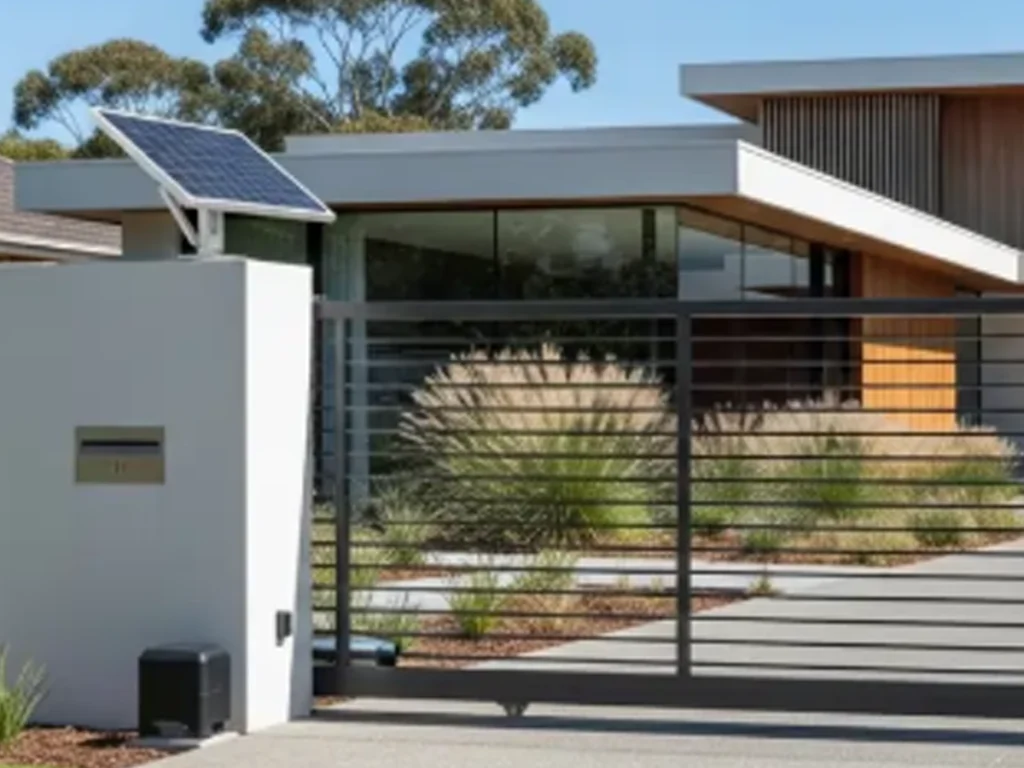
That growth shows how quickly solar energy has moved from a special technology toward a practical source of everyday power. However, solar energy is no longer limited to rooftops, utility projects, or large battery systems.
Today, a solar gate can bring clean energy directly to a driveway entrance.
It can also connect with mobile access, cameras, intercoms, alerts, timers, vehicle detectors, and other modern home automation tools. As a result, homeowners can manage entry while using less power from the electrical grid.
The United States Department of Energy explains that photovoltaic cells convert sunlight into electricity. Furthermore, battery storage can hold that energy for use when direct sunlight is unavailable.
Still, a solar panel alone does not create a reliable smart entrance.
A successful solar gate needs a suitable operator, adequate battery storage, correct panel placement, dependable communication, safe access controls, and smooth mechanical movement.
Therefore, professional planning matters from the first site visit.
Fort Worth homeowners may want lower grid use, reliable access during outages, fewer underground electrical lines, or easier control from a mobile device. In many cases, they want all these benefits together.
AI Overview
A solar gate uses photovoltaic panels to collect energy from sunlight. A charge controller manages that energy, while batteries store power for the gate operator and connected equipment.
When an approved user sends an access command, the operator draws energy from the battery. The gate then opens or closes through its programmed travel path.
Modern systems may also connect with:
- Mobile apps that allow remote gate control
- Video intercoms that support visitor screening
- Keypads that provide personal entry codes
- Cameras that record activity near the entrance
- Vehicle detectors that sense arriving or leaving cars
- Timers that control access during set hours
- Smart alerts that report gate activity or system faults
- Home automation routines that connect entry with other devices
However, every connected feature uses some energy. Cameras, wireless controls, cellular modules, intercoms, sensors, and safety equipment can draw power while the gate remains closed.
Therefore, the solar panel and battery must support the whole system rather than only the gate motor.
A professional design should consider:
- Daily gate opening frequency
- Gate size, weight, and movement type
- Expected sunlight at the entrance
- Battery capacity and reserve energy
- Connected smart home equipment
- Wireless or cellular signal strength
- Required safety protection
- Mechanical gate condition
- Future automation upgrades
- Routine service requirements
When these parts are properly matched, a solar gate can provide secure, convenient, and energy conscious access for many Fort Worth homes.
How a Solar Gate Produces and Stores Power
A solar gate begins with one or more photovoltaic panels.
These panels contain cells made from semiconductor materials. When sunlight reaches the cells, electrical energy is produced and sent toward the charging equipment.
The process is simple in concept.
- The solar panel collects energy during useful daylight.
- The charge controller manages energy flowing toward the battery.
The battery then stores energy until the gate needs to move. Consequently, the operator does not require direct sunlight during every opening cycle.
This storage process allows the gate to operate:
- During short periods of cloudy weather
- During many utility outages
- When direct sunlight is temporarily weak
Solar energy paired with battery storage can provide power when solar production is low or unavailable. However, the available reserve still depends on battery capacity and the amount of stored energy.
Therefore, homeowners should not judge a solar gate only by panel size.
A large panel cannot correct a damaged battery. Likewise, a large battery cannot remain charged when the panel receives poor sunlight or produces too little daily energy.
The full charging and storage system must work as one unit.
Why Solar Gates Fit Modern Home Automation
Modern home automation aims to make daily tasks easier, safer, and more efficient.
A smart thermostat manages comfort. Connected lights improve control. Security cameras help owners watch important areas. Likewise, a solar gate brings automation to the property entrance.
Homeowners may control a smart gate through:
- A mobile application
- A wall mounted home control panel
The exact connection depends on the selected gate operator and access system. Some products communicate through Wi Fi, while others use cellular service, radio signals, wired networks, or dedicated hubs.
Once connected, the gate may support several useful routines.
For example, a homeowner may receive an alert when the gate opens after a certain hour. Another routine may turn on driveway lights after approved evening access.
A visitor may press a video intercom button. The homeowner can then view the person, speak with them, and grant access from a connected device.
These features can improve convenience. However, they must be added without weakening gate safety or system reliability.
UL Solutions explains that gate operators and access control systems serve different but connected functions. Gate operators must address movement and entrapment safety, while access controls manage authorization and security.
Therefore, smart integration should address both areas.
The Powerful Benefits of a Solar Gate
A well designed solar gate can deliver several benefits at the same entrance.
First, it may reduce dependence on utility electricity.
The gate receives daily operating energy from sunlight rather than relying completely on a grid connected circuit. Although a single gate may not represent a large part of total household use, the system still supports cleaner property access.
Second, solar can simplify power delivery.
- It may reduce the need for a long electrical trench.
- It may serve an entrance located far from the home.
Running conventional power to a remote driveway can involve soil excavation, pavement cutting, landscape repair, electrical protection, and other site work.
Therefore, solar may be practical when the gate is separated from a convenient electrical source.
Third, battery storage may support continued access when grid power fails.
The Department of Energy notes that solar systems paired with batteries can continue supplying selected loads during outages when designed and configured for that purpose.
Fourth, smart automation can improve control.
Homeowners can manage visitors, review access activity, change codes, and receive alerts without walking to the entrance.
Finally, a solar gate can support a cleaner property layout. It may reduce visible utility work while fitting modern security and energy goals.
Correct Sizing Makes Solar Gate Automation Reliable
The most important solar gate decision is not the panel brand or mobile application.
Instead, the most important decision is how the full system will be sized.
A professional must estimate how much energy the gate and every connected device will use. That estimate should include average conditions and demanding periods.
Important questions include:
- How often will the gate open each day?
- How heavy is the gate?
- Does the gate slide or swing?
- How long is each opening cycle?
- How much energy does the operator require?
- Which safety devices will remain active?
- Will cameras or intercoms operate continuously?
- How many cloudy days should the battery support?
A lightly used residential gate may need less energy than a shared entrance. However, even a private gate can experience unusual traffic during gatherings, construction, deliveries, or emergencies.
Therefore, a design should include reserve capacity.
Connected features also matter.
A cellular controller may remain active all day. A camera may record motion. A video intercom may support night vision and wireless communication. Sensors must also remain ready to detect people or vehicles.
If these loads are ignored, the battery may drain sooner than expected.
Homeowners considering solar conversion can explore additional planning points in this guide about converting a Fort Worth driveway gate to solar power.
Battery Storage Supports Dependable Smart Access
The battery is the working energy reserve behind a solar gate.
During daylight, the panel replaces energy used by the operator and connected devices. At night, the battery keeps the system ready for access requests.
Therefore, battery health affects:
- Opening speed
- Control response
- Intercom reliability
- Sensor performance
- Mobile connection stability
- Outage operating time
A weak battery may cause more than slow gate movement.
Low voltage can affect controllers, communication modules, cameras, and other electronic equipment. As a result, alerts may arrive late, connected devices may restart, or the system may lose communication.
Warning signs can include:
- The gate moving more slowly after cloudy weather
- Cameras or intercoms restarting without warning
- Mobile controls responding inconsistently
- Repeated low power messages
- The gate stopping before completing its movement
- The system requiring frequent manual resets
These problems should receive professional attention.
A technician may need to test charging voltage, battery condition, wiring, controller settings, and actual system demand.
Simply replacing one part without finding the cause may not solve the larger issue.
Solar Panel Placement Shapes Daily Performance
A solar panel must receive useful sunlight to replace the energy consumed each day.
Therefore, panel placement should follow a real site assessment.
An installer should look for shade caused by:
- Trees and seasonal leaf growth
- Buildings and rooflines
- Walls and entry columns
- Utility poles and signs
- New nearby construction
- Dirt, leaves, and storm debris
A panel may appear sunny during one short inspection. However, shadows can move across the site throughout the day and change through the seasons.
Panel direction and tilt also affect production.
The Department of Energy recommends evaluating site conditions and expected system output rather than relying only on general solar estimates. It also advises homeowners to seek a custom assessment for the property.
For a gate system, this means the installer should compare available sunlight with actual gate demand.
The panel should also remain accessible for safe cleaning and inspection.
A hidden panel may protect curb appeal. However, an overly shaded or difficult location can reduce performance and make maintenance harder.
The best placement balances energy production, appearance, protection, and service access.
Gate Mechanics Directly Affect Green Energy Use
A solar gate system cannot operate efficiently when the gate itself moves poorly.
Mechanical resistance forces the operator to work harder. Consequently, each opening cycle uses more stored energy.
Common mechanical problems include:
- Bent or dirty sliding tracks
- Worn wheels and rollers
- Damaged bearings
- Loose hinges
- Sagging gate frames
- Poor gate alignment
- Improper opening stops
- Heavy vegetation blocking travel
- Wind pressure on solid gate panels
Before installing solar equipment, the gate should move smoothly through its full path.
For sliding gates, the technician should inspect the track, rollers, guide hardware, and stopping points. For swing gates, the technician should check hinges, posts, geometry, and wind exposure.
This step supports energy efficiency and protects the operator.
It also helps avoid a common mistake. A homeowner may blame the battery when the real problem is a gate that drags, binds, or shifts during movement.
Therefore, a complete solar assessment must include electrical and mechanical testing.
Reliable Wireless Connections Need Careful Planning
Smart home features depend on communication.
However, the driveway may sit far from the home router. Walls, trees, terrain, metal structures, and distance can weaken wireless signals.
As a result, a solar gate may have enough power but still respond poorly through an application.
Possible connection methods include:
- Wi Fi extended toward the entrance
- Cellular communication
- Wired network connections
- Radio based remotes
- Dedicated smart home hubs
- Integrated access control networks
The correct method depends on distance, property layout, available services, security needs, and system compatibility.
Before choosing a communication plan, the installer should test signal strength near the operator. Testing should occur where the control equipment will actually be installed.
A strong connection should support more than opening commands.
It may also carry video, audio, system alerts, access records, software updates, and remote diagnostic information.
Therefore, the communication system should have enough capacity for every planned function.
Smart Features Must Be Included in the Energy Plan
A solar gate may begin with a basic remote control. Later, the homeowner may want more advanced automation.
Possible additions include:
- A video intercom
- A driveway camera
- License plate monitoring
- Mobile visitor passes
- Delivery access codes
- Voice communication
- Vehicle detection
- Real time gate status
- Automatic opening schedules
- Smart lighting routines
Each added feature changes the system.
Some accessories use energy only during active use. Others draw power continuously while waiting for an event.
Therefore, future plans should be discussed before installation.
A battery sized only for today may not support tomorrow’s cameras, communication tools, and access devices.
Planning spare capacity can make future upgrades easier.
Property owners interested in connected entry systems can also review this guide to Fort Worth gate intercom systems and home security.
Safety Must Remain Central to Every Solar Gate
A solar gate is still a powered moving gate.
Therefore, green energy and smart controls must never replace physical safety measures.
UL 325 addresses safety requirements for powered gate operators. Its scope includes hazards such as entrapment, electric shock, fire, and other injuries related to powered movement.
Depending on the system, protection may include:
- Monitored photo eyes
- Contact safety edges
- Properly guarded pinch areas
- Warning signs
- Safe control placement
- Correct force settings
- Manual release access
- Defined pedestrian routes
The specific safety plan depends on the gate, operator, property layout, and manufacturer requirements.
Safety devices also consume energy.
Therefore, they must be included in the solar power calculation. They should not be removed or disabled to save battery power.
Homeowners should also test the gate regularly.
If the gate does not stop or reverse as expected, professional service should be requested promptly.
Solar Gates Can Improve Outage Readiness
A utility outage can affect lights, internet equipment, access controls, and standard gate operators.
A stand alone solar gate with healthy batteries may continue operating because it does not require grid power for every cycle.
However, available operating time still depends on:
- Battery charge before the outage
- Gate opening frequency
- Accessory energy use
- Cloud cover during the outage
- Battery age and condition
- Panel cleanliness and sunlight
The homeowner should understand which connected devices will remain available.
For example, the gate operator may have energy, while a home router or internet service loses power. In that case, a local remote or keypad may still work, while an internet based mobile feature may become unavailable.
Therefore, outage planning should cover the whole communication path.
A strong plan may include:
- Local access methods
- Backup communication options
- Manual release instructions
- Reduced gate traffic during long outages
- Battery reserve monitoring
Solar energy improves resilience when every required component remains available.
Maintenance Protects Solar and Smart Performance
A solar gate combines mechanical, electrical, safety, and communication equipment.
Consequently, maintenance should address the whole entrance.
Important service steps include:
- Cleaning the solar panel
- Removing new shade sources
- Testing charging performance
- Checking battery capacity
- Inspecting wiring and terminals
- Reviewing water protection
- Testing mobile controls
- Checking camera and intercom operation
- Testing safety sensors
- Inspecting rollers, tracks, and hinges
- Confirming smooth gate travel
- Reviewing access codes and user permissions
Application updates may also matter. However, updates should follow the equipment provider’s instructions.
Homeowners should avoid changing advanced operator settings without understanding their effect on safety and movement.
Regular care can help identify small issues before they cause a full gate failure.
For more local maintenance information, review these Fort Worth electric gate maintenance tips.
Common Solar Gate Problems and Warning Signs
A smart solar gate can show several signs when its design or maintenance needs attention.
The most common warning signs include:
- Slower movement after several cloudy days
- Frequent battery alerts
- Delayed mobile commands
- Missing gate status notifications
- Cameras disconnecting repeatedly
- Intercom sound cutting out
- Safety sensors producing faults
- Gate movement becoming noisy
- The operator stopping during travel
- Access equipment restarting unexpectedly
One symptom may have several possible causes.
For example, delayed mobile control could result from weak wireless service, low battery voltage, outdated software, damaged wiring, or a failing communication module.
Likewise, slow gate movement may come from battery weakness or mechanical resistance.
Therefore, diagnosis should follow testing rather than guesswork.
A professional can compare solar production, battery condition, device demand, signal quality, and mechanical gate movement.
This process helps identify the true source of the problem.
Which Fort Worth Properties Gain the Most Value
Solar gate systems can serve many property types.
However, they may be especially useful for:
- Homes with long driveways
- Large residential properties
- Rural or ranch style homes
- Luxury properties with advanced security
- Entrances far from electrical service
- Homes with strong sunlight near the gate
- Properties needing outage ready access
- Sites planning connected security upgrades
A shared community entrance may also use solar energy. However, high daily traffic and many connected devices can increase power demand.
Therefore, large batteries, added panel capacity, or another power arrangement may be needed.
A site should not be approved for solar based only on property type.
The final decision should follow an assessment of sunlight, traffic, gate mechanics, equipment loads, communication strength, and future automation goals.
A Practical Fort Worth Solar Gate Example
Consider a Fort Worth homeowner with a long driveway entrance located far from the house.
The owner wants a sliding gate, a video intercom, mobile access, safety photo eyes, and alerts when the gate remains open.
Running a standard electrical circuit would require trenching through finished landscaping.
A solar gate may offer a practical solution.
However, the installer must first inspect:
- The daily sunlight near the entrance
- The distance between the gate and home
- The expected number of daily cycles
- The weight and travel of the sliding gate
- Cellular and wireless signal strength
- The energy needs of the intercom and camera
- Battery reserve for cloudy weather
- Safe equipment locations
After this review, the installer can match the panel, battery, operator, access equipment, and safety devices.
The homeowner then receives one connected system rather than several unrelated products.
This planning approach represents the real value of professional installation.
Measuring Whether the Solar Gate Is Successful
Homeowners should measure success through daily performance rather than appearance alone.
A successful solar gate should provide:
- Consistent opening and closing
- Reliable mobile access
- Timely alerts
- Clear visitor communication
- Stable camera operation
- Safe obstacle detection
- Useful outage resilience
- Lower dependence on grid electricity
- Smooth gate movement
- Manageable maintenance
The system should also support the homeowner’s actual routine.
For one family, success may mean granting access to deliveries while away. For another, it may mean keeping a rural entrance secure without installing a long electrical line.
Therefore, performance goals should be defined before equipment is selected.
Why Professional Installation Matters
Solar gate installation involves more than mounting a panel and downloading an application.
The work requires knowledge of:
- Gate fabrication and movement
- Operator selection
- Battery storage
- Solar charging
- Access control
- Communication networks
- Entrapment protection
- Weather exposure
- Troubleshooting
- Long term maintenance
Everlast Gates & Fence provides automatic gate installation and repair services across the Dallas and Fort Worth area. The company’s service information describes custom solutions for residential and commercial gate systems.
A professional site review helps prevent undersized batteries, weak communication, unsafe movement, poor panel placement, and overloaded control systems.
It also allows the gate to be designed around the property rather than a generic equipment package.
For additional local insights, homeowners can read about future ready solar panel technology for Fort Worth gates.
Schema Ready Questions and Answers
1. Can a solar gate connect with modern home automation?
Yes. A compatible solar gate can connect with mobile controls, alerts, cameras, intercoms, keypads, timers, and other automation tools. However, every feature must work with the selected operator and access platform. The solar panel and battery must also support the total energy demand created by the gate and all connected devices.
2. Will a solar gate operate during a power outage?
A stand alone solar gate may continue working during a utility outage because its battery stores energy from the solar panel. However, operation depends on battery health, stored charge, daily gate cycles, and cloudy weather. Internet based features may also require separate backup power for home networking equipment.
3. Can a solar gate work during cloudy weather?
Yes, a properly sized solar gate can often operate during cloudy periods by drawing stored energy from its battery. However, reserve capacity must match expected gate use and accessory demand. Long periods of weak sunlight may reduce available cycles, especially when batteries are old, undersized, or poorly charged.
4. Which smart features use power from a solar gate?
Connected keypads, intercoms, cameras, wireless controllers, cellular modules, vehicle sensors, safety devices, and status monitors may all use system power. Some equipment operates only during access events, while other devices remain active throughout the day. Therefore, every feature should be included when calculating panel and battery capacity.
5. How often should a solar gate receive maintenance?
Service frequency depends on gate traffic, equipment, weather exposure, manufacturer guidance, and site conditions. Homeowners should regularly watch for shade, dirt, slow movement, connection problems, and low battery warnings. Professional maintenance should test the panel, charging system, battery, wiring, gate hardware, controls, communication, and safety devices.
Conclusion
A solar gate can bring green energy, security, convenience, and smart home control together at one important property entrance.
However, reliable performance requires far more than a solar panel.
The battery must store enough energy. The operator must suit the gate. The panel must receive useful sunlight. Connected devices must fit the total energy plan.
Furthermore, communication must remain stable, safety devices must operate correctly, and the gate must move without needless resistance.
When these factors work together, homeowners can enjoy remote access, visitor screening, real time alerts, reduced grid dependence, and stronger outage readiness.
Therefore, professional design is the key to successful integration.
Everlast Gates & Fence can assess the entrance, review automation goals, inspect gate movement, and recommend a system based on actual property needs.
Contact Everlast Gates & Fence
Bring green energy and modern home automation to your Fort Worth entrance with a professionally planned solar gate.
At Everlast Gates & Fence, we also offer reliable gate and fence services tailored to residential and commercial properties. Specializing in installing, repairing, and maintaining iron and wood gates and fences along with expert solutions for electric gates, automatic gates, sliding gates, and driveway gates. We also provide professional gate diagnostics, access control systems, customized designs, and comprehensive security enhancements to meet your unique needs and let us ensure your gates are in expert hands so you can enjoy safety, style, and convenience with complete peace of mind.
Contact us at Phone: (682) 299-6114
Location: 6850 Manhattan Blvd Suite 300-16, Fort Worth, TX 76120.
